A Guide to the Early Italian Renaissance: Light, Space, and the Human Soul
In short: The Early Italian Renaissance (c. 1400–1490) marked a revolutionary shift from flat, symbolic medieval art to realistic, three-dimensional spaces, driven by mathematical perspective, natural light, and a deep humanism.
The Dawn of Realism: Breaking the Medieval Mold
Imagine stepping out of a dimly lit cathedral, where flat, solemn saints gaze down from gold-leafed walls, and into the bright, bustling streets of fifteenth-century Florence. This is the sensation of moving from the medieval world into the Early Italian Renaissance. Beginning around 1400, Italian artists began to look at the world with fresh eyes, casting off the rigid, stylized conventions of the Byzantine tradition in favor of something radical: reality.
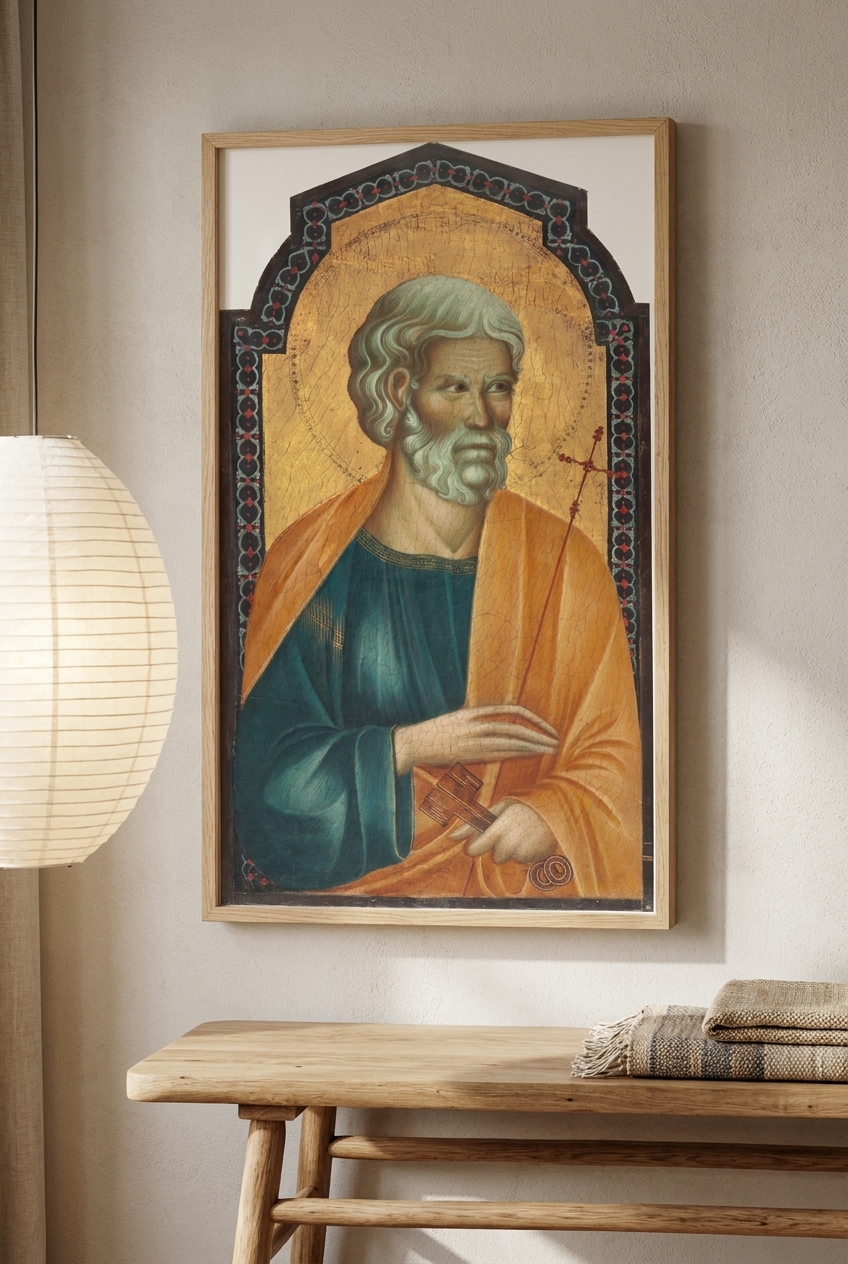
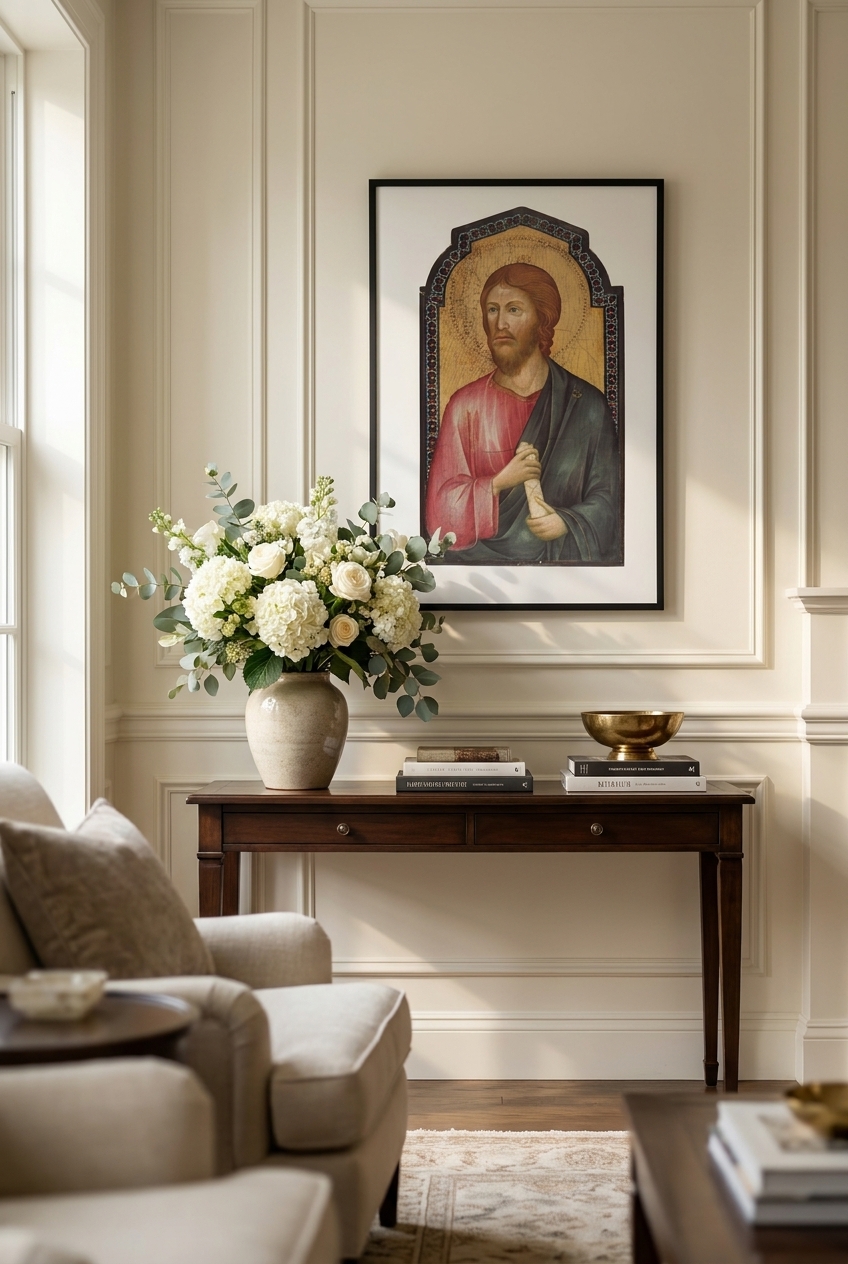
Before this artistic awakening, painters prioritized symbolic meaning over physical accuracy. Figures were flat, weightless, and sized according to their theological importance rather than their distance from the viewer. But as the humanist philosophy took hold, celebrating human potential and the beauty of the natural world, art transformed. We can see the very earliest stirrings of this transition in the work of late medieval masters like Grifo di Tancredi. His hauntingly beautiful painting Saint Peter bridges the gap, retaining the iconic gold background of the medieval era while introducing a subtle, physical weight and a deeply human expression to the apostle's face.
The Masters of Light, Space, and Perspective
The true revolution of the Early Renaissance was the discovery of mathematical perspective. Led by architects and painters like Brunelleschi and Masaccio, artists figured out how to project a three-dimensional world onto a flat surface. Suddenly, paintings had depth. Buildings receded into the distance toward a single vanishing point, and landscapes felt like places you could actually walk through.
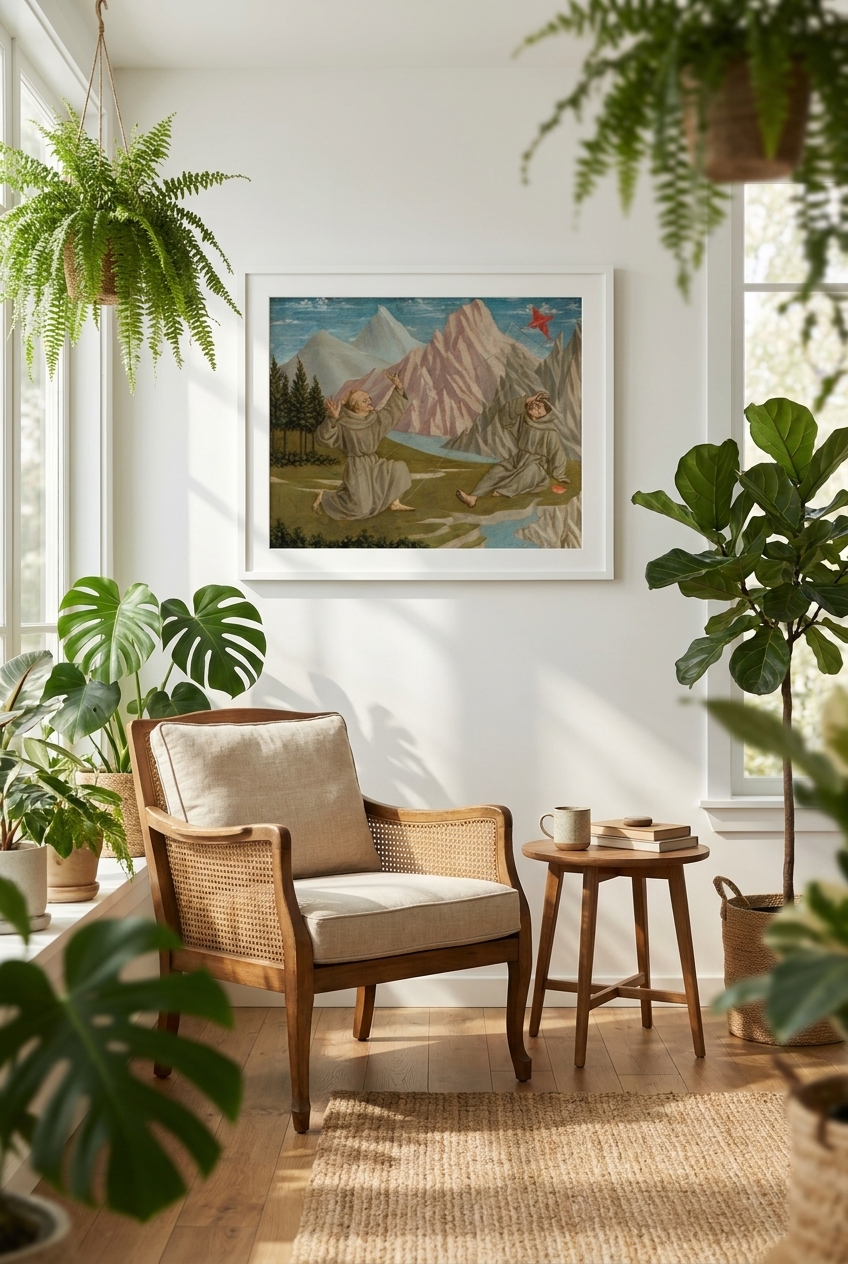
Alongside perspective came a new understanding of natural light. Instead of the uniform, otherworldly glow of medieval gold, artists began to paint light that had a clear source, casting soft shadows and defining the three-dimensional form of bodies and drapery. Domenico Veneziano was a master of this technique, using pale, luminous daylight to create a sense of quiet atmosphere. In his masterpiece Saint Francis Receiving the Stigmata, the dramatic mountain landscape is bathed in a cool, realistic morning light that heightens the spiritual intensity of the scene without relying on supernatural gold backgrounds.
Other masters, such as Antonello da Messina, brought the oil painting techniques of Northern Europe to Italy, allowing for unprecedented detail and richness of color. Meanwhile, followers of Andrea Mantegna explored extreme foreshortening, making figures appear to pop out of the canvas. This cross-pollination of ideas created a vibrant, experimental environment where every artist sought to push the boundaries of what paint could achieve.
Humanism, Portraiture, and the Individual
As the Renaissance progressed, the focus shifted from the purely divine to the deeply human. Wealthy merchants, scholars, and noble families began commissioning art, leading to a massive revival of portraiture. For the first time since antiquity, artists sought to capture not just the physical likeness of an individual, but their inner psychological life and character.
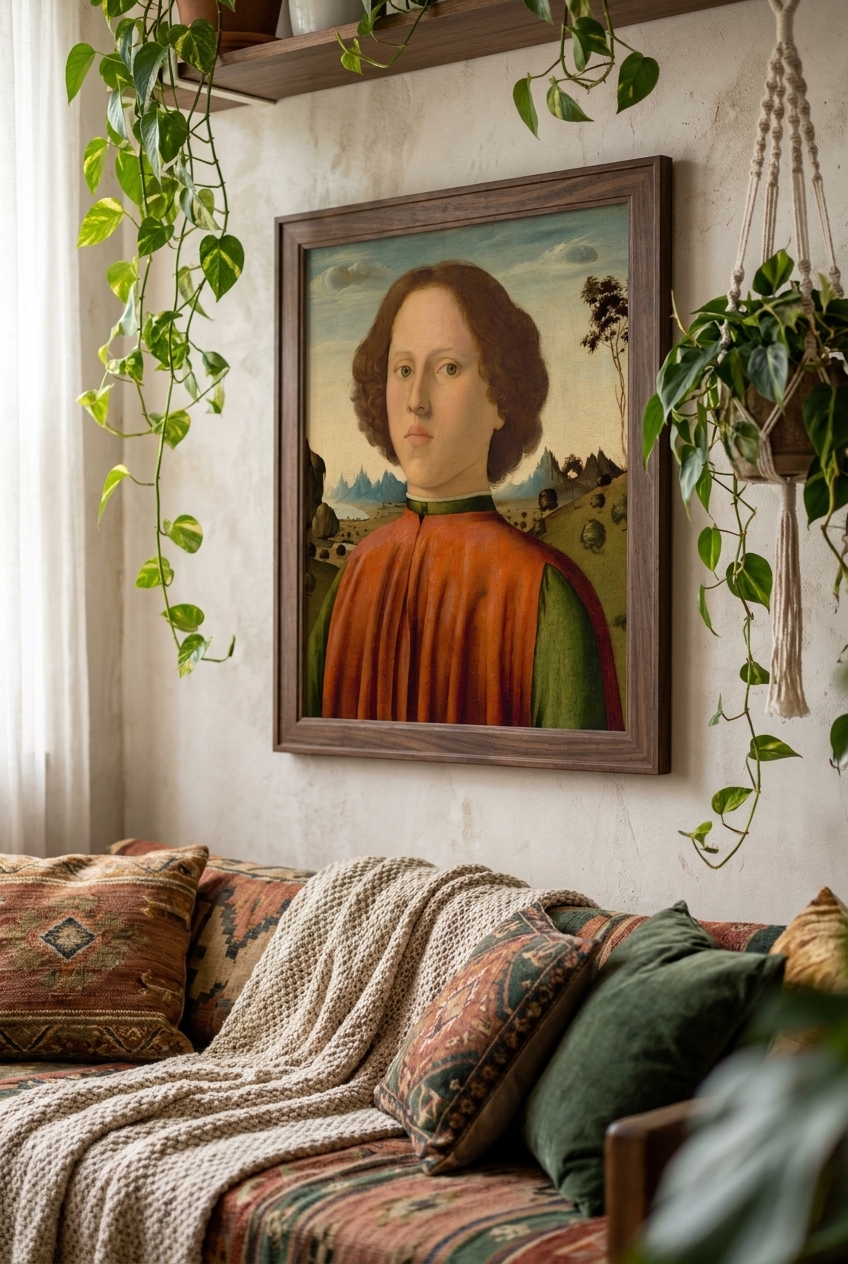
This interest in the individual is beautifully illustrated in the work of Biagio d'Antonio. His exquisite Portrait of a Boy captures the soft vulnerability and quiet dignity of youth with remarkable sensitivity. At the same time, the era saw a fascination with classical antiquity, leading artists to explore pagan mythology and ancient symbols. This classical revival extended to smaller, highly personal objects like commemorative medals. The renowned medalist Matteo de' Pasti captured this spirit perfectly in his work, such as the whimsical and symbolic design of The Malatesta Elephant in a Meadow [reverse], which combines a classical love of heraldry with a charmingly stylized rendering of nature.
Humanism also changed how religious stories were told. Instead of distant, untouchable deities, biblical figures were depicted as real people experiencing real grief, joy, and wonder. When you look at an Early Renaissance painting, you are invited to empathize with the figures on a human level, sharing in their quiet moments of contemplation or their sudden, dramatic revelations.
Living with Early Renaissance Art
There is a unique serenity to Early Renaissance art that makes it exceptionally well-suited for modern living spaces. Because these artists were obsessed with balance, geometry, and soft, natural light, their works bring a sense of calm, structured order to a room. The color palettes of this era—dominated by soft egg-tempera tones, earthy terracottas, pale blues, and warm ochres—harmonize beautifully with contemporary interiors.
When choosing a reproduction for your home, consider how the artwork's sense of space can open up a room. A landscape or an architectural scene with strong perspective lines can make a small study or hallway feel deeper and more expansive. If you prefer a focal piece that invites quiet contemplation, a portrait or a single-figure study offers a timeless, soulful connection that transcends the centuries. Framed in simple, dark wood or displayed as a textured canvas, these works serve as windows into a time when humanity first rediscovered the beauty of its own world.
Frequently asked questions
What defines the Early Italian Renaissance compared to later periods?
The Early Italian Renaissance (roughly 1400–1490) was a period of intense experimentation and discovery, characterized by the invention of linear perspective, the study of human anatomy, and a return to classical ideals. The High Renaissance (c. 1490–1527) built upon these discoveries, achieving a peak of harmony, scale, and effortless mastery exemplified by artists like Leonardo da Vinci and Michelangelo.
Why do some paintings from this era still feature gold backgrounds?
The transition from the medieval Gothic style to the Renaissance was gradual. Early Renaissance artists, especially in the early 1400s, often retained gold leaf backgrounds to signify the sacred, heavenly nature of the subjects, even as they began painting the figures themselves with more realistic weight, depth, and human emotion.
What medium was primarily used during the Early Italian Renaissance?
Most early Renaissance panel paintings were created using egg tempera, where dry pigments were mixed with egg yolk as a binder. This medium dried quickly and produced a matte, luminous finish with delicate, precise brushstrokes. Later in the fifteenth century, artists gradually adopted oil paints, which allowed for richer colors and smoother blending.
How should I frame and display an Early Renaissance art print?
These works look spectacular in classic, dark wood frames (like walnut or mahogany) which echo the traditional wooden altarpieces of the era. For a more contemporary look, a canvas print with a floating frame allows the soft colors and architectural lines of the artwork to stand out without distraction.
![The Malatesta Elephant in a Meadow [reverse]](https://pub-13a1a0fce6b84e01bbb44f17cde61fc9.r2.dev/social/lifestyle/a7fbf43d8cbd8009/1.jpg)
![The Malatesta Elephant in a Meadow [reverse]](https://pub-13a1a0fce6b84e01bbb44f17cde61fc9.r2.dev/social/lifestyle/65a131e2ec08598e/1.jpg)