Beyond Perfection: The Drama and Distortions of Mannerist Art
In short: Mannerism took the perfect balance of the High Renaissance and twisted it into something theatrical, emotional, and beautifully strange. Defined by elongated figures, impossible poses, and striking color palettes, this 16th-century style remains one of art history's most fascinatingly modern eras.
The Rebels of the Renaissance
For a brief moment in the early 1500s, it seemed Western art had reached its peak. Masters like Leonardo da Vinci, Michelangelo, and Raphael had mastered perspective, human anatomy, and natural light. They had achieved a kind of perfect, harmonious balance. But for the generation of artists who followed, this perfection posed a daunting question: where do you go when there is nowhere left to climb?
The answer was Mannerism. Emerging around 1520 in Florence and Rome, this fascinating movement decided that if nature could not be rendered any more realistically, it should instead be rendered more beautifully, more dramatically, and far more expressively. Rather than looking to the real world for inspiration, these artists looked to art itself, prioritizing style, elegance, and emotional tension over strict realism.
This shift was not just artistic; it was cultural. Europe was undergoing massive upheaval, including the Protestant Reformation and the Sack of Rome in 1527. The calm, stable world of the High Renaissance was fracturing, and the tense, restless, and deeply spiritual style of Mannerism was the perfect visual language for an anxious age.
Visual Hallmarks: Grace, Tension, and the S-Curve
If you have ever looked at a painting and felt a strange, thrilling sense of unease, you may well have been looking at a Mannerist masterpiece. While Renaissance art is calm and centered, Mannerist art is restless and theatrical. It is defined by several distinct visual hallmarks that make it instantly recognizable.
First, there is the elongation of the human form. Necks are gracefully stretched, fingers are impossibly long and tapering, and limbs extend in ways that defy anatomical reality. This was not due to a lack of skill; it was a deliberate choice to emphasize elegance and aristocratic grace. Artists wanted to create figures that looked otherworldly and refined.
Second is the famous figura serpentinata, or serpentine pose. Figures twist and turn in spiral-like shapes, creating a sense of dynamic, winding movement. Finally, the compositions themselves became crowded and complex. Instead of a single, clear focal point, Mannerist artists often filled their canvases with overlapping figures, forcing the viewer's eye to wander dynamically across the scene. The colors, too, departed from nature, favoring acidic greens, striking oranges, icy blues, and vivid pinks lit by a mysterious, theatrical light.
The Masters of Elegance and Drama
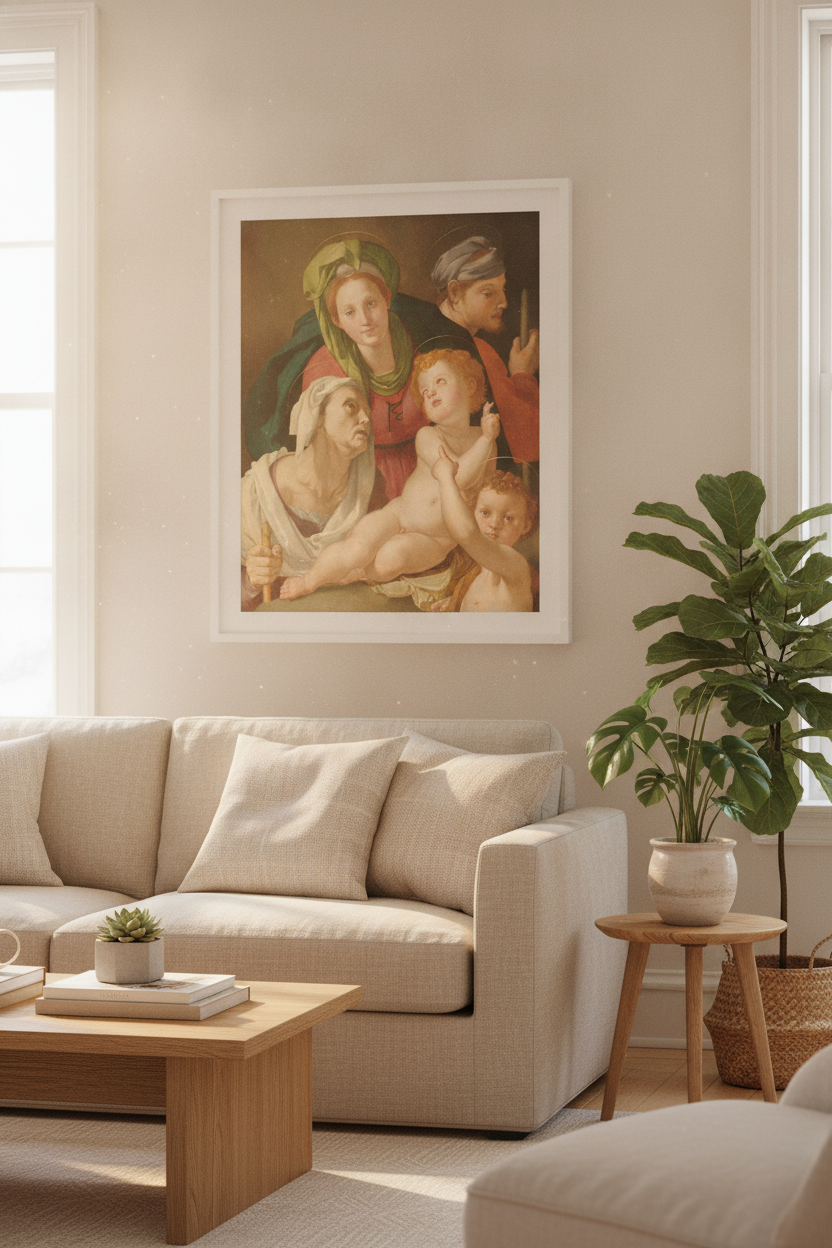
Mannerism flourished in different ways across Europe, guided by artists who pushed the boundaries of what paint and ink could do. In Florence, Agnolo Bronzino became the ultimate portraitist of the Medici court, famous for his cool, polished, and highly stylized figures. His masterpiece, "The Holy Family" (c. 1527/1528), perfectly illustrates this approach. The figures possess a smooth, almost porcelain-like quality, arranged in a tight, complex composition that feels both intimate and grandly theatrical. The cool, sculptural drapery and serene yet distant expressions are classic Bronzino.
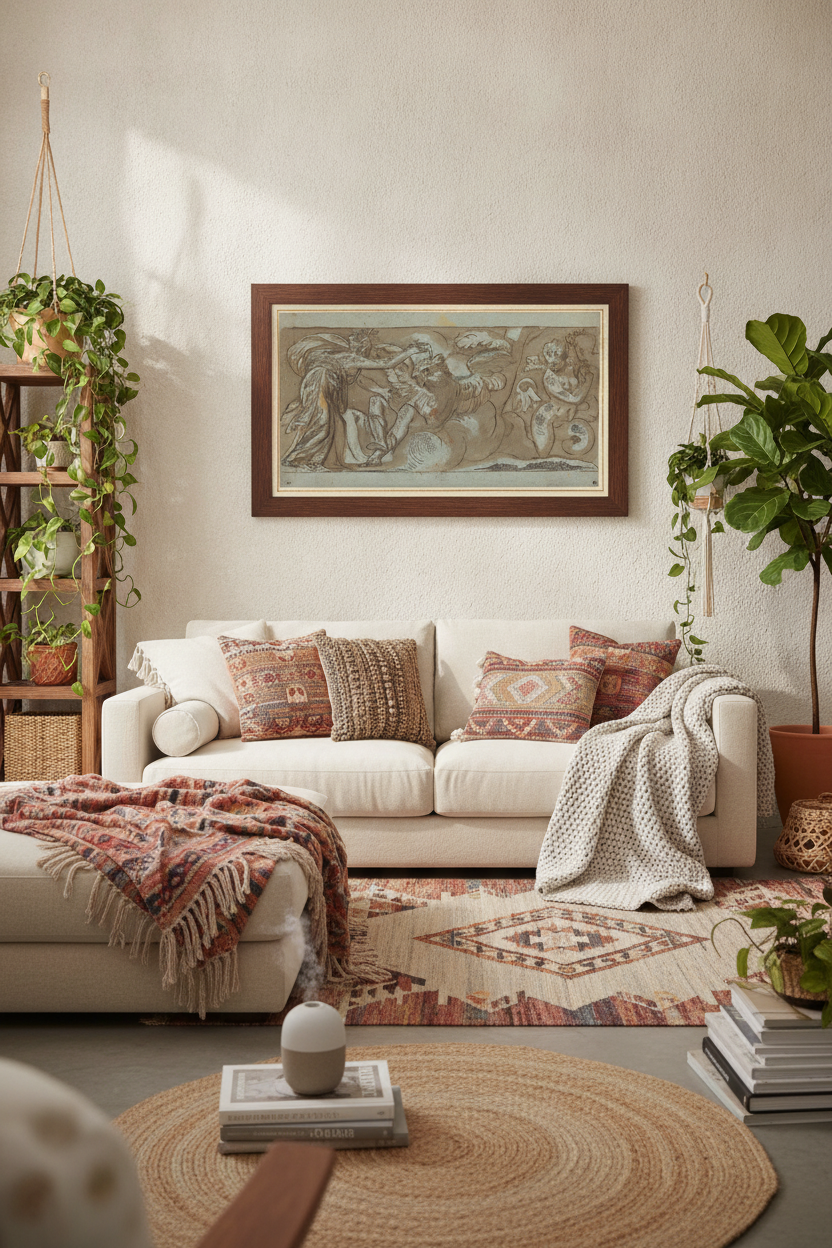
Further north in Verona, artists like Paolo Farinati brought a dynamic, graphic energy to classical and mythological themes. In his striking composition, "Ceres Changing Ascalaphus into a Bird of Evil Omen" (1524), we see the Mannerist love for dramatic narrative and expressive, twisting bodies. The scene is alive with tension, captured through fluid lines and a powerful sense of movement that draws the viewer directly into the myth, highlighting the dramatic transformation with masterly linework.
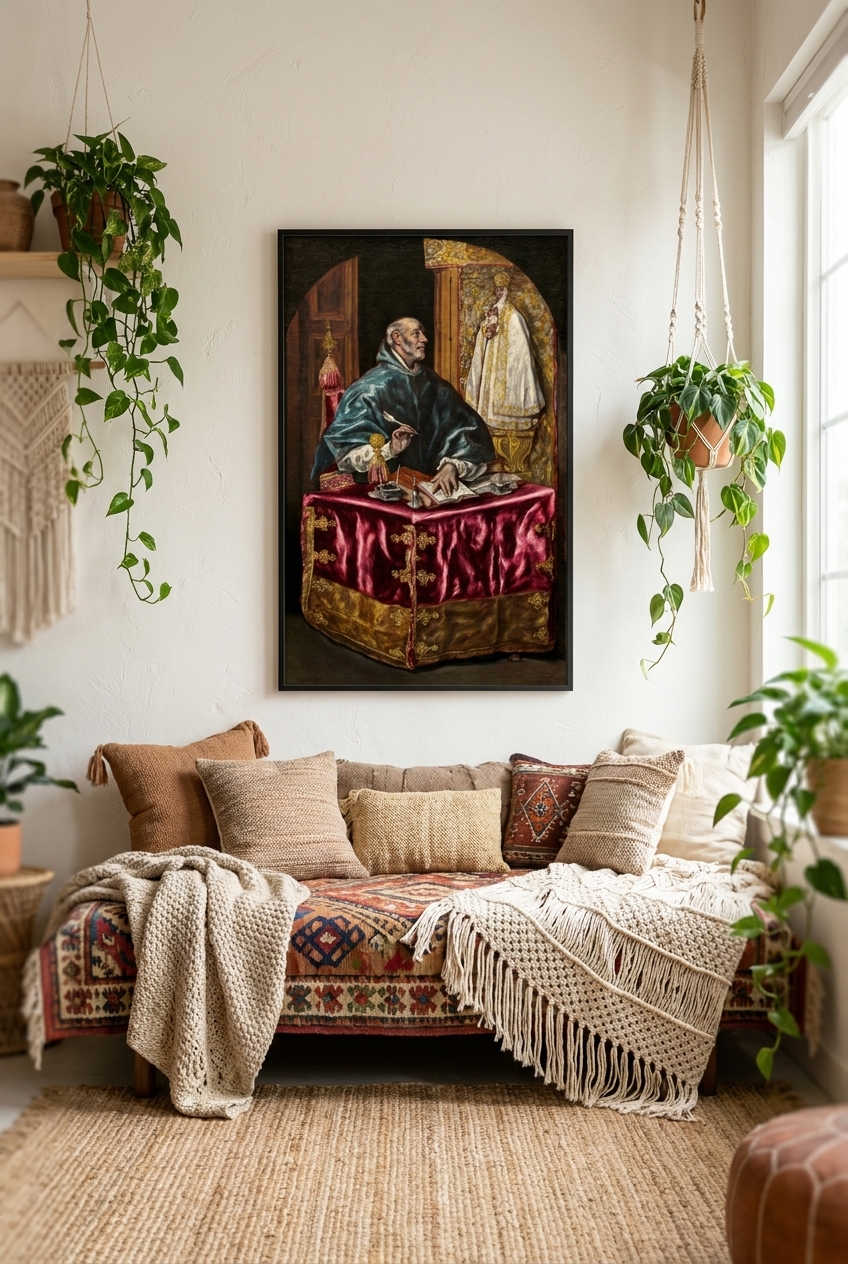
Perhaps the most famous and radical of all Mannerists was Domenikos Theotokopoulos, universally known as El Greco. Working in Spain, El Greco took the spiritual intensity of Mannerism to its absolute limit. In works like "Saint Ildefonso" (c. 1603/1614), he used highly elongated figures, flickering brushwork, and a mystical, otherworldly light to convey deep, interior devotion. The saint is shown at his desk, illuminated by a divine glow that seems to vibrate with spiritual energy. El Greco's art feels incredibly modern, prefiguring Expressionism by nearly three centuries.
Bringing Mannerism into the Modern Home
Because Mannerist art is so visually striking and intellectually rich, it makes an extraordinary addition to contemporary interiors. These are not quiet, background paintings; they are conversation starters that command attention and reward close, thoughtful viewing.
If your home features clean lines and minimalist decor, a Mannerist print can provide a stunning, dramatic counterpoint. The cool, sculptural elegance of Bronzino fits beautifully in sophisticated, modern spaces, while the swirling energy and rich, dark tones of El Greco add a layer of soulful warmth and history to a study, library, or living room. When framing these pieces, consider simple, dark wood or elegant gold frames that honor their historical roots while keeping the focus entirely on the brilliant, expressive compositions within.
Frequently asked questions
What does the word 'Mannerism' actually mean?
The term comes from the Italian word 'maniera,' which translates to 'style' or 'manner.' It originally referred to an artist's effortless grace, elegance, and highly stylized approach to painting, rather than a direct copying of nature.
How is Mannerism different from the High Renaissance?
While High Renaissance art focused on harmony, balance, realistic proportions, and natural perspective, Mannerism rejected these rules. Mannerist artists embraced artificiality, elongated proportions, complex and twisting poses, and highly emotional or theatrical lighting.
Why did Mannerist artists distort the human body?
The distortions were a deliberate artistic choice to convey elegance, grace, and emotional intensity. By elongating limbs and twisting bodies, artists could express complex feelings and create a sense of courtly sophistication that realistic anatomy couldn't achieve.
Is El Greco considered a Mannerist?
Yes, El Greco is widely regarded as one of the greatest and most unique figures of the late Mannerist period. His highly elongated figures, dramatic use of light, and intense spiritual expression are classic hallmarks of the movement, taken to a deeply personal and visionary level.