
Edvard Munch: Painting the Echoes of the Mind
In short: Edvard Munch bypassed traditional realism to paint raw human emotion. His swirling lines, moody colors, and haunting atmospheres laid the foundation for Expressionism, making his work deeply resonant for modern interiors.
The Painter of the Soul
Edvard Munch did not paint what he saw; he painted what he felt. Emerging from the late 19th-century Symbolist movement, the Norwegian master bypassed the polite, realistic conventions of his era to give visual form to the internal human landscape. His work became a bridge to German Expressionism, forever changing how we define modern art.
Munch’s life was marked by loss, illness, and a profound sensitivity to the world around him. Instead of letting these struggles break him, he channeled them into a revolutionary artistic language. He transformed personal anguish—grief, anxiety, jealousy, and love—into universal motifs that still vibrate with intensity today.
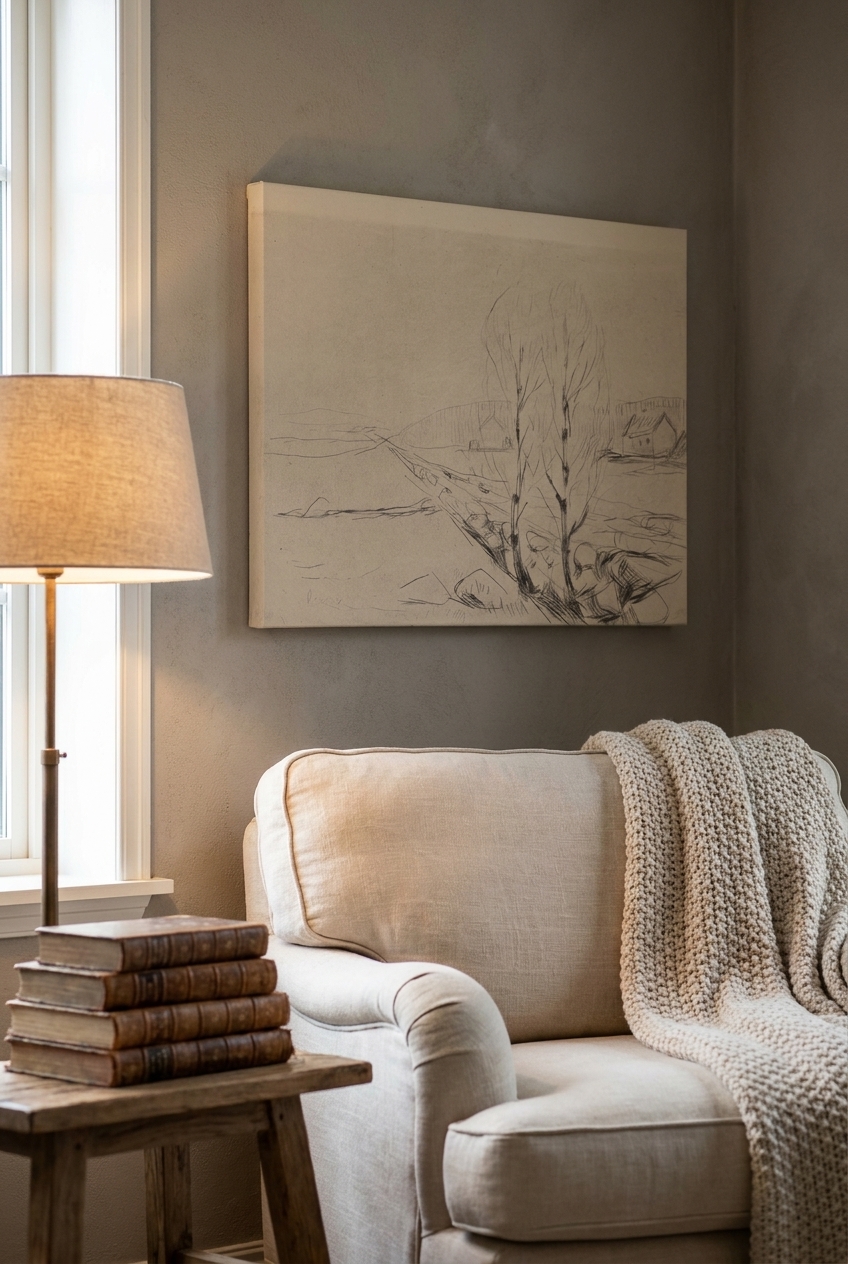
Swirling Lines and Discordant Colors
When you look at a Munch painting, you immediately feel a sense of movement and atmosphere. His stylistic signature is defined by undulating, sinuous lines that seem to vibrate across the canvas. He favored a moody, often discordant color palette, pairing deep blues and bruised purples with startling oranges and sickly yellows.
Rather than focusing on precise details, Munch used sweeping brushstrokes and simplified, evocative forms. This abstraction allowed him to capture the fleeting intensity of a mood rather than just the physical reality of a scene. The background and the figures often bleed into one another, suggesting that the environment itself is reacting to the character's internal emotional state.
Beyond the Scream
While most people associate Munch with a single iconic image of existential dread, his broader body of work is incredibly diverse and deeply rewarding to explore. He was a master of capturing the quiet, melancholic beauty of the Scandinavian wilderness, where the natural world echoes human emotion.
A stunning example of this is his Norwegian Landscape (Norwegische Landschaft), painted around 1908. Here, his characteristic swirling brushwork and bold color choices turn a simple hillside and sky into a living, breathing entity. To discover more of his psychological portraits and evocative scenes, you can browse our Edvard Munch collection.
Bringing Munch into the Modern Home
Why do Munch’s works translate so beautifully into modern living spaces? In a world of clean lines and minimalist design, a Munch fine-art print or canvas reproduction acts as a powerful anchor. His deep, saturated tones and rich textures bring warmth and undeniable character to a room.
Munch's art is inherently conversational. His pieces do not fade quietly into the background; they invite viewers to pause, feel, and contemplate. Whether it is a moody coastal landscape or an intimate portrait, a high-quality archival print captures the raw texture of his original brushstrokes, offering a window into the soul of one of history's most fearless artists.
Frequently asked questions
Was Edvard Munch part of the Impressionist movement?
No, Munch began in the Symbolist movement and went on to become a pioneer of Expressionism. While Impressionists focused on capturing the external play of light, Munch focused on capturing internal emotional states.
What mediums did Munch work in?
Munch was incredibly versatile. He is famous for his oil paintings, but he was also a master printmaker, creating woodcuts, lithographs, and etchings that allowed him to experiment with color and form.
Why are his landscapes considered expressionistic?
Munch's landscapes, like his figures, are filled with emotional weight. He used unnatural, moody colors and undulating lines to project human feelings—such as loneliness, peace, or anxiety—onto the natural world.