Giovanni Bastianini: The Nineteenth-Century Master of the Renaissance Soul
In short: Giovanni Bastianini was a 19th-century Italian sculptor who captured the soul of the Renaissance. His incredibly detailed terracotta and marble portraits bring classical warmth and timeless grace to modern walls.
The Sculptor Who Out-Dreamed the Renaissance
In the mid-nineteenth century, Florence was a city deeply alive with the ghosts of its golden age. Walking down its cobbled streets, one could feel the lingering presence of Donatello, Michelangelo, and Verrocchio. Among the dusty workshops of this historic city, a young, self-taught sculptor named Giovanni Bastianini was doing something truly extraordinary. He was not merely copying the past to satisfy tourists; he was living and breathing it. While his contemporaries rushed to embrace modern industrialism and new artistic movements, Bastianini looked backward. He channeled the classical ideals of form, proportion, and spiritual depth that defined the Italian Quattrocento. Working with humble clay and fine marble, he created works that rivaled the Renaissance masters in both execution and soul. To explore his remarkable body of work, you can browse the Full Giovanni Bastianini collection.
A Delicate Play of Light and Soul
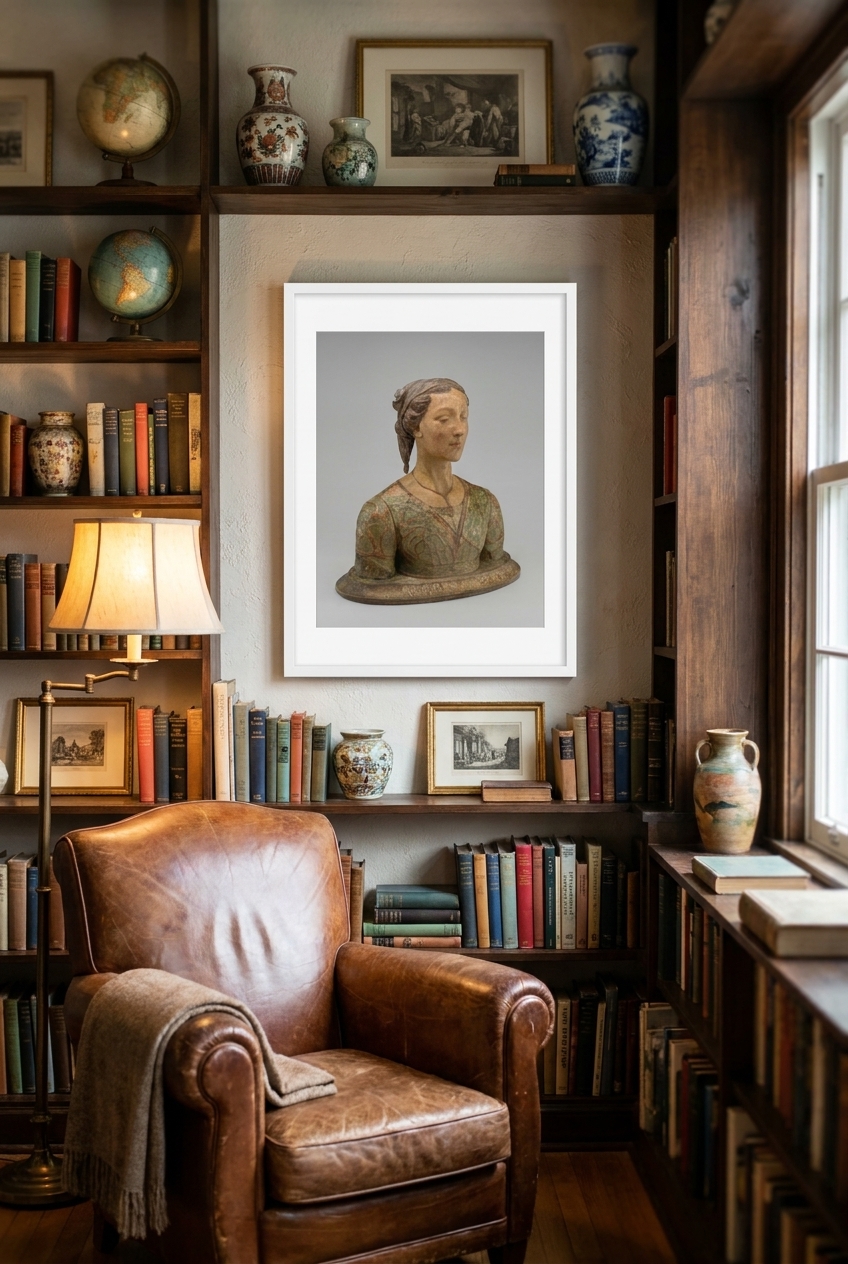
His stylistic signature lies in the exquisite sensitivity of his modeling and the profound psychological realism of his subjects. Bastianini possessed a rare sensitivity to his materials, coaxing life from clay and stone with delicate transitions of light and shadow that evoke the humanist grace of the early masters. He did not sculpt cold, idealized, or detached figures. Instead, he captured the quiet, intimate dignity of real human beings. A prime example of this humanist grace is his celebrated Portrait of a Lady, "Giovanna Albizzi". This piece captures the soft contours, intricate hair, and serene, thoughtful gaze of Renaissance nobility with an astonishing level of precision and tenderness.
The Louvre's Great Renaissance Mistake
Bastianini’s mastery of the Renaissance style was so absolute that it famously led to one of the nineteenth century's most sensational art controversies. In 1864, he created a terracotta bust of the Renaissance poet Girolamo Benivieni. The work was so flawless, so deeply imbued with the genuine spirit of the old masters, that leading art experts declared it an authentic fifteenth-century masterpiece. The Louvre Museum in Paris purchased the bust for an astronomical sum, displaying it proudly alongside the greatest treasures of art history. When the truth finally emerged that a living, working-class Florentine sculptor had created it, the international art world was thrown into chaos. This controversy only proved what his admirers already knew: Bastianini was not a simple copyist, but a true peer to the historic masters.
Why Sculptural Prints Belong in Modern Spaces
There is a unique magic in translating three-dimensional sculpture into two-dimensional fine-art prints and canvases. When captured on high-quality archival paper, the dramatic side-lighting of Bastianini’s terracotta busts creates a striking sense of depth and texture. The warm, earthy tones of fired clay and the cool, soft grays of marble bring an organic, grounding element to modern interiors. Whether placed in a minimalist living room, a quiet study, or a grand hallway, these prints act as windows into another era. They offer more than just decoration; they bring a sense of quiet intellect, historical romance, and timeless Florentine craftsmanship into your home, bridging the centuries beautifully.
Frequently asked questions
Was Giovanni Bastianini an art forger?
No, Bastianini was not a forger by intent. He was an honest sculptor who worked in the style of the Renaissance simply because he loved its aesthetic and techniques. It was art dealers and eager historians who misattributed his incredibly accurate, soulful works to the 15th-century masters.
What materials did Bastianini primarily work with?
He worked extensively with terracotta (fired clay) and marble. Terracotta allowed him to achieve incredibly fine, soft details in his portraits, while marble gave his classical reliefs a smooth, monumental quality.
How do sculptural prints look on a wall compared to traditional paintings?
Sculptural prints have a unique, tactile quality. Because they capture the play of light and shadow across a three-dimensional surface, they often look more dramatic and architectural than flat paintings, adding rich texture and depth to a room.