Hanging Fine Art in Small Spaces: A Gallery Guide to Apartment Living
In short: Small spaces do not require small art. By focusing on singular statement pieces, thoughtful framing, and unexpected placements, you can create a sophisticated gallery feel in any apartment.
The Power of Scale
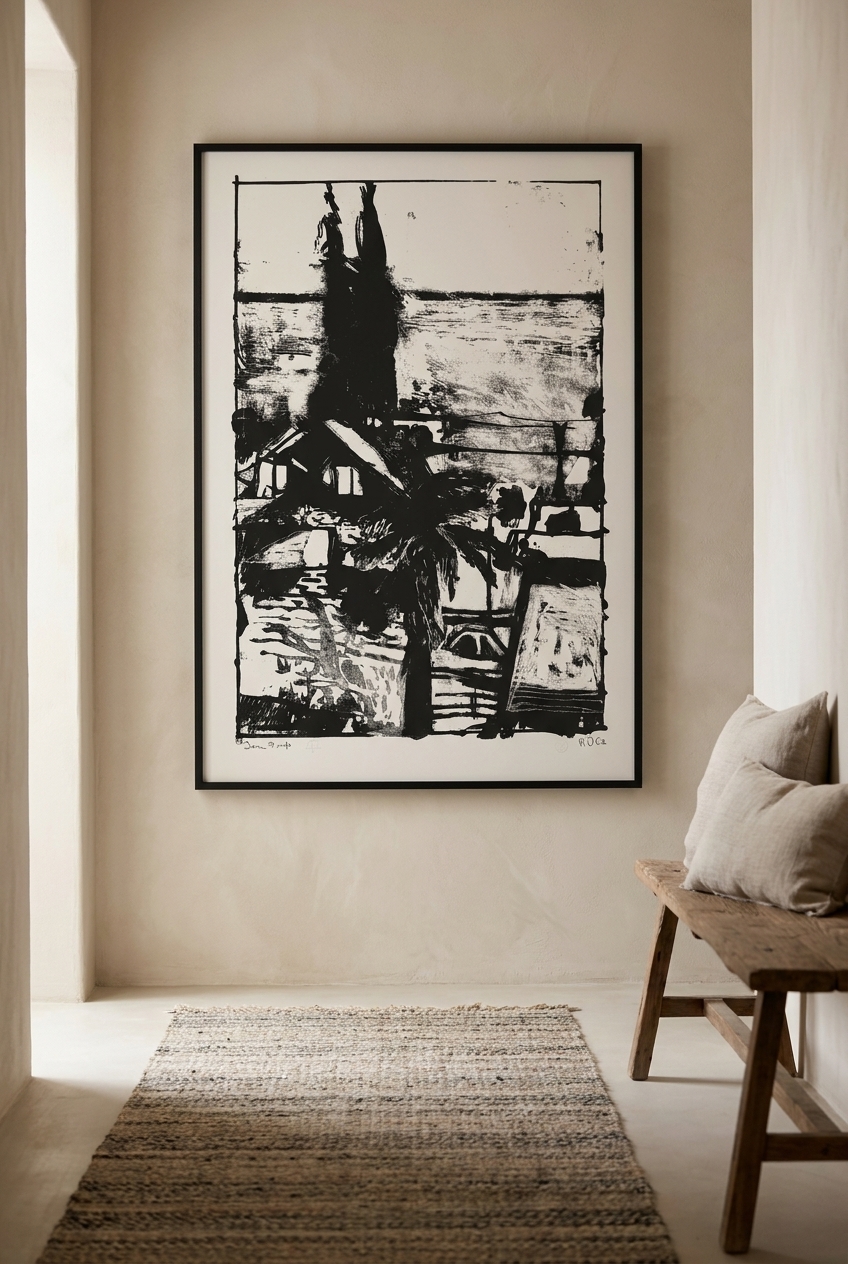
It is a common misconception that small rooms demand small art. In fact, scattering a dozen miniature frames across a limited wall often creates visual noise, making a room feel cluttered rather than curated. Instead, the most sophisticated apartments lean into the power of scale. A single, commanding statement piece can anchor an entire room, drawing the eye upward and defining the space.
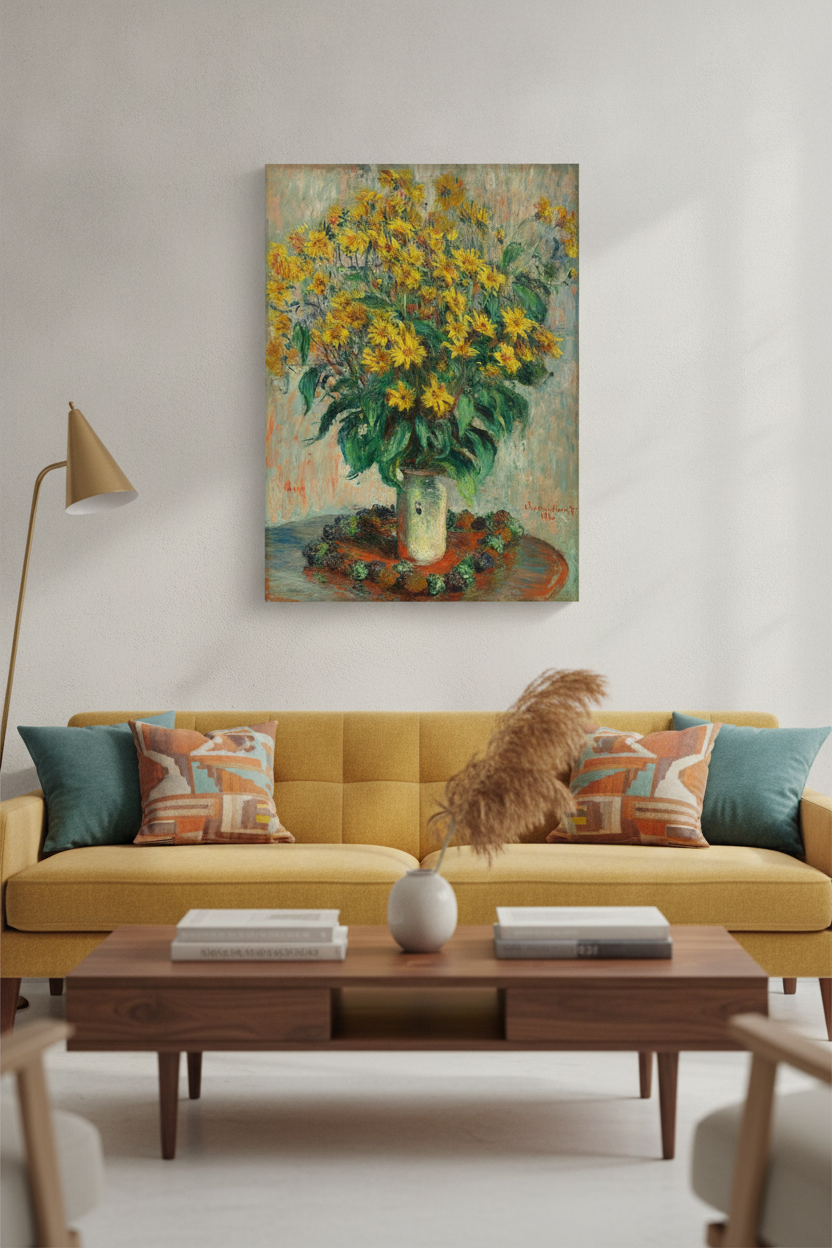
Consider an expressive, color-rich piece like Claude Monet's Jerusalem Artichoke Flowers. Hanging a generous print of this masterpiece above a low-profile sofa or a dining table creates a focal point that expands the room's boundaries. The vibrant brushstrokes and natural forms bring organic energy indoors, distracting from the physical limitations of the walls.
Framing for Depth and Light
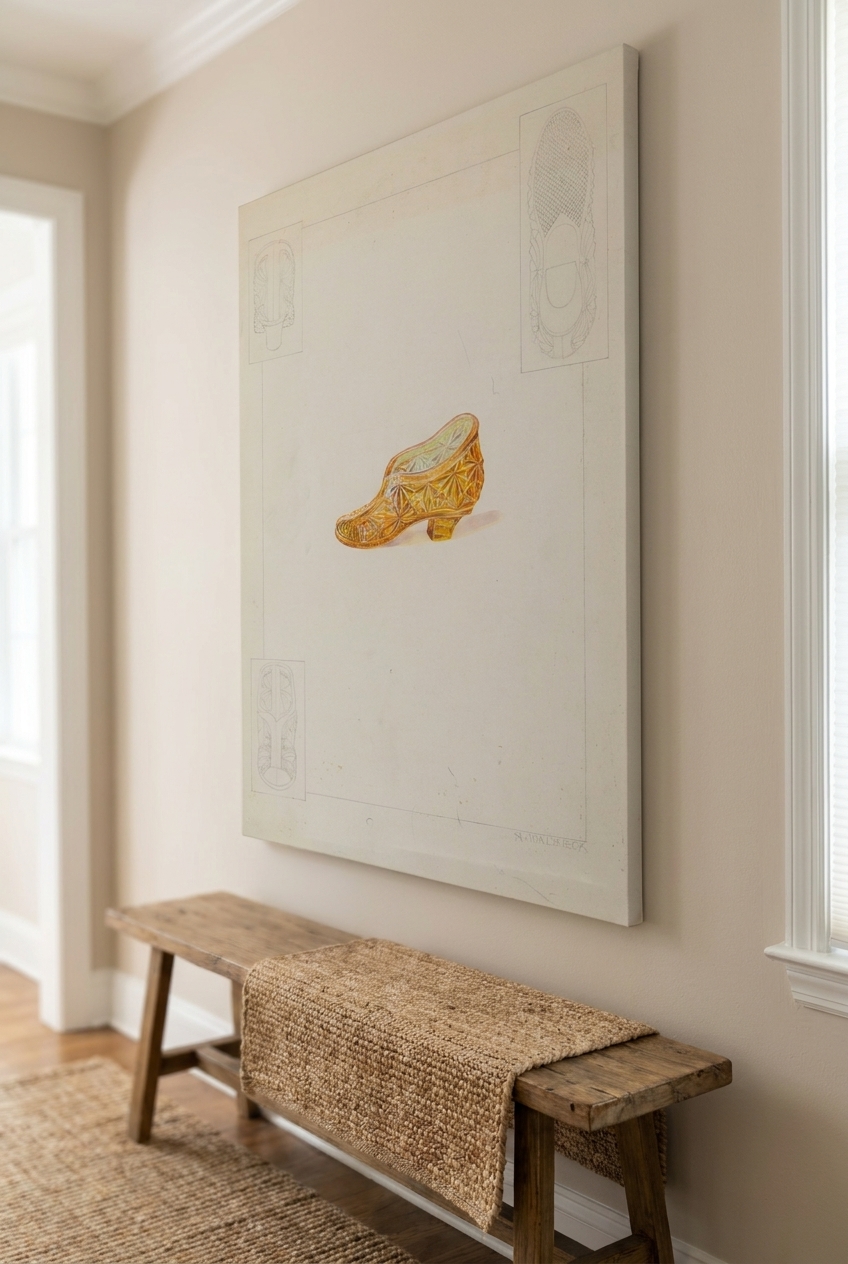
Framing is more than a protective boundary; it is an architectural tool. In smaller spaces, the depth and finish of your frames play a crucial role in how light moves through the room. Heavy, ornate frames can sometimes feel oppressive in tight quarters, whereas slim, clean-lined profiles in natural wood or matte black offer a modern, airy feel.
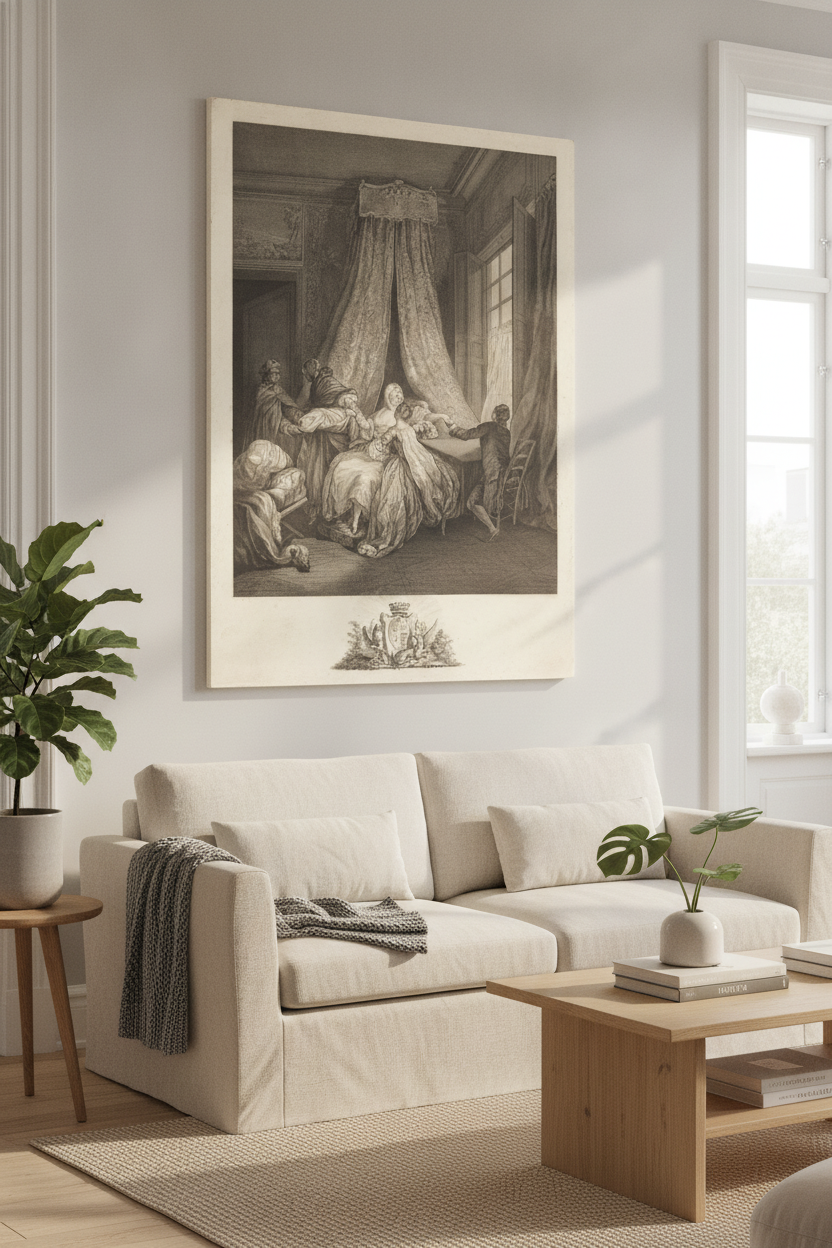
For classical works, a delicate, light-toned frame can beautifully balance historical weight. For instance, the clean lines of Alfred Walbeck's Flower Holder pair wonderfully with a simple oak frame. The contrast between the classical subject and a minimalist frame creates a bridge between historical art and contemporary living, a perfect formula for modern apartments.
Unexpected Placements and Leaning Art
Rentals often come with strict rules about drilling into plaster or drywall. Fortunately, some of the most elegant styling techniques require no nails at all. Leaning framed artwork against a wall on top of a credenza, a fireplace mantel, or even a sturdy bookshelf adds an effortless, studio-like charm to your decor.
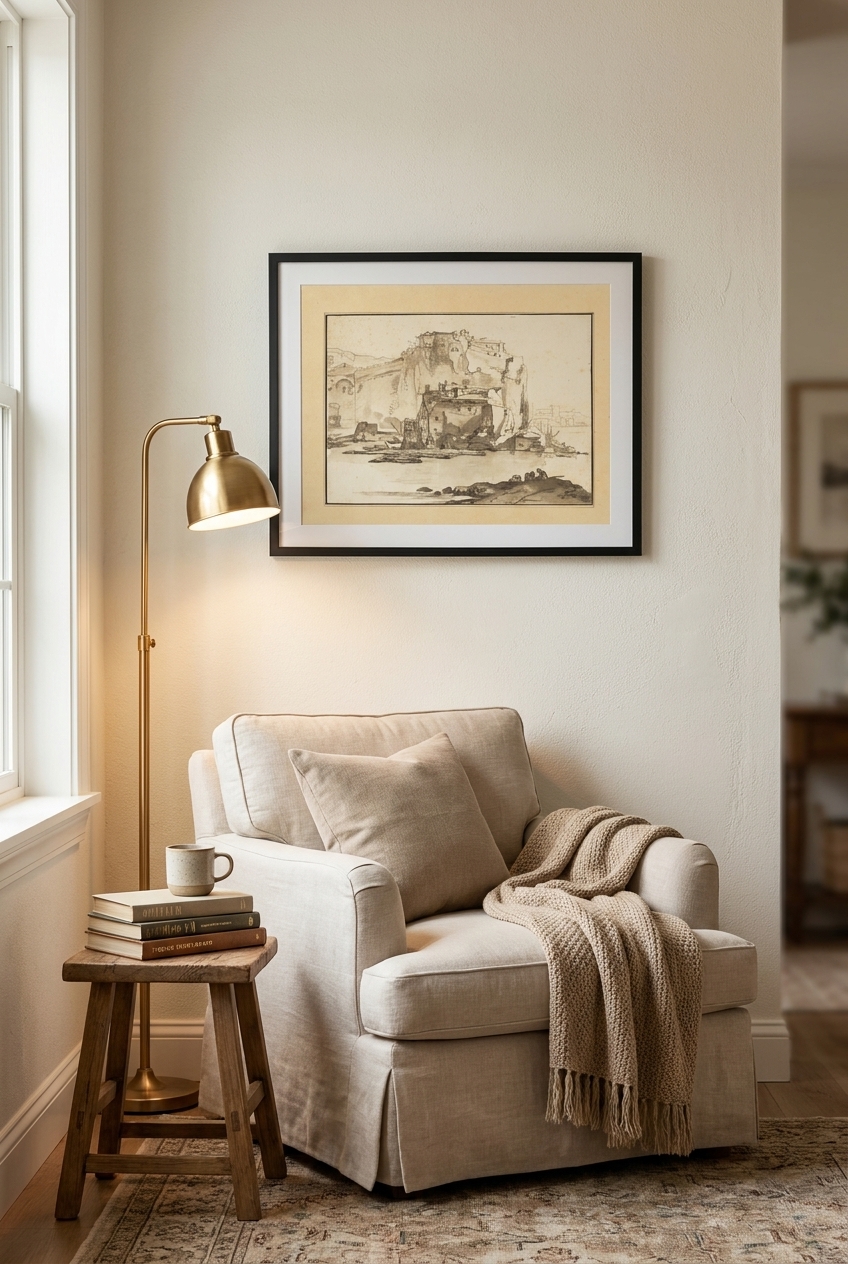
This casual yet intentional placement works beautifully with atmospheric works. A piece like the Mediterranean Seascape by Maria Catharina Prestel, rested on a dark wood console table alongside a ceramic vase and a stack of art books, invites quiet contemplation. It suggests a lived-in sophistication, turning an awkward rental corner into a curated vignette.
Color Palettes that Expand the Room
Color psychology is a powerful ally when space is at a premium. Cool tones—blues, soft greens, and pale grays—naturally recede from the viewer, creating an illusion of distance and openness. If your apartment feels slightly claustrophobic, introducing art that features expansive horizons and cool palettes can visually push the walls back.
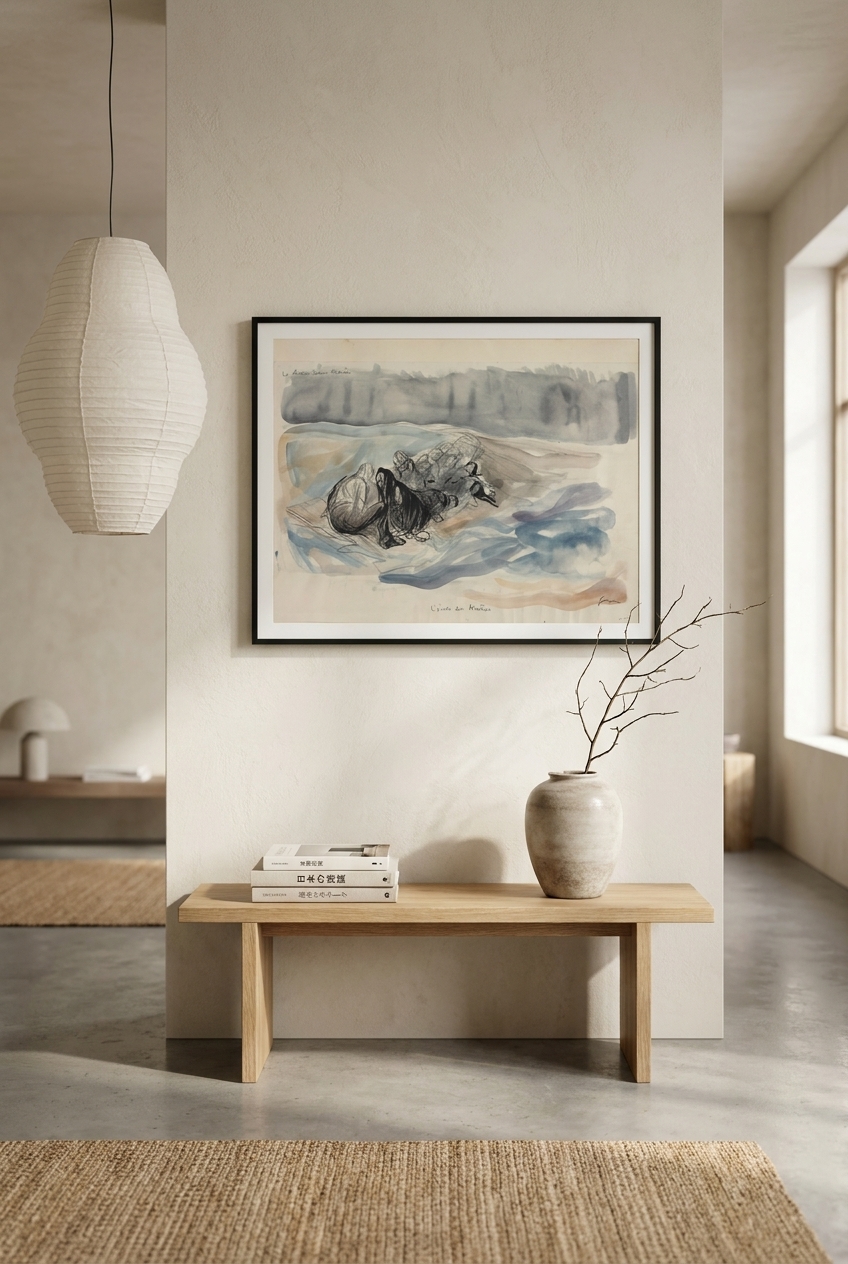
A stunning example of this is Richard Diebenkorn's Seascape. Its broad washes of blue and sand evoke the infinite horizon of the California coast. By placing a piece like this opposite a window, you not only bounce natural light around the room but also introduce a sense of endless outdoor space into your home.
Frequently asked questions
Can I hang art in a windowless bathroom or small hallway?
Yes. Small, transitional spaces like hallways and powder rooms are perfect for creating intimate gallery moments. Use high-quality acrylic glazing instead of glass to reduce glare and protect the print from moisture.
How high should I hang my art if I have low ceilings?
The standard gallery rule is to hang art at eye level (about 57 to 60 inches from the floor to the center of the piece). However, in rooms with low ceilings, hanging art slightly lower—closer to furniture—can create a cozier, more grounded atmosphere and make the ceiling feel higher.
How do I choose the right mat board size for a small room?
A wider mat board (2.5 to 4 inches) can actually make a small print feel much more significant and luxurious. It gives the artwork 'breathing room' and prevents it from looking lost on the wall.