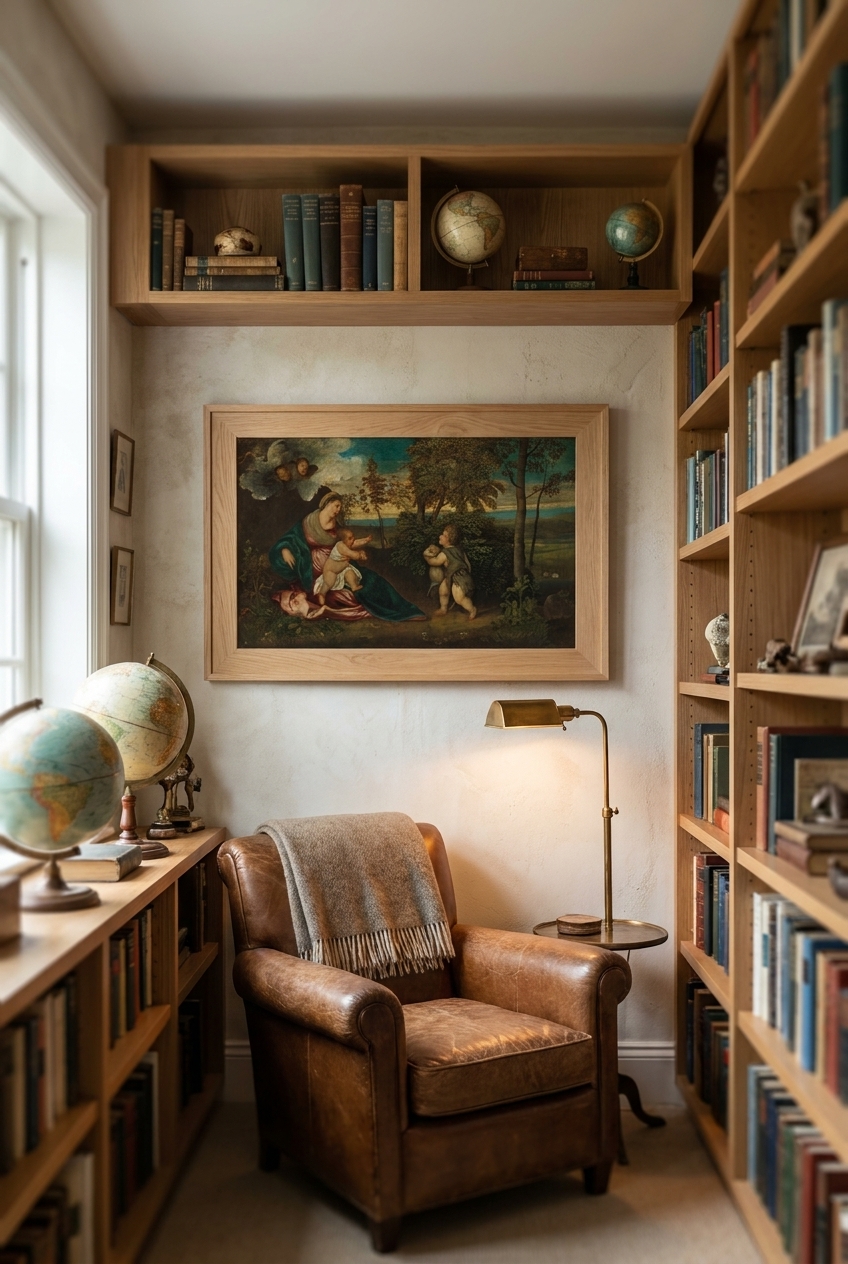
Hanging with Intent: A Gallery Guide to Scale, Height, and Placement
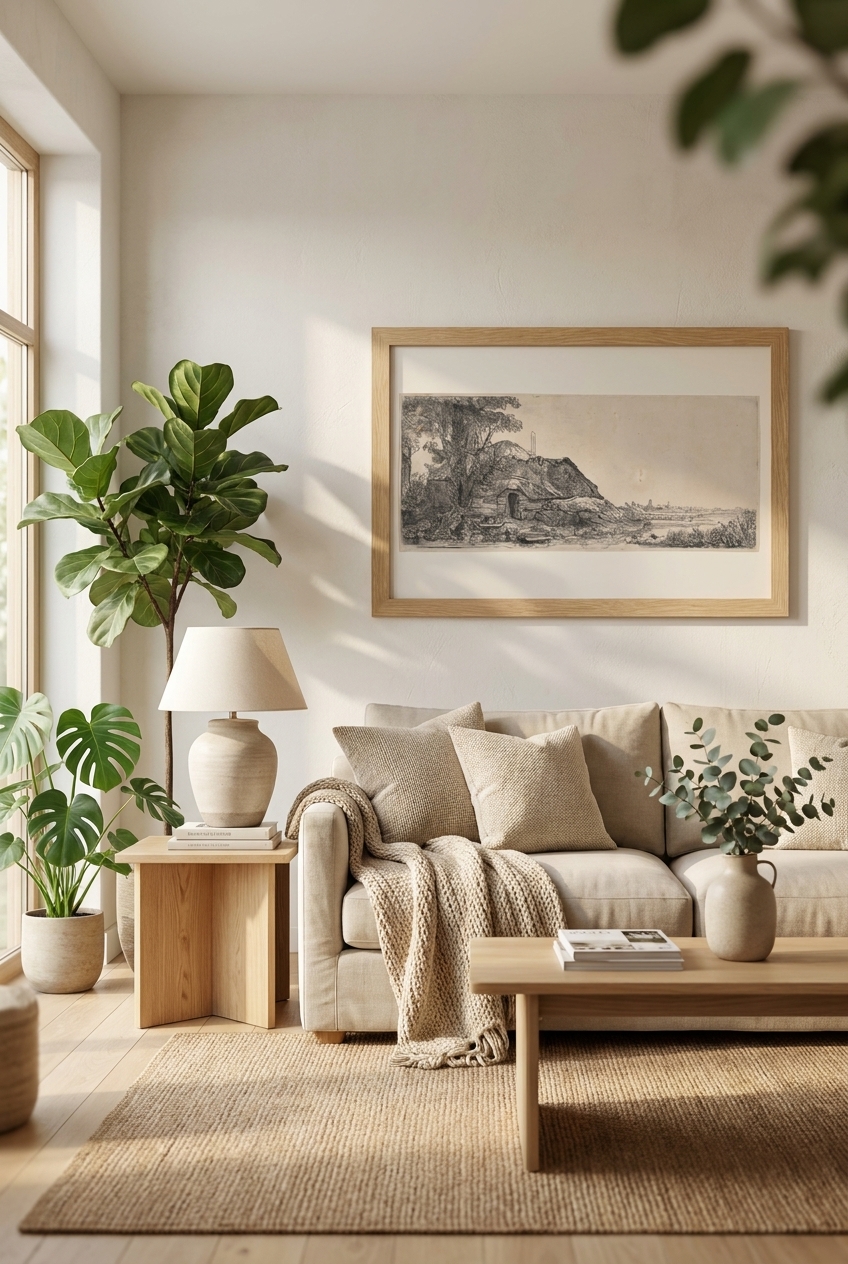
In short: To achieve effortless visual harmony, hang your artwork so the bottom of the frame sits 6 to 8 inches above your furniture, aiming for the piece to span roughly two-thirds of the furniture's width.
The Golden Proportions of Scale
When entering a beautifully designed room, the eye naturally seeks balance. One of the most common missteps in interior styling is choosing artwork that is too small for the wall it occupies, making even the most exquisite print look like an afterthought. To avoid this, we look to classical proportions.
As a rule of thumb, an artwork or a curated grouping of prints should span roughly two-thirds to three-quarters of the width of the sofa or headboard below it. For instance, if you have a seven-foot sofa, look for an art piece or gallery arrangement that is approximately five feet wide. A grand, sweeping scene like Rembrandt's Landscape with a Cottage and a Large Tree framed generously can effortlessly anchor a living room, providing a sense of depth and architectural weight.
Finding the Perfect Height
The second pillar of successful placement is height. In open galleries, art is typically hung at a standard eye level—roughly 57 to 60 inches from the floor to the center of the image. However, when hanging art above furniture like a sofa or a bed, that rule must yield to the furniture itself.
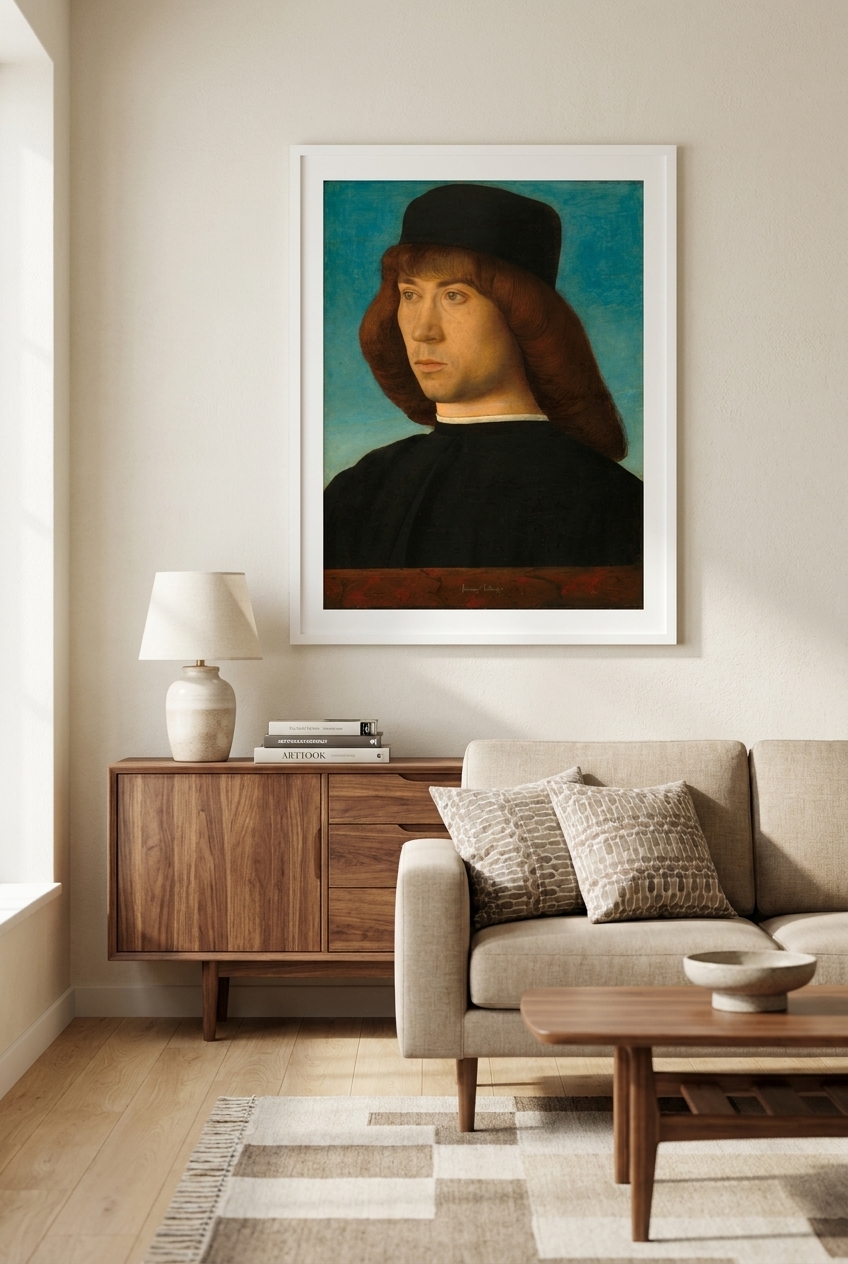
To create a cohesive visual unit rather than two disconnected elements, the bottom of your frame should sit 6 to 8 inches above the top of the sofa back or the headboard. Hanging the piece any higher breaks the invisible connection between the furniture and the art, causing the frame to look as though it is floating aimlessly on the wall. By keeping the gap intimate, the artwork becomes an extension of the seating or sleeping area, wrapping the space in warmth.
Styling the Bedroom vs. the Living Room
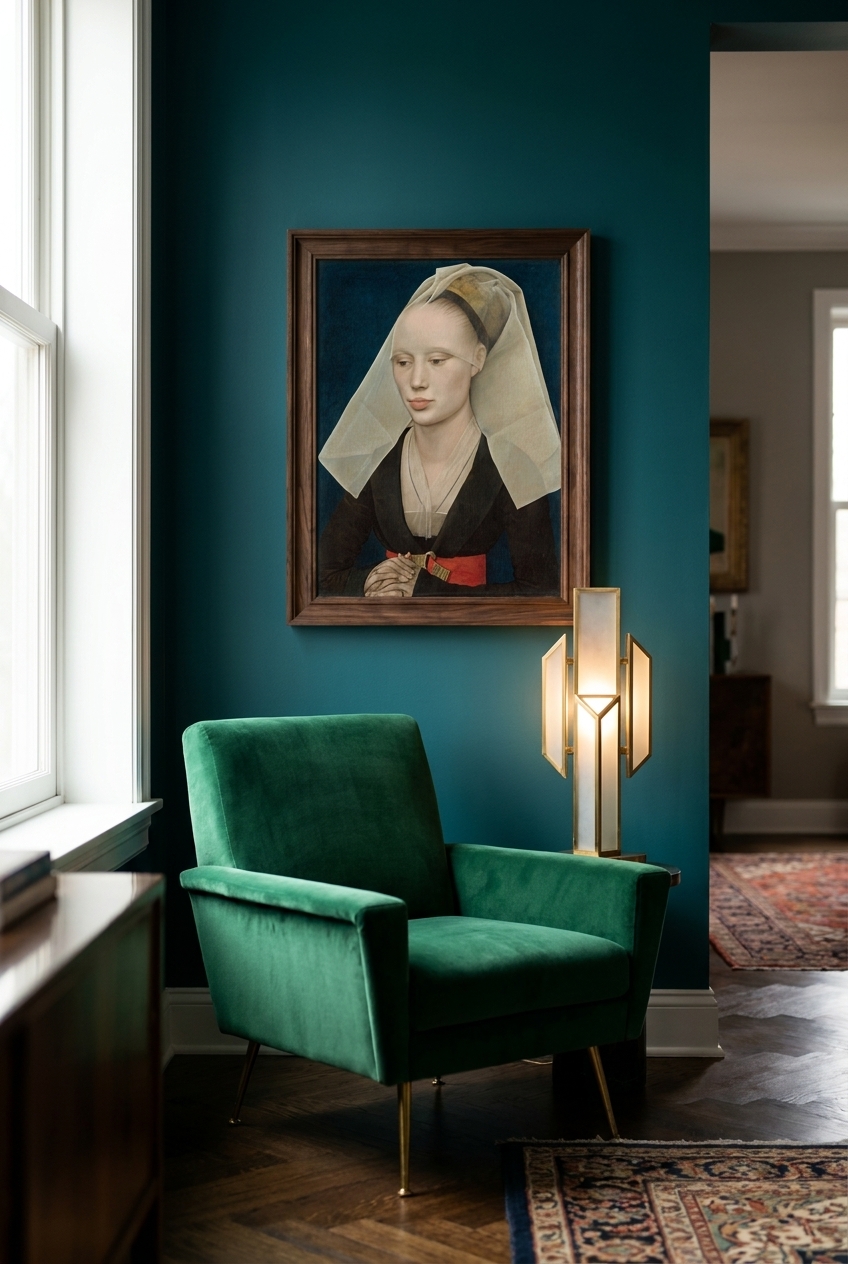
The mood of the room should dictate your choice of subject and color palette. In the bedroom, where we seek stillness and introspection, quieter works with clean lines and soft tones excel. A minimalist headboard pairs beautifully with a structured, elegant portrait such as Rogier van der Weyden's Portrait of a Lady, which brings a sense of quiet dignity and historical romance to a personal sanctuary.
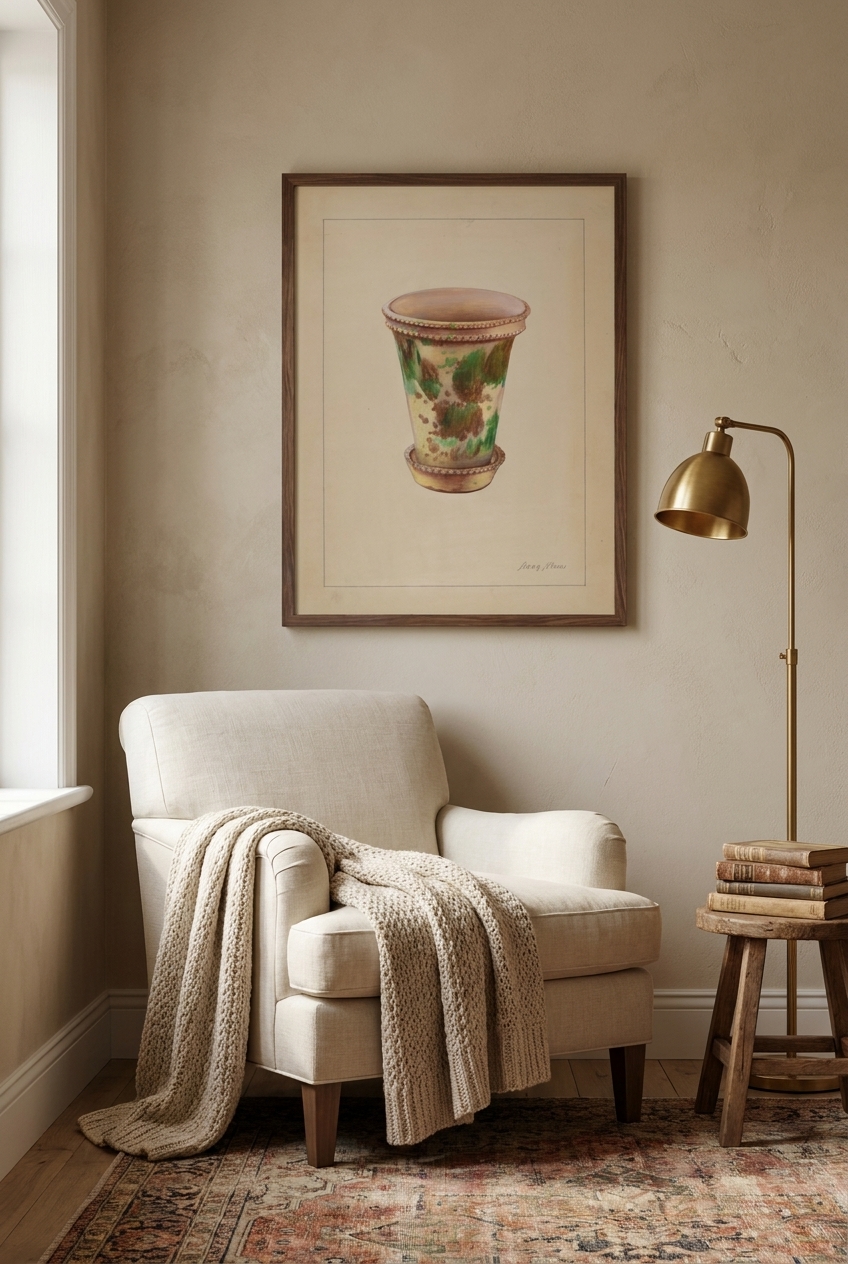
In the living room, you can afford to be more dynamic. If your sofa is upholstered in a neutral linen, consider introducing a pop of rich, organic color nearby. A vibrant, textured work like Anna Aloisi's Flower Pot can be hung slightly lower on an adjacent side table or nestled into a reading nook, bridging the gap between your larger statement pieces and the smaller details of the room.
The Role of Framing and Matting
Never underestimate the transformative power of a frame. When calculating your dimensions, always include the width of the frame and the matting. A medium-sized print can easily be elevated to a grand scale by utilizing a wide, museum-style mat board. This extra breathing room around the image draws the viewer's eye inward, giving the artwork the respect and presence it deserves.
- Dark wood frames offer a classic, grounded feel that complements mid-century and traditional furniture.
- Gilt frames catch the light beautifully and add a touch of historical warmth to modern, minimalist spaces.
- Deep mats help smaller prints hold their own above larger furniture pieces.
Frequently asked questions
How do I choose the right size art if my sofa is exceptionally long?
For very long sofas, a single artwork can sometimes feel lost or prove difficult to source. Instead, try hanging a matching pair (a diptych) or a trio (a triptych) of framed prints side by side. Aim for the combined width of the frames, including a 2- to 3-inch gap between them, to span about two-thirds of the sofa's total length.
Should the frame match the wood of my bed or sofa legs?
Not necessarily. While a loose relationship in wood tones is pleasant, exact matching can make a room feel sterile or overly styled. If you have a walnut headboard, a warm gilt frame or a dark, slightly contrasting oak frame adds depth and makes the space feel collected over time rather than purchased all at once.
What if my headboard is very tall or has an intricate design?
If your headboard is already a dramatic focal point, hanging a large piece of art directly above it can create visual clutter. Instead, consider flanking the bed. Hanging a matching pair of vertical portraits or landscapes above your nightstands is an elegant way to introduce art without competing with your headboard.