How did a painter and a weaver change Renaissance art?
In short: By combining the dramatic scale of the Italian Renaissance with the meticulous detail of Flemish weaving, painter Bernard van Orley and master weaver Pieter Pannemaker I elevated tapestry into a monumental narrative art form.
The Ultimate Creative Partnership
In sixteenth-century Brussels, the worlds of fine painting and master weaving collided to create something entirely new. Court painter Bernard van Orley provided the grand, dramatic visions, while master weaver Pieter Pannemaker I translated them into thread. Together, they changed Northern Renaissance art by bridging the gap between two distinct traditions: the meticulous, detailed realism of Flanders and the heroic scale of the Italian Renaissance.
By combining these styles, they elevated tapestry from simple decorative wall coverings to monumental narrative masterpieces. Today, exploring the Full Pieter Pannemaker I after Bernard van Orley collection reveals how this partnership pushed the boundaries of depth, light, and human emotion.
Bridging Two Worlds of Style
What makes these works so captivating is their incredible visual density. Van Orley was heavily influenced by the Italian "Romanist" style, which favored muscular figures, grand classical architecture, and intense drama. Pannemaker took these bold designs and masterfully wove them, capturing subtle gradations of light and shadow that were previously thought impossible to achieve in textile art.
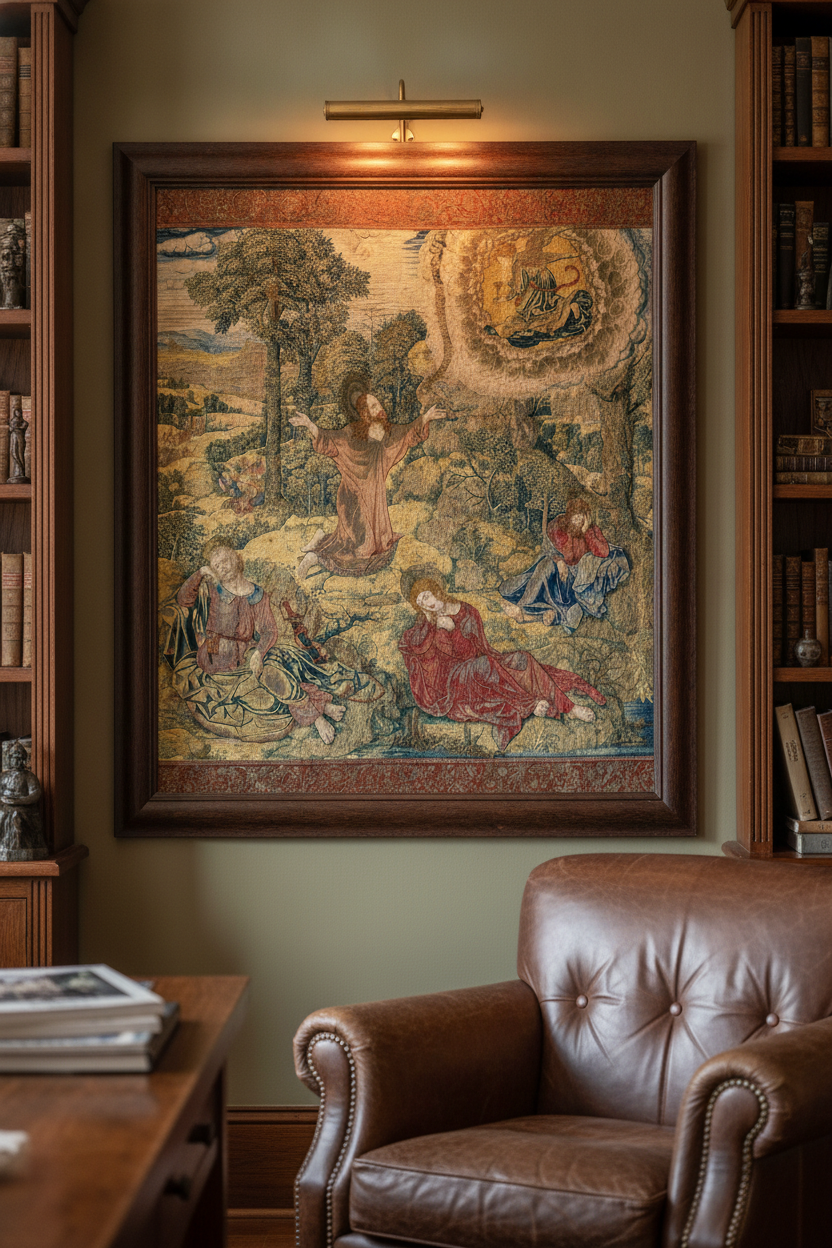
In works like The Garden of Gethsemane (c. 1520), you can see this synthesis at its peak. The scene is packed with expressive faces, twisting figures, and deep architectural perspectives, all rendered with a level of detail that rivals any oil painting of the era.
The Magic of Tapestry Textures in Modern Prints
While the original tapestries were woven for royal courts and grand cathedrals, their designs translate beautifully into the modern home. When reproduced as high-quality fine-art prints or canvases, the rich textures of the original weave are preserved, giving the artwork a unique, tactile depth that smooth paintings often lack.
These pieces bring a sense of history, warmth, and intellectual curiosity to contemporary spaces. Because the compositions are so complex, you will find yourself noticing new details—a hidden figure in the background, a beautifully rendered leaf, or a subtle fold of drapery—every time you look at them.
Frequently asked questions
Who was Bernard van Orley?
Bernard van Orley was a leading Flemish painter of the High Renaissance who served as the official court artist to the governors of the Netherlands. He was famous for introducing Italian Renaissance styles, such as heroic proportions and deep perspective, to Northern European art.
Who was Pieter Pannemaker I?
Pieter Pannemaker I was a master weaver based in Brussels, which was the undisputed global center of high-quality tapestry production in the sixteenth century. His workshop was renowned for its ability to translate complex, painterly designs into intricate textile masterpieces.
How do tapestry designs translate to modern paper and canvas prints?
Modern high-resolution scanning captures the actual texture of the woven threads, wool, and silk from the original tapestries. When printed on archival paper or canvas, these details remain visible, giving the print a rich, tactile appearance that adds warmth and depth to any wall.