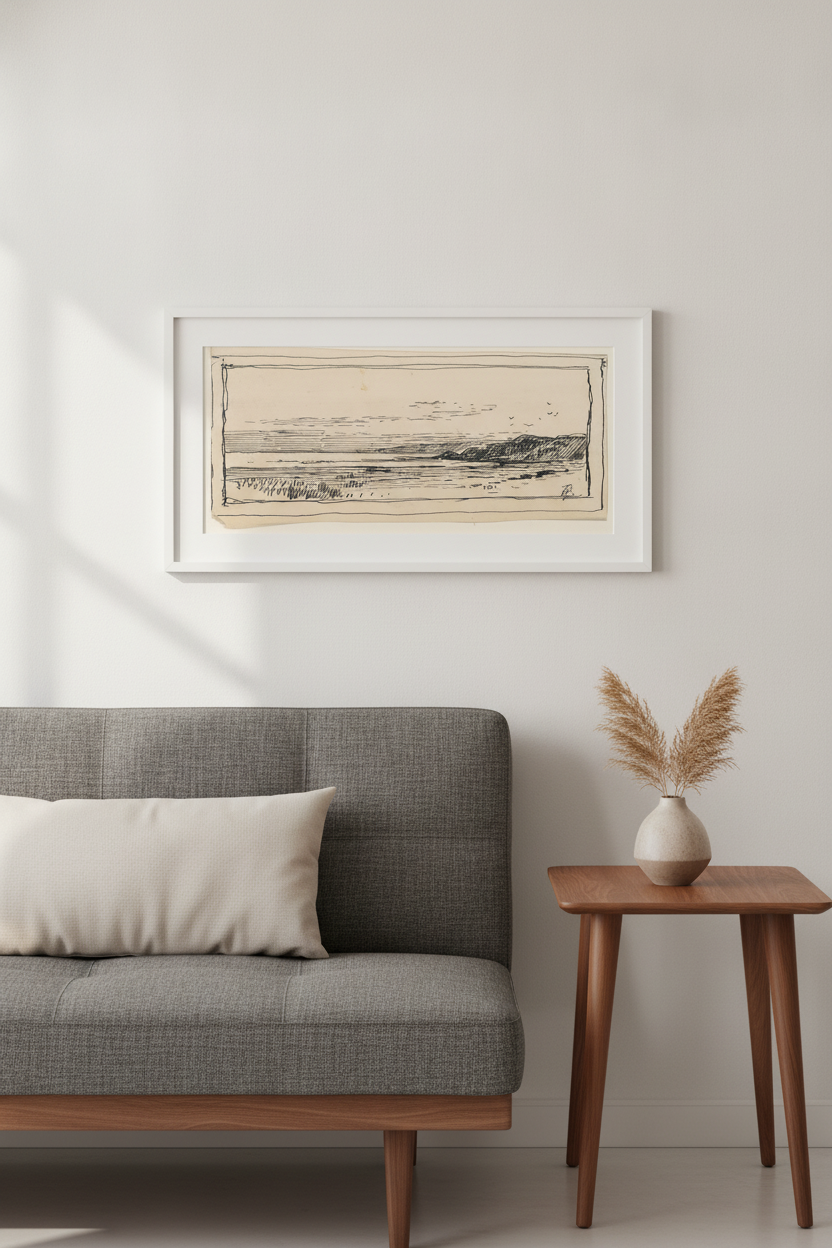
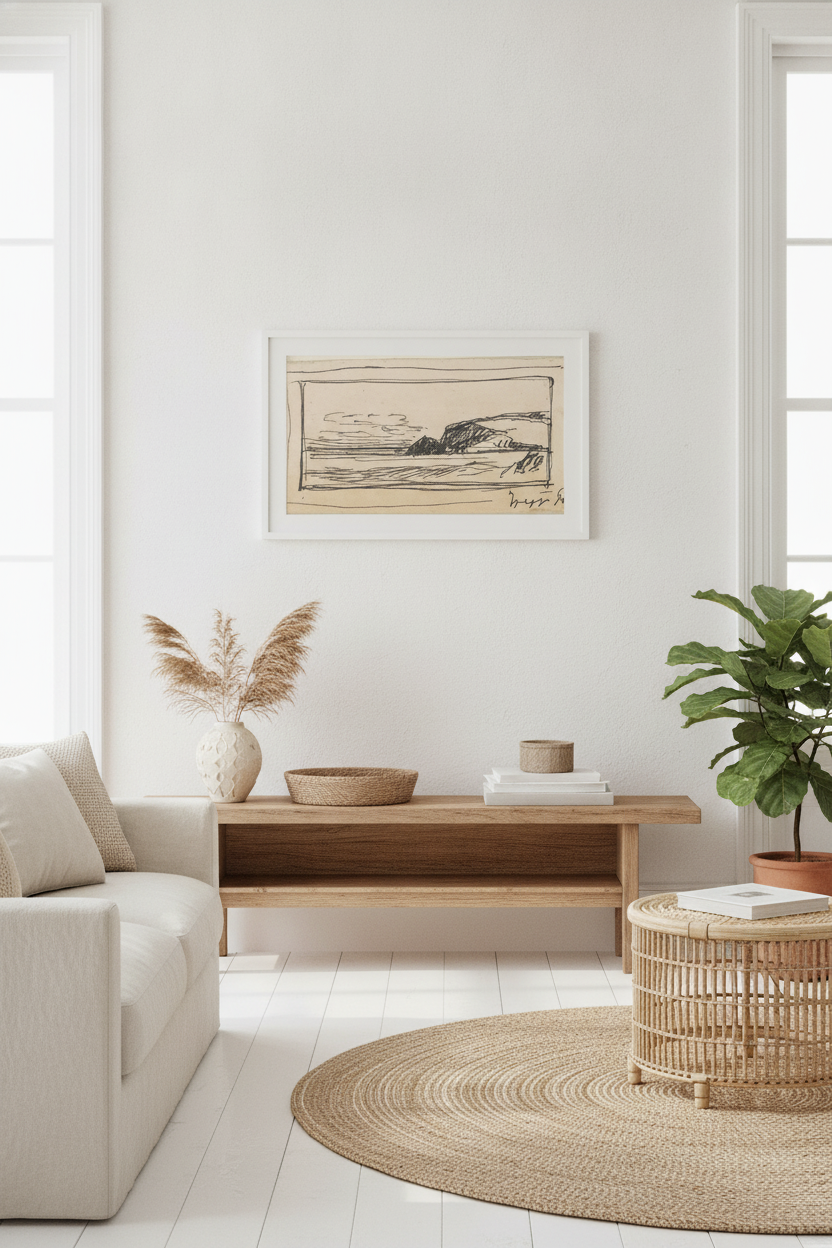
How did Alfred Thompson Bricher paint such quiet water?
In short: Alfred Thompson Bricher was a master of American Luminism, famous for his ultra-still, light-filled paintings of the northeastern coast. His invisible brushwork and expansive horizons bring a sense of deep, meditative calm to any space.
Who was the painter of America's quietest coasts?
If you have ever stood on a beach at dawn, before the wind kicks up and the crowds arrive, you know a specific kind of silence. The water is a mirror, the air feels heavy with salt, and the horizon stretches out infinitely. Alfred Thompson Bricher spent his entire life trying to capture that exact moment of absolute stillness.
Active in the late nineteenth century, Bricher was a key figure in the American Luminism movement and a member of the later generation of the Hudson River School. While earlier painters of his era sought out dramatic mountain peaks and raging storms, Bricher found his muse along the northeastern coastline, from the rugged cliffs of Maine to the gentle beaches of Long Island. He answered the question of how to paint quiet water by masterfully hiding his own hand. By using exceptionally fine, near-invisible brushwork, he removed any trace of paint texture, leaving behind a surface as smooth and reflective as the tides he painted. You can explore his serene vision in our Full Alfred Thompson Bricher collection.
What makes Luminism feel so meditative?
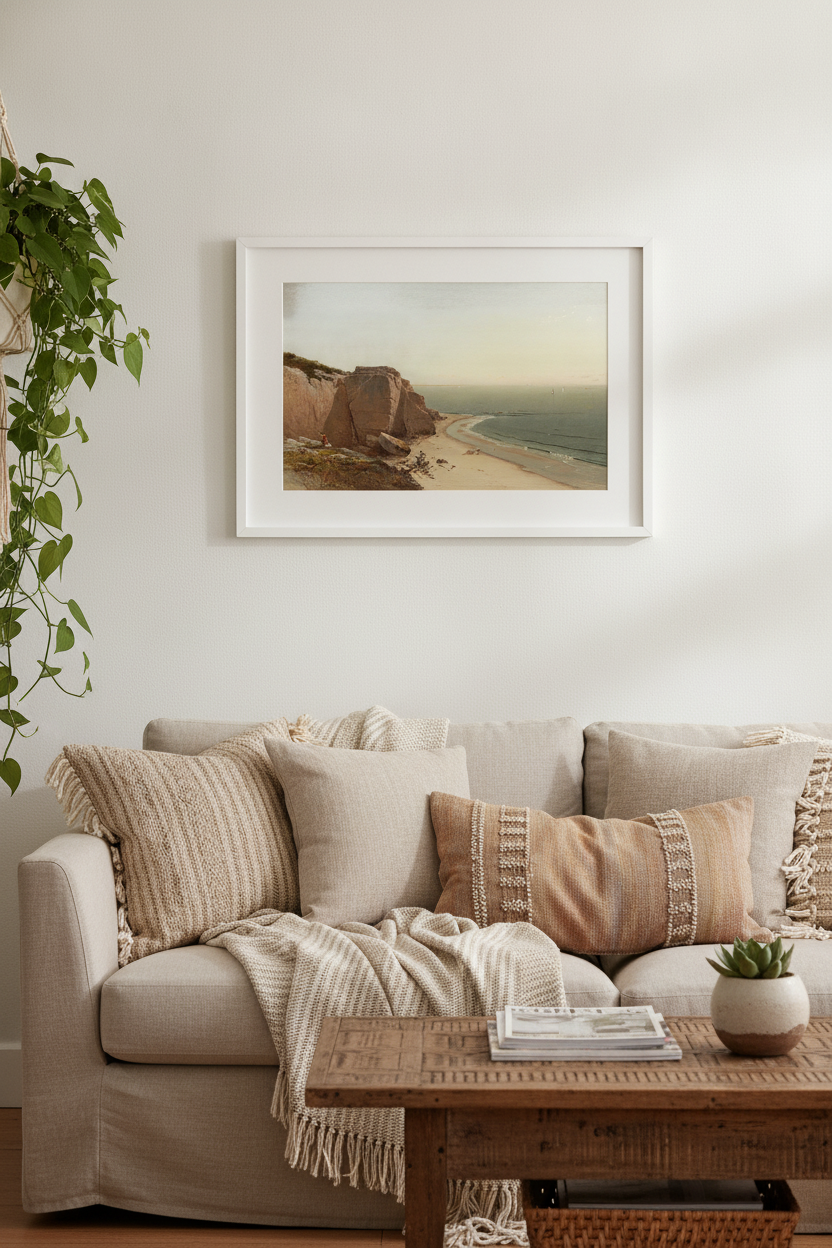
Luminism was not just about painting landscapes; it was an exploration of light as a spiritual and meditative force. Bricher’s compositions are marvels of mathematical balance. He structured his scenes with low, expansive horizons that give the sky room to breathe, often occupying two-thirds of the canvas.
Under his brush, light becomes a tangible presence. In masterpieces like A Quiet Day near Manchester, we see how he manipulated atmosphere to create a sense of suspended time. The water is so still that the tiny ripples near the shore seem frozen in place, and the distant sailboats appear locked in a peaceful, eternal drift. There is no narrative drama here—only the sublime, quiet majesty of the natural world.
What should you look for in a Bricher painting?
When studying a Bricher painting, look closely at how he renders different textures. He was a master of contrast: the hard, dark weight of wet coastal rocks stands against the weightless, glowing mist of the Atlantic. He had a particular fondness for tidal pools left behind by the receding sea, using them as secondary mirrors to double the light of the sky.
In works like The Coast, Bricher balances these elements perfectly. The foreground rocks anchor the composition, while the soft transition of colors in the sky—from pale yellow to soft blue—draws the eye outward into the infinite. His ability to render the wet sheen of sand just after a wave has retreated is unmatched, capturing a fleeting physical phenomenon and turning it into a permanent state of grace.
Why do Bricher's coastal scenes suit modern interiors?
Our modern lives are fast, loud, and constantly connected. Perhaps that is why Bricher’s nineteenth-century coastal scenes feel so incredibly urgent and necessary today. Hanging a reproduction of his work in a modern home acts as a visual anchor—a dedicated space for the eyes and the mind to rest.
Because of his horizontal compositions, a Bricher print has the magical ability to make a room feel wider and more spacious. His color palette of soft blues, sandy beiges, warm ochres, and pale pinks fits effortlessly into contemporary interiors, whether you favor minimalist modernism, cozy transitional style, or classic coastal decor. On a high-quality textured canvas or as a framed fine-art print, his luminous skies and silent waters offer a daily invitation to slow down, breathe, and appreciate the quiet.
Frequently asked questions
What is Luminism and how does it differ from Impressionism?
While both styles focus on light, Impressionism uses visible, energetic brushstrokes to capture a fleeting moment. Luminism, popular in 19th-century America, conceals the brushwork entirely to create a smooth, glassy surface, emphasizing absolute stillness, clear atmosphere, and a meditative, almost spiritual quality.
Which coastal locations did Alfred Thompson Bricher paint?
Bricher was deeply inspired by the northeastern coast of the United States. He frequently painted the rugged shorelines of Maine, the beaches of Massachusetts (such as Cape Ann and Manchester-by-the-Sea), Rhode Island, and the tranquil bays of Long Island, New York.
Why are Bricher's paintings so effective as home decor?
Bricher's work features strong horizontal compositions and a soothing, natural color palette of blues, sands, and soft sky tones. These elements naturally make spaces feel larger, calmer, and more open, making his prints ideal for bedrooms, living rooms, or offices where a tranquil atmosphere is desired.