How did Angelo Bulone bring classical order to everyday art?
In short: Angelo Bulone blended classical Italian discipline with American design, using perfect symmetry and soft light to turn everyday objects into elegant, timeless art.
The Marriage of Classical Heritage and American Design
How did Angelo Bulone bring classical order to everyday art? The answer lies in his profound devotion to the foundational rules of high art—balance, symmetry, and proportion. Drawing deep inspiration from his Italian heritage, Bulone did not merely document his subjects; he elevated them. By applying the rigorous, academic precision of the Old Masters to mid-century American subjects, he transformed the ordinary into something monumental, quiet, and enduring.
Active during the mid-20th century, Bulone became a key contributor to preserving American design history. Yet, while other illustrators of his era focused on simple documentation, Bulone infused his work with a sense of intellectual order. You can explore this unique fusion of history and high art in the Full Angelo Bulone collection, which showcases his ability to find heroic beauty in the quietest corners of life.
Atmospheric Light and Meticulous Draftsmanship
To look at a Bulone composition is to experience a masterclass in restraint. His stylistic signature is defined by an incredibly soft, atmospheric handling of light and shadow. Rather than relying on harsh contrasts, Bulone coaxes his subjects into three dimensions using gentle gradations of tone. This technique gives his work a physical weight and a serene, contemplative depth.
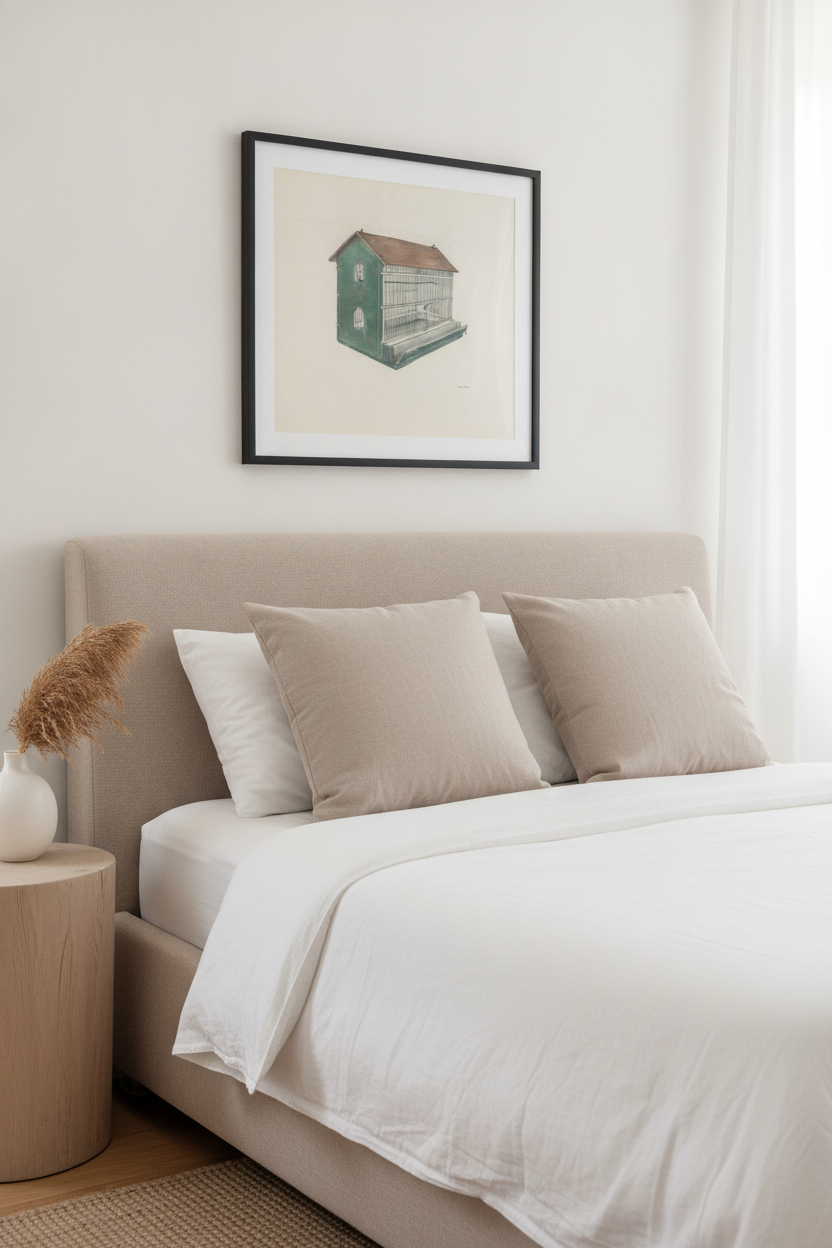
His draftsmanship is equally disciplined. Every line is deliberate, and every curve is balanced. Consider his rendering of the Zoar Bird Cage. In this piece, a functional, historical object is treated with the same reverence and geometric harmony one might expect in a classical architectural study. Through a restrained palette and perfect symmetry, the object becomes a sculptural masterpiece.
Bringing Classical Calm into the Modern Home
There is a unique power in art that does not shout. Because Bulone prioritized harmony and quiet permanence over flashy trends, his work translates beautifully into modern living spaces. Whether displayed as a textured canvas or a framed fine-art print, his compositions bring a grounding presence to a room.
His neutral, sophisticated color palettes—rich in warm earth tones, soft grays, and delicate creams—complement contemporary interiors effortlessly. In an era dominated by digital noise, hanging a piece of Bulone's art on your wall is an invitation to slow down, appreciate fine craftsmanship, and enjoy a moment of clean, classical calm.
Frequently asked questions
Who was Angelo Bulone?
Angelo Bulone was an American artist and illustrator rooted in classical traditions. He is best known for his meticulous, academically precise renderings of American material culture, often associated with the WPA-era Index of American Design, where he applied classical principles of symmetry and light to historical objects.
What defines Angelo Bulone's artistic style?
Bulone's style is characterized by elegant draftsmanship, strict geometric proportion, and a restrained color palette. He is particularly celebrated for his soft, atmospheric use of light and shadow, which gives his subjects a sense of weight, depth, and quiet permanence.
How do Angelo Bulone prints fit into modern home decor?
Because of their balanced compositions and neutral, earthy color palettes, Bulone's prints offer a grounding, sophisticated element to modern spaces. They provide a sense of calm, intellectual order, and historical depth that pairs exceptionally well with minimalist, mid-century, or transitional interior designs.