How did Ernest-Ange Duez capture the light of Belle Époque France?
In short: Ernest-Ange Duez bridged classical academic realism with a modern, atmospheric sensitivity to light, making his elegant scenes perfect for contemporary homes.
The Painter of Quiet Elegance
In the late nineteenth century, Paris was a whirlwind of artistic revolution. While the Impressionists were busy shattering rules with bold, visible brushstrokes, another group of artists sought a different kind of magic. They wanted to preserve the exquisite draftsmanship of the classical academies while embracing the fresh, luminous light of the modern world. At the very center of this movement was Ernest-Ange Duez.
Duez captured the spirit of Belle Époque France not by distorting reality, but by elevating it. His paintings of elegant Parisian society, coastal scenes, and intimate portraits are defined by a serene, poetic balance. By exploring the Full Ernest-Ange Duez collection, one can see how he masterfully bridged the gap between academic rigor and a soft, modern sensitivity to atmosphere.
A Masterclass in Texture and Light
What makes a painting by Duez immediately recognizable is his extraordinary handling of tone and texture. He possessed a rare, almost tactile ability to render the world around him. When you look at his work, you can practically feel the weight of heavy velvet, the whisper of delicate silk, and the cool mist of the ocean air.
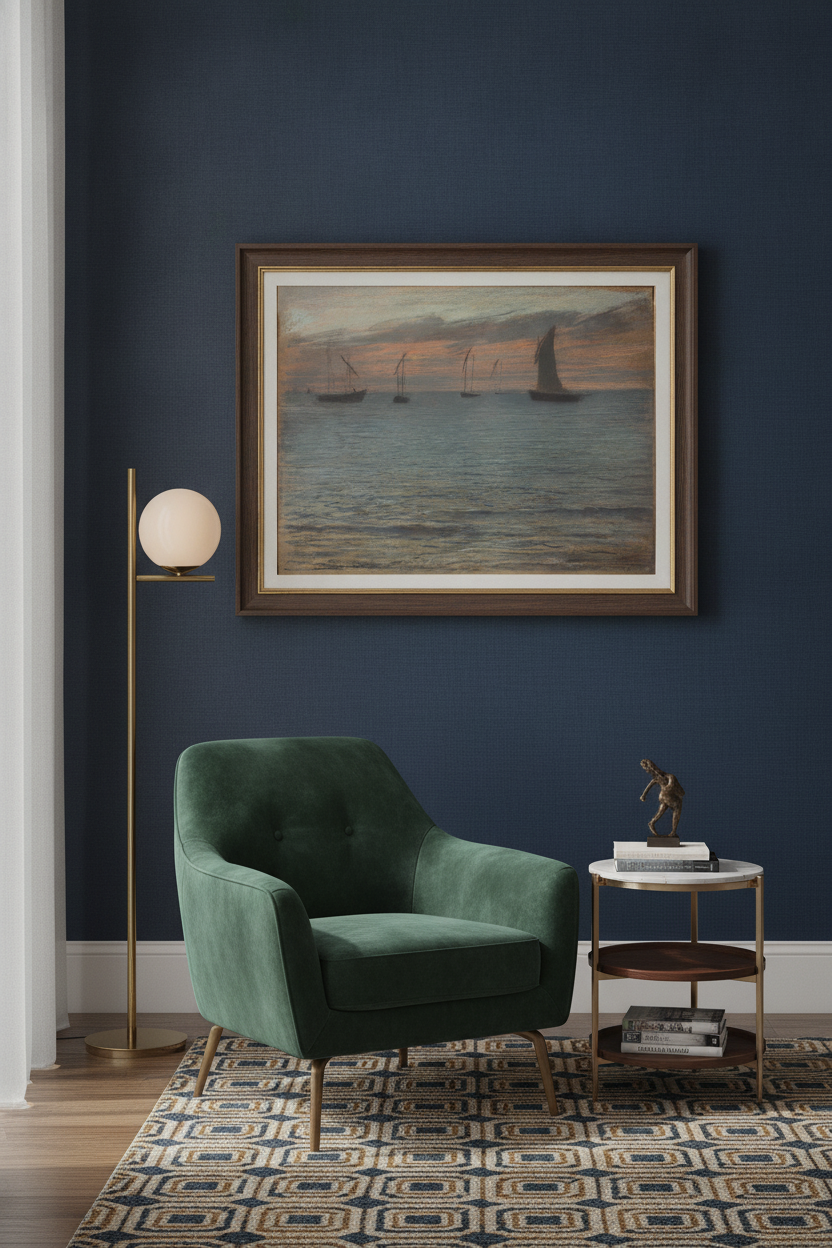
Unlike many of his academic contemporaries who painted under the artificial, controlled light of a studio, Duez was deeply sensitive to natural light. He studied how sunlight filtered through coastal clouds, how it bounced off wet sand, and how it softened the contours of a subject's skin. A prime example of this atmospheric mastery is his work "A Seascape at Sunset", which captures the fleeting, golden warmth of day's end with incredible subtlety.
From Parisian Salons to the Normandy Coast
Duez’s portfolio is delightfully varied, reflecting the dual nature of his life. On one hand, he was a celebrated society portraitist, capturing the sophisticated elite of Paris with a meticulous yet fluid hand. These works are masterclasses in elegance, showing off the fashion, poise, and quiet confidence of his sitters.
On the other hand, Duez found deep inspiration away from the city. He spent significant time on the Normandy coast, where his style relaxed into open, breezy landscapes. In these coastal scenes, his palette shifted to soft grays, pearly whites, and deep blues. Whether painting a fashionable lady on a beach or a solitary boat on the water, his subjects are always grounded in a calm, classical stillness.
Why His Work Resonates in Modern Interiors
There is a timeless, understated quality to Classical Realism that makes it incredibly well-suited for modern homes. While highly dramatic or abstract art can sometimes dominate a room, Duez’s paintings offer a sense of serene companionship. Here is why his work translates so beautifully to fine-art prints and canvases:
- A soothing palette: His use of soft, atmospheric tones—like muted blues, sandy beiges, and gentle rose—complements contemporary color schemes without clashing.
- Visual depth: The incredible detail in his rendering of fabric and water draws the viewer in, offering new details to discover every day.
- A sense of calm: His compositions are balanced and harmonious, bringing a peaceful, meditative energy to living rooms, bedrooms, or quiet study spaces.
By bringing an archival print of Duez's work into your home, you are not just hanging a beautiful image; you are opening a window into a world of quiet sophistication and everlasting light.
Frequently asked questions
Who was Ernest-Ange Duez?
Ernest-Ange Duez (1843–1896) was a prominent French painter of the late nineteenth century. He is best known for his elegant genre scenes, coastal landscapes, and society portraits that beautifully bridge classical academic training with modern, atmospheric realism.
What art movement is Ernest-Ange Duez associated with?
Duez is primarily associated with Classical Realism and late nineteenth-century French classicism. While he maintained the strict draftsmanship and polished technique of academic art, he incorporated the soft, natural light and atmospheric qualities popularized by the Impressionists.
Why are his paintings highly regarded for home decor?
His works feature a soft, harmonious color palette, elegant subjects, and a serene sense of balance. This combination makes them highly versatile for modern interiors, offering a sophisticated and calming focal point that blends seamlessly with various decor styles.