How did Eugene Croe capture the soul of classical design?
In short: Eugene Croe's work brings the quiet permanence and balanced proportions of classical design into the modern home through serene, precise draftsmanship.
The Quiet Power of Classical Order
How do we capture the essence of an object so that it feels timeless rather than dated? The answer lies in the classical tradition, a school of thought that values balance, proportion, and idealized beauty above all else. The artist Eugene Croe mastered this approach, creating works that serve as a bridge between the physical objects of the past and the enduring principles of classical order.
By stripping away the chaotic noise of transient trends, Croe focused on structured composition and refined draftsmanship. In our Eugene Croe collection, you can see how this dedication to quiet permanence transforms everyday design elements into objects of deep, contemplative beauty.
The Art of Serene Restraint
Croe’s stylistic signature is defined by a sense of serene restraint. Instead of dramatic, theatrical lighting or chaotic color schemes, his work utilizes a harmonious palette and carefully controlled light. This deliberate moderation invites us to slow down and look closer. When you study his pieces, you will notice:
- Academic Precision: Every line is rendered with a steady hand, honoring the true geometry of the subject.
- Harmonious Palettes: Soft, earthy tones and muted hues ensure the artwork integrates seamlessly into a space without overwhelming it.
- Balanced Light: Light is used not to startle, but to define form and volume with absolute clarity.
This disciplined technique ensures that each composition achieves a sense of weight and presence, making them feel grounded and deliberate.
Documenting Design: The Rosewood Sofa
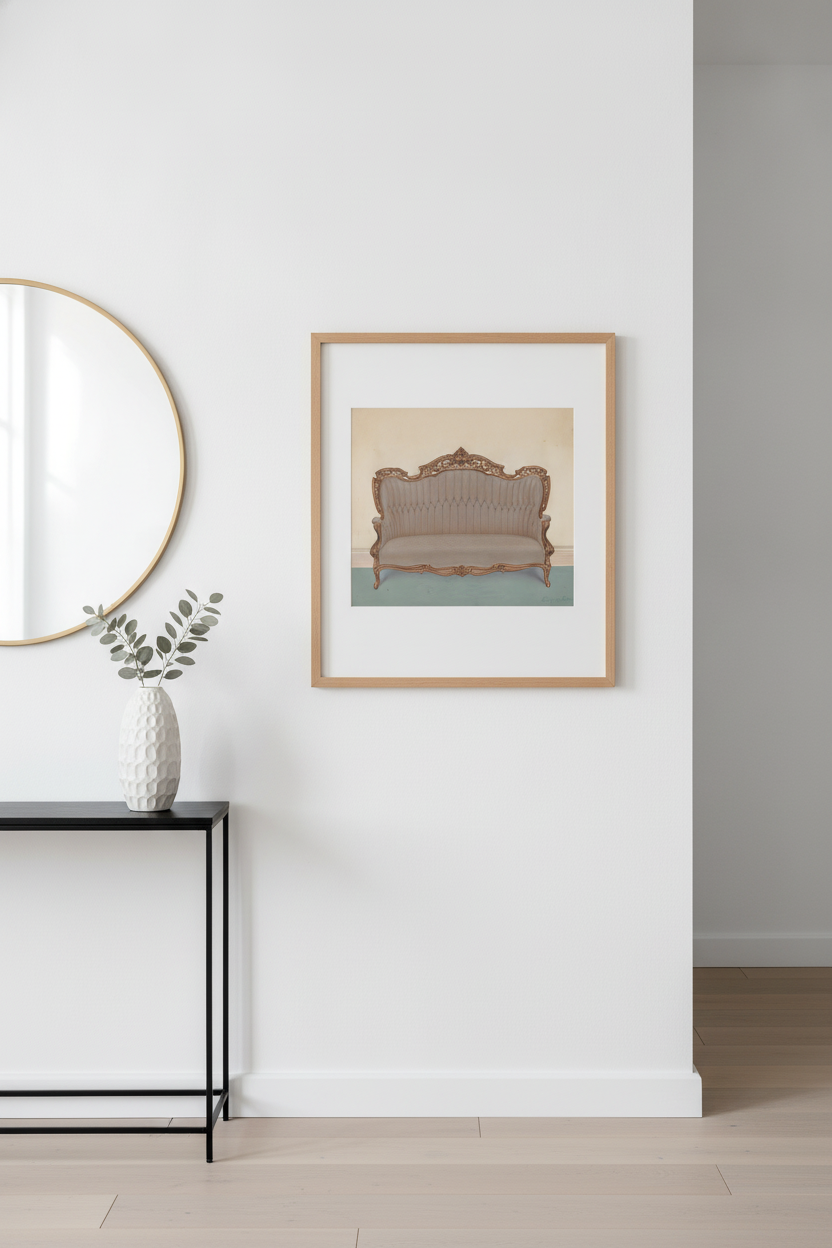
A perfect example of Croe’s ability to elevate functional design into fine art is his rendering of the Rosewood Sofa (c. 1936). Created as part of a mid-century effort to document historical American design, this piece is far more than a mere illustration. Croe captures the rich texture of the wood, the elegant sweep of the frame, and the delicate balance of the classical revival style with breathtaking accuracy.
Through his eyes, a piece of furniture becomes a study in sculptural form. The print showcases how classical proportions—originally inspired by the architecture of antiquity—can be translated into domestic objects that carry an air of quiet dignity.
Why Classical Prints Belong in Modern Spaces
In today's fast-paced, highly digital world, our homes have become sanctuaries where we seek calm and clarity. This is precisely why Eugene Croe’s classical prints work so beautifully in modern interiors. Their structured compositions offer a visual anchor, bringing a sense of stability and historical depth to contemporary spaces.
Whether framed on a minimalist gallery wall or displayed as a large-scale canvas in a study, Croe’s work introduces an element of academic sophistication. It is art that does not demand attention with loud colors, but rather commands it through sheer, quiet elegance.
Frequently asked questions
What artistic movement does Eugene Croe's work belong to?
Eugene Croe's work is deeply rooted in the Classical movement and academic realism. His style prioritizes structured composition, refined draftsmanship, and idealized beauty, drawing heavy inspiration from the balanced proportions of antiquity.
What makes Croe's depiction of the Rosewood Sofa unique?
Rather than a simple catalog illustration, Croe's depiction of the Rosewood Sofa is a masterclass in light, texture, and form. He uses precise academic draftsmanship to elevate a piece of historical furniture into a stunning, standalone work of fine art.
How do Eugene Croe prints fit into modern home decor?
Because of their neutral, harmonious color palettes and balanced compositions, Croe's prints bring a sense of calm and structure to modern spaces. They pair exceptionally well with minimalist, transitional, or traditional interior designs.