How did Mannerism break the rules of the High Renaissance?
In short: While the High Renaissance chased perfect balance and symmetry, Mannerism rebelled with elongated figures, strange perspectives, and emotional drama.
The Peak of Balance
In the early 1500s, Italian art reached a moment of breathtaking clarity. We call this the High Renaissance. For a few short decades, artists in Florence, Rome, and Venice achieved a rare harmony. They believed that the universe was ordered by divine geometry, and they wanted their art to reflect that cosmic balance.
If you look at a High Renaissance composition, you will notice a sense of absolute stability. Figures are often arranged in stable triangles. The lighting is soft and natural, and the perspective draws your eye effortlessly into the distance. It was an art of calm confidence, where humanity was depicted in its most idealized, noble form. But this perfect balance could not last forever. Once perfection is achieved, where do you go next?
Bending the Rules of Reality
By the 1520s, a younger generation of artists looked at the flawless works of Michelangelo and Raphael and realized they could not beat them at their own game. Instead of copying nature, they decided to copy and exaggerate the "manner" (or maniera) of the great masters. Thus, Mannerism was born.
Mannerist artists abandoned the calm rules of the High Renaissance. They embraced tension, instability, and artificial grace. Instead of natural proportions, they painted figures with impossibly long necks, elongated fingers, and twisting, serpentine bodies. Space became shallow and confusing, and colors shifted from natural earth tones to acidic pinks, vivid oranges, and icy blues.
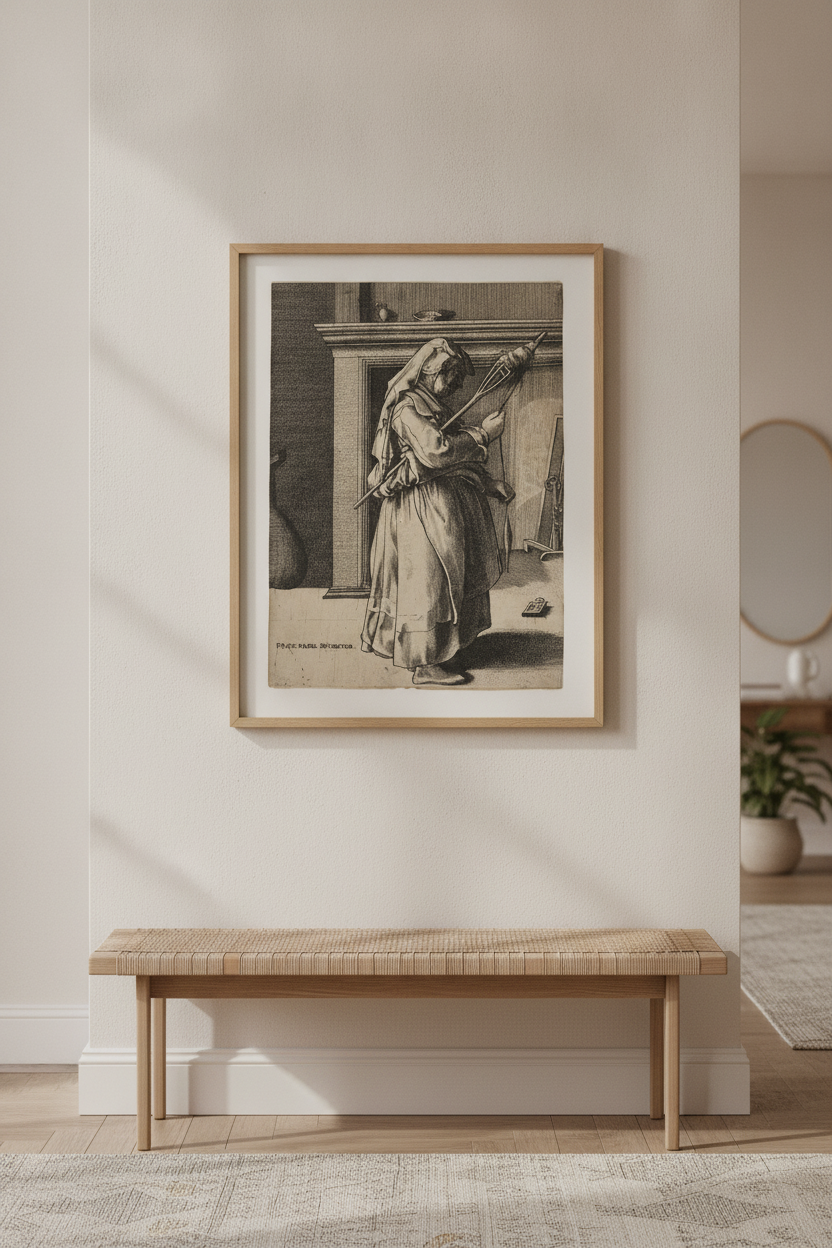
You can see this stylistic shift beautifully captured in printmaking. A prime example is the striking engraving Old Woman with a Distaff, engraved by Enea Vico after a design by Parmigianino. Parmigianino was a pioneer of Mannerism, famous for his elegant distortions. In this work, the everyday subject of an old woman spinning wool is elevated through dramatic, swirling drapery and a heightened sense of classical drama. It is not a simple recording of daily life; it is an exercise in style, elegance, and emotional intensity.
The Elegance of 16th-Century Design
The intellectual spark of this era did not stop at the canvas or the copper printing plate. It infused every corner of the Renaissance home. In Florence, the cultural heart of the era, furniture and decorative objects were treated with the same architectural seriousness as grand cathedrals.
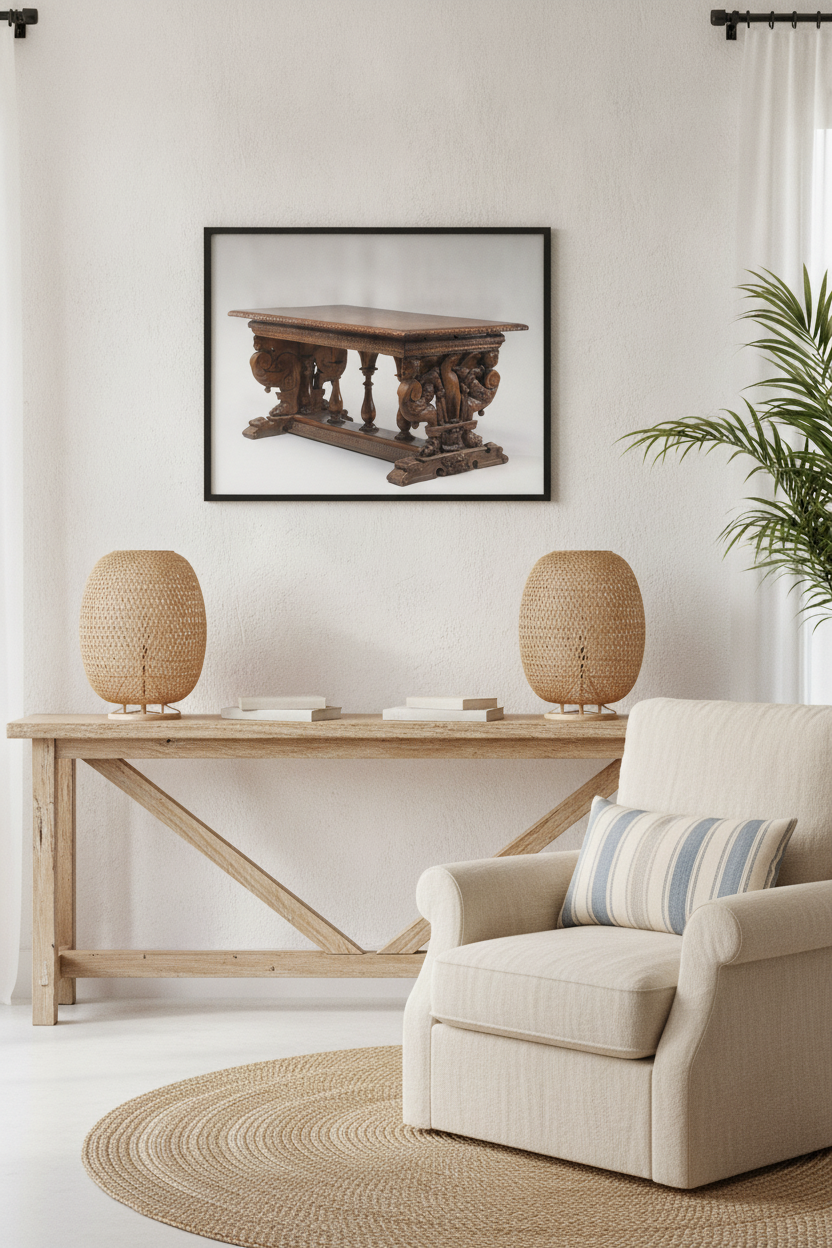
Designers drew inspiration from classical Roman ruins, incorporating mythical beasts, heavy foliage, and dramatic architectural supports into everyday objects. This grand, sculptural sensibility is perfectly preserved in detailed drawings and prints of the era, such as the design for the Walnut Table with Eagles on the Supports. This work showcases the Florentine obsession with structure, symmetry, and classical motifs, proving that even a functional household object could carry the weight and dignity of high art.
Bringing the 16th Century to Modern Walls
When choosing art from this transformative century for your own home, think about the mood you want to create. High Renaissance pieces bring a sense of quiet authority and peace to a space. They work beautifully in living rooms, studies, or bedrooms where you want to encourage rest and contemplation.
Mannerist works, on the other hand, are conversation starters. Their dramatic angles, theatrical lighting, and expressive lines bring energy and intellectual intrigue to a dining room or entryway. Because these works rely heavily on strong draftsmanship and rich tonal contrasts, they look exceptionally striking in dark wood frames or simple, clean-lined modern frames that let the intricate linework speak for itself.
Frequently asked questions
What is the main difference between the High Renaissance and Mannerism?
High Renaissance art focuses on harmony, balance, realistic proportions, and natural perspective. Mannerism deliberately rejects these rules, favoring elongated figures, complex poses, artificial colors, and emotional tension.
When did these two art movements take place?
The High Renaissance flourished roughly from the late 1490s (marked by Leonardo da Vinci's Last Supper) until the sack of Rome in 1527. Mannerism emerged in the 1520s and remained the dominant style in Italy until the end of the 16th century.
Who was Parmigianino, and why is he important?
Parmigianino was an influential Italian painter and printmaker of the early Mannerist period. He is famous for pioneering a highly elegant, stylized aesthetic characterized by elongated limbs and graceful, twisting figures that prioritized beauty over anatomical accuracy.