How did Qing Dynasty painters capture nature?
In short: Qing Dynasty art balances meticulous observation of nature with a deep reverence for classical traditions, using negative space to create a sense of profound calm.
The Philosophy of the Brush
The Qing Dynasty (1644–1912) was China's final imperial epoch, a time of immense cultural sophistication and artistic reflection. Rather than abandoning the past, Qing court painters and independent scholars looked backward to leap forward. They studied the masterpieces of earlier dynasties, synthesizing ancient calligraphic brushwork with a fresh, highly detailed observation of the natural world. The result was an art of poetic restraint, where every stroke of ink on silk or paper was an exercise in mindfulness and cosmic harmony.
These artists did not paint simply what they saw; they painted the essence of the subject. By mastering the delicate balance between human expression and the natural world, they created works that feel both deeply personal and universally peaceful.
Reading the Empty Space
To fully appreciate a Qing painting, one must look at what is not painted. Negative space is not empty; it is active. It represents mist, water, sky, or simply the breathing room of the soul. Within this quiet expanse, artists rendered natural subjects with breathtaking precision.
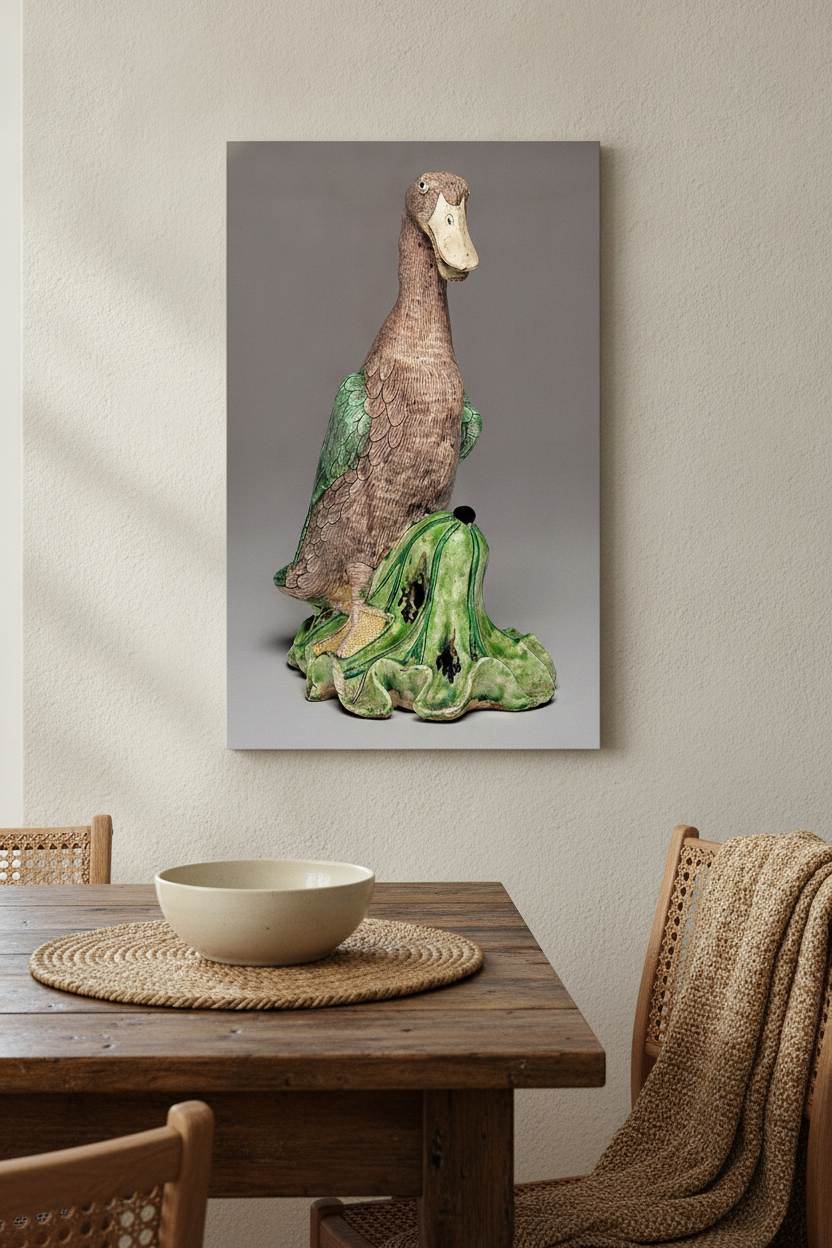
Take, for instance, the exquisite Duck on Lotus Leaf from the Kangxi period. Here, a simple creature and a single plant become a profound meditation on balance, captured with delicate mineral pigments and a masterful control of line. The generous space surrounding the subject draws our focus to the fine details of the feathers and the gentle curve of the leaf, inviting a moment of quiet contemplation.
Masterpieces of Clay and Color
The artistic genius of the Qing Dynasty was not confined to scrolls. The imperial kilns produced ceramics that rivaled the finest paintings in their complexity and poetic beauty. Glazes became canvases of their own, capturing natural phenomena in porcelain.
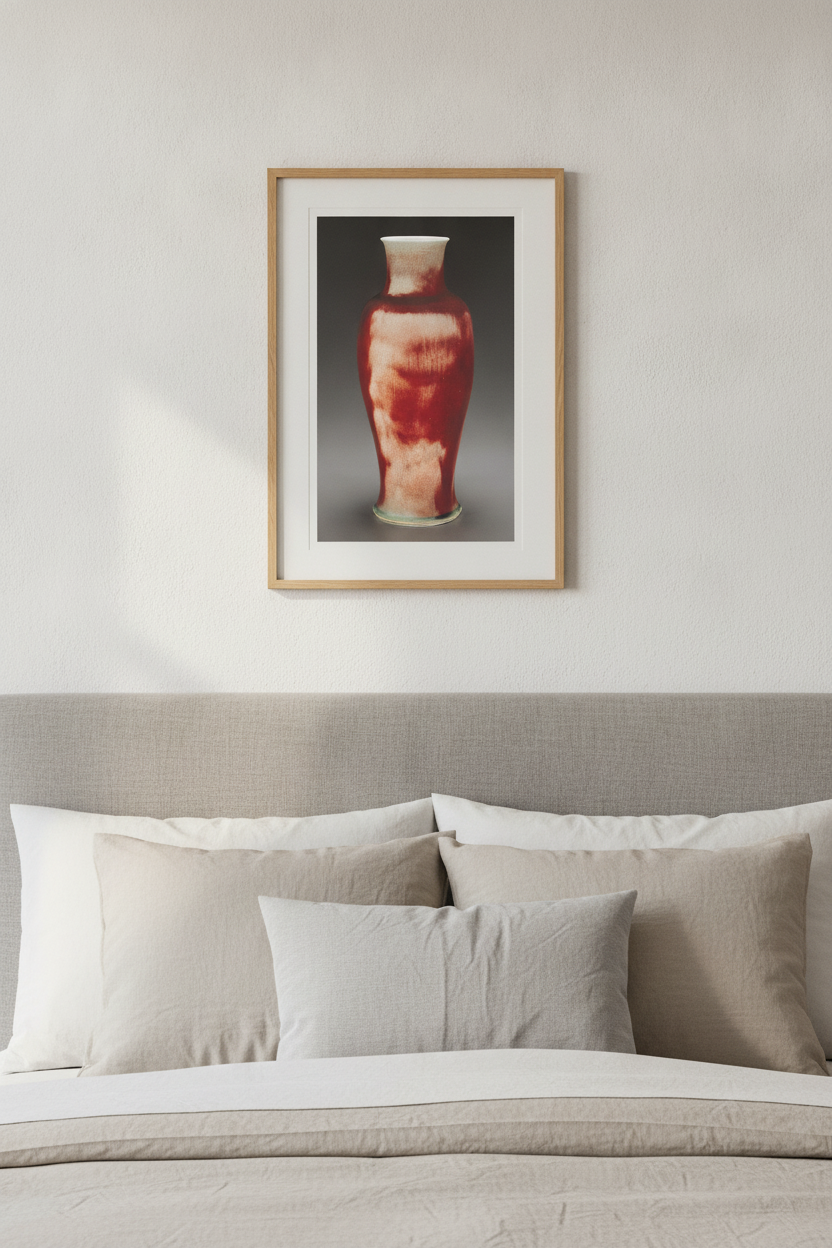
A striking example is the Vase, called "The Fire Cloud", which showcases the era's ability to turn molten minerals into swirling, atmospheric art. These pieces reflect the same philosophical goal as the paintings: capturing the fleeting, elemental forces of the universe and preserving them in a form of permanent elegance.
Why Qing Art Belongs in the Modern Home
Modern living spaces often crave a sense of calm, and this is exactly what Qing art delivers. Because these works rely on organic lines, earthy mineral tones, and generous negative space, they do not shout for attention. Instead, they harmonize beautifully with contemporary minimalist and transitional interiors.
Whether you choose a sweeping landscape or an intimate study of flora and fauna, exploring the wider Chinese Qing Dynasty collection offers a timeless way to bring natural harmony, elegance, and history into your home.
Frequently asked questions
What materials did Qing Dynasty painters use?
Artists primarily used animal-hair brushes, carbon-based ink sticks ground on inkstones, and natural mineral pigments (like malachite green and azurite blue) on delicate surfaces of silk or handmade paper.
Why is there so much empty space in these artworks?
In Chinese aesthetics, negative space is as important as the painted subject. It represents the flow of life energy (Qi), suggesting atmosphere, water, or sky, and gives the viewer's mind room to wander.
How do these traditional prints fit into modern interior design?
Their minimalist compositions, soft mineral palettes, and organic subjects make them incredibly versatile. They bring a sense of tranquility and organic warmth to modern, minimalist, or transitional spaces.