How did Thomas Dooley capture classical beauty?
In short: Thomas Dooley’s work brings the balance and quiet dignity of classical academic art into the modern era through soft light, precise lines, and timeless motifs.
The Search for Perfect Balance
In a world that often feels chaotic and fast-paced, the classical academic tradition offers a soothing antidote. At the heart of this movement is the work of Thomas Dooley, an artist whose creations capture a sense of timeless, quiet dignity. But how did Thomas Dooley capture classical beauty so effectively? The answer lies in his absolute devotion to formal balance, proportion, and the pursuit of ideal form.
Dooley did not just paint or draw what he saw; he filtered the world through the disciplined principles of antiquity. His compositions are built on a rock-solid foundation of structural clarity. Every line, curve, and shadow is carefully weighed to create a harmonious whole that feels both natural and deeply ordered. It is this deliberate structure that gives his work its enduring power.
Delicate Lines and Soft Shadows
To truly appreciate Dooley's mastery, one must look closely at his handling of light and form. He employed a soft, subtle version of chiaroscuro—the contrast between light and dark—to give his subjects a serene, sculptural quality. Instead of harsh, dramatic contrasts, Dooley favored a gentle transition of tone that coaxes three-dimensional depth out of a flat surface.
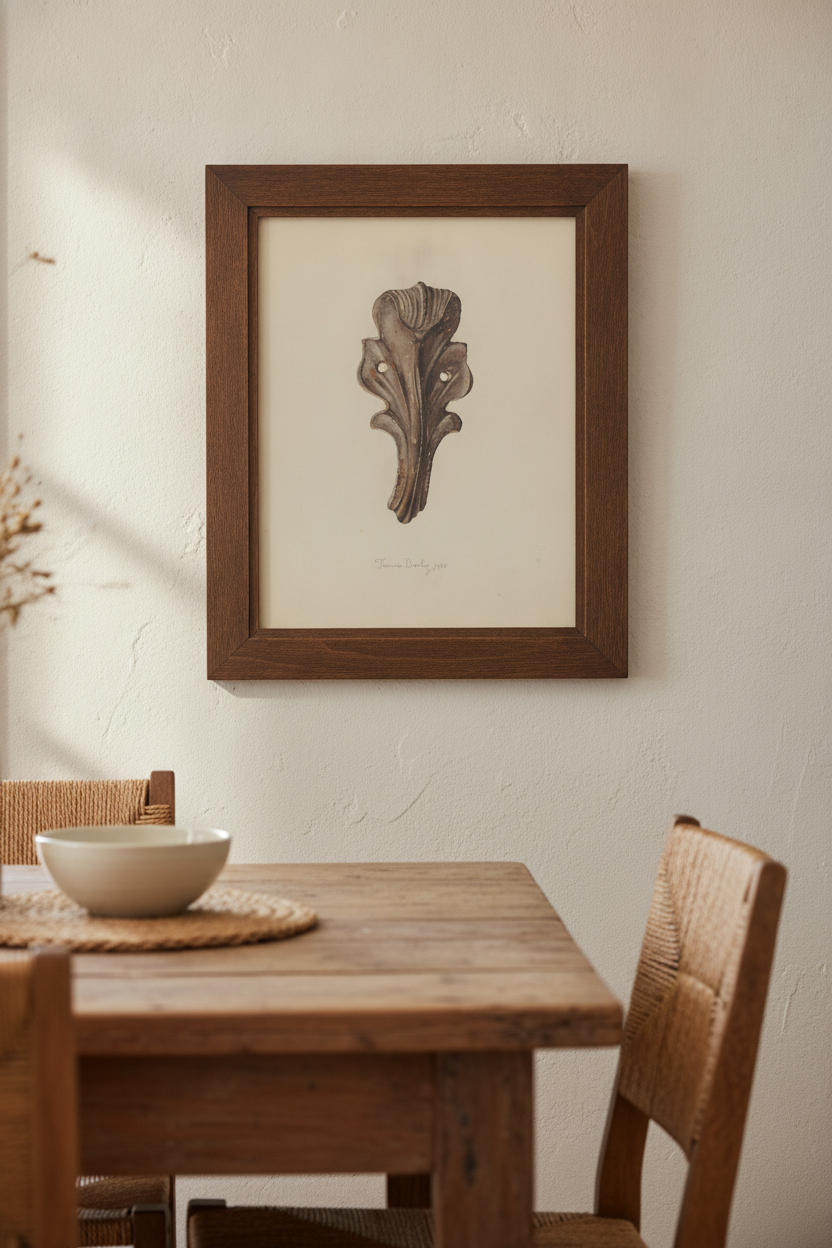
His approach is beautifully showcased in works like Ornamental Iron Leaf (1938), where the rigid geometry of metalwork is softened by his organic, restrained palette. Similarly, in Leaf and Scroll (c. 1938), his delicate draftsmanship elevates a simple decorative motif into a profound study of balance and rhythm. His hand is always disciplined, never flashy, allowing the inherent elegance of the subject to shine through.
A Timeless Fit for Contemporary Spaces
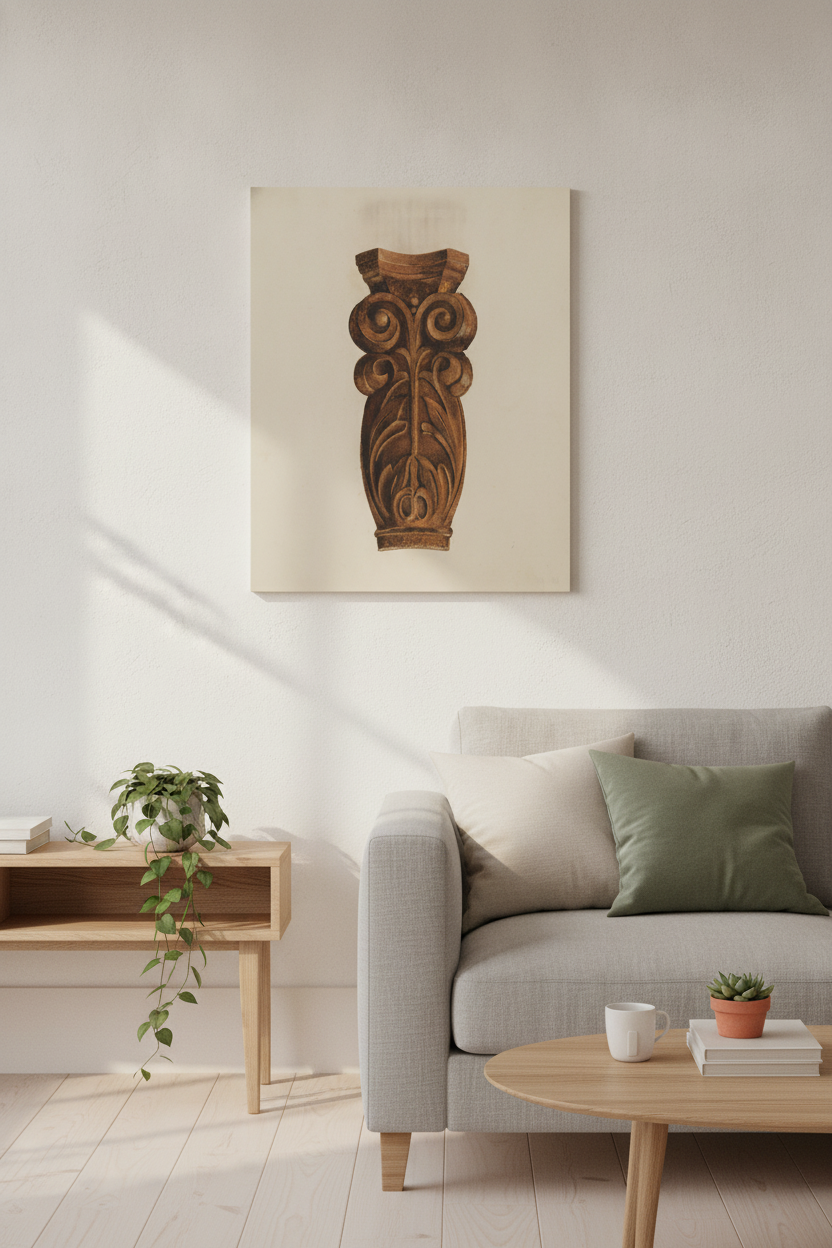
While Dooley's work is rooted in classical academic traditions, his clean lines and minimalist focus make his pieces incredibly well-suited for modern interiors. The neutral, earthy tones and sculptural clarity of his prints bring a sense of grounding and architectural interest to contemporary homes.
Whether displayed as a large-format canvas in a minimalist living room or as a framed print in a quiet study, his art acts as a visual anchor. By exploring the Full Thomas Dooley collection, you can find the perfect piece to bring this sense of refined aesthetic order and quiet contemplation into your own daily life.
Frequently asked questions
What art movement does Thomas Dooley belong to?
Thomas Dooley's work is deeply rooted in the classical academic tradition, which emphasizes formal balance, proportion, and the pursuit of ideal beauty inspired by antiquity.
What characterizes Dooley's artistic style?
Dooley's style is defined by disciplined draftsmanship, structured compositions, a restrained and organic color palette, and the use of soft chiaroscuro to create a serene, sculptural quality.
How do Thomas Dooley prints look in modern interiors?
Because of their clean lines, neutral tones, and balanced compositions, Dooley's works fit exceptionally well in modern spaces, offering a sense of calm, structure, and architectural elegance.