How does Tabea Hosier paint quiet stillness?
In short: Tabea Hosier's Classical Realism combines academic precision with soft, diffused light and a muted palette. Her serene still lifes and botanical prints bring a sense of timeless calm and sophisticated warmth to modern interiors.
The Art of Slowing Down
In a world that rarely stops moving, the art of Tabea Hosier offers a breath of cool, quiet air. A prominent figure of Classical Realism, Hosier achieves a rare sense of stillness through a perfect marriage of academic rigor and soft, diffused light. How does she paint this quiet stillness? The secret lies in her rejection of the chaotic and the temporary. Instead, she roots her work in the enduring principles of balance, proportion, and tonal harmony.
By focusing on the poetic weight of the everyday—a simple vase, a quiet room, a serene figure—she invites us to slow down. Her paintings do not shout for attention; they whisper, drawing the viewer into a space of contemplative elegance. This makes her work not just visually beautiful, but emotionally grounding.
The Magic of Muted Tones and Chiaroscuro
Hosier's technique relies heavily on the classical tradition of chiaroscuro—the delicate play between light and shadow. However, unlike the harsh, theatrical contrasts of the Baroque era, Hosier employs a soft, diffused light that gently sculpts her subjects. This light feels as though it is filtering through a tall window on a quiet afternoon, catching dust motes and softening hard edges.
To complement this gentle light, she uses a highly restrained and sophisticated color palette. By relying on earthy pigments, muted tones, and subtle greys, she avoids the distraction of loud, saturated colors. This allows the viewer to focus entirely on the form, texture, and weight of the subject. It is a masterful approach that bridges historical methodologies with a refined, modern sensibility, proving that classical techniques are timeless.
From Botanical Precision to Quiet Interiors
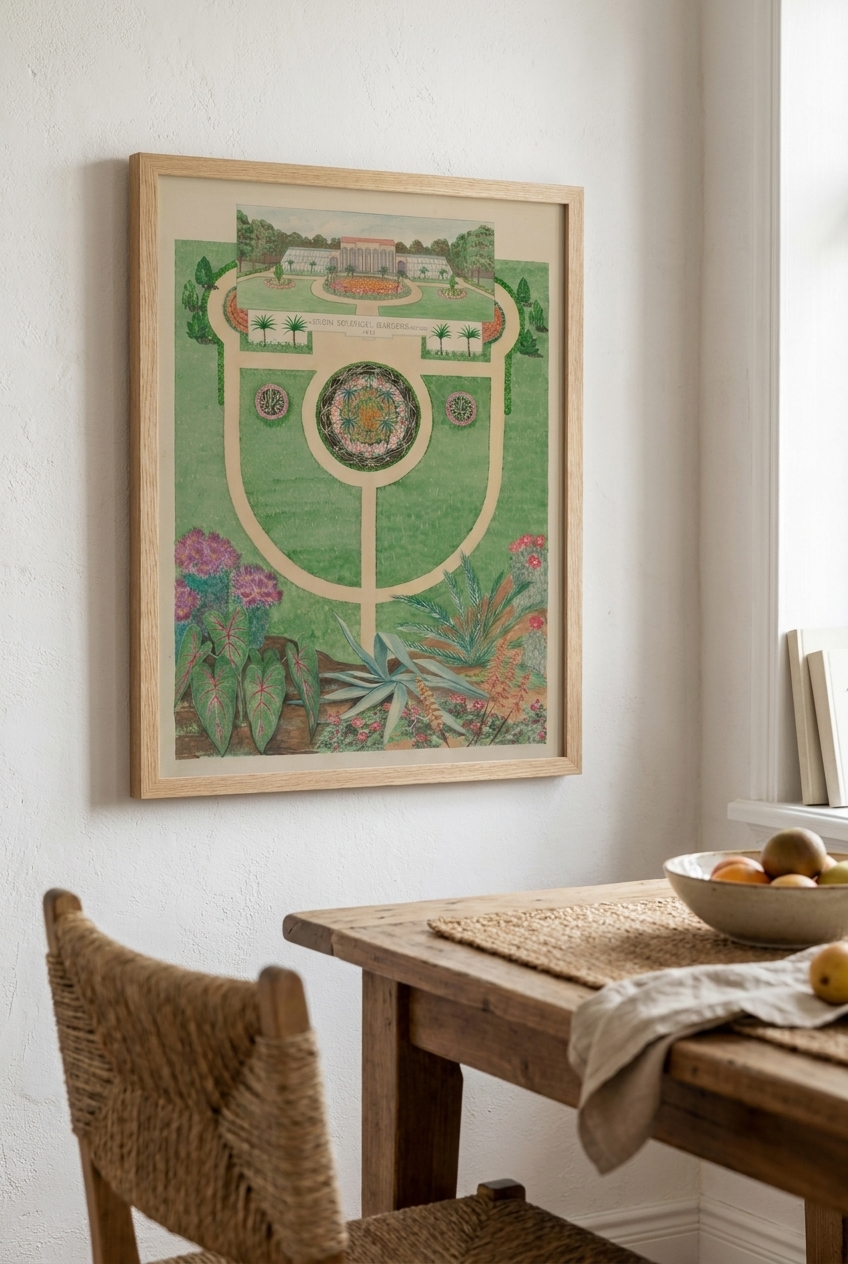
Whether rendering a quiet interior or a detailed botanical study, Hosier's meticulous attention to form is always on display. A prime example of this is her stunning work, "Elgin Botanical Gardens" (c. 1936). In this piece, the rigorous traditions of classical representation are brought to life with incredible precision, capturing the delicate structure of botanical life with a quiet grandeur. The composition feels balanced and organic, a testament to her skill in organizing complex natural forms into harmonious designs.
Her still lifes and quiet interiors carry the same poetic weight. They are not mere records of objects, but meditations on presence, light, and time. You can explore these diverse subjects in the full Tabea Hosier collection, which showcases her unique ability to find extraordinary beauty in the ordinary moments of life.
Why Classical Realism Belongs in the Modern Home
Why does a style rooted in centuries-old academic traditions feel so incredibly right in a contemporary living space? The answer lies in its inherent balance. Modern homes, often characterized by clean lines, minimalist furniture, and open spaces, can sometimes feel a bit sterile or cold. A high-quality fine-art print or canvas of Hosier's work introduces warmth, depth, and a sense of history without cluttering your visual environment.
Her muted earth tones—warm ochres, soft umbers, and cool greys—harmonize beautifully with natural materials like wood, stone, and linen. Hanging one of her serene figures or understated still lifes in a living room, bedroom, or study creates an instant focal point of calm. It acts as a daily visual anchor, reminding us to appreciate the quiet, poetic moments of our own lives.
Frequently asked questions
What is Classical Realism?
Classical Realism is a contemporary artistic movement that values the skills and techniques of the traditional masters. It emphasizes rigorous training in drawing, perspective, proportion, and the realistic depiction of light and form, drawing inspiration from the French Academy and the Renaissance.
How do Tabea Hosier's prints look on canvas versus paper?
On canvas, Hosier's work takes on the textured, painterly quality of an original oil painting, enhancing the depth of her chiaroscuro. On fine-art paper, the soft, diffused light and meticulous details of her botanical and interior studies are captured with stunning, crisp clarity.
What kind of framing suits Tabea Hosier's artwork?
Because of her classic style and muted palette, her prints look exceptional in simple, elegant wood frames—such as dark walnut or natural oak—or classic gilt frames that complement the warm, earthy tones of her compositions.