James McNeill Whistler: The Master of Mood and Quiet Harmony
In short: James McNeill Whistler rejected the storytelling of Victorian art to create pure visual music. His misty landscapes and subtle portraits, built on delicate tones and fluid brushwork, offer a timeless, serene aesthetic for contemporary homes.
The Rebel Who Painted Music
In the late nineteenth century, while most Victorian painters were busy telling moralizing stories on canvas, James McNeill Whistler was doing something radical. He declared that art didn't need to teach a lesson or tell a story. Instead, he championed "art for art's sake"—the idea that a painting's primary job is simply to be beautiful. To Whistler, a canvas was like a musical composition, a delicate arrangement of color and form designed to trigger an emotional response.
By exploring the Full James McNeill Whistler collection, one can see how this philosophy transformed his entire body of work, turning everyday scenes into timeless visual poetry.
Mist, Mood, and Mastery
Look closely at a Whistler painting, and you won't find sharp, harsh lines or bright, jarring colors. Instead, you will see a world softened by mist, twilight, and shadow. Whistler was fascinated by the atmospheric quality of London's smog and the quiet beauty of the Thames at dusk. He painted these scenes—which he famously called "nocturnes"—using a highly restricted, delicate palette of blues, grays, and muted greens.
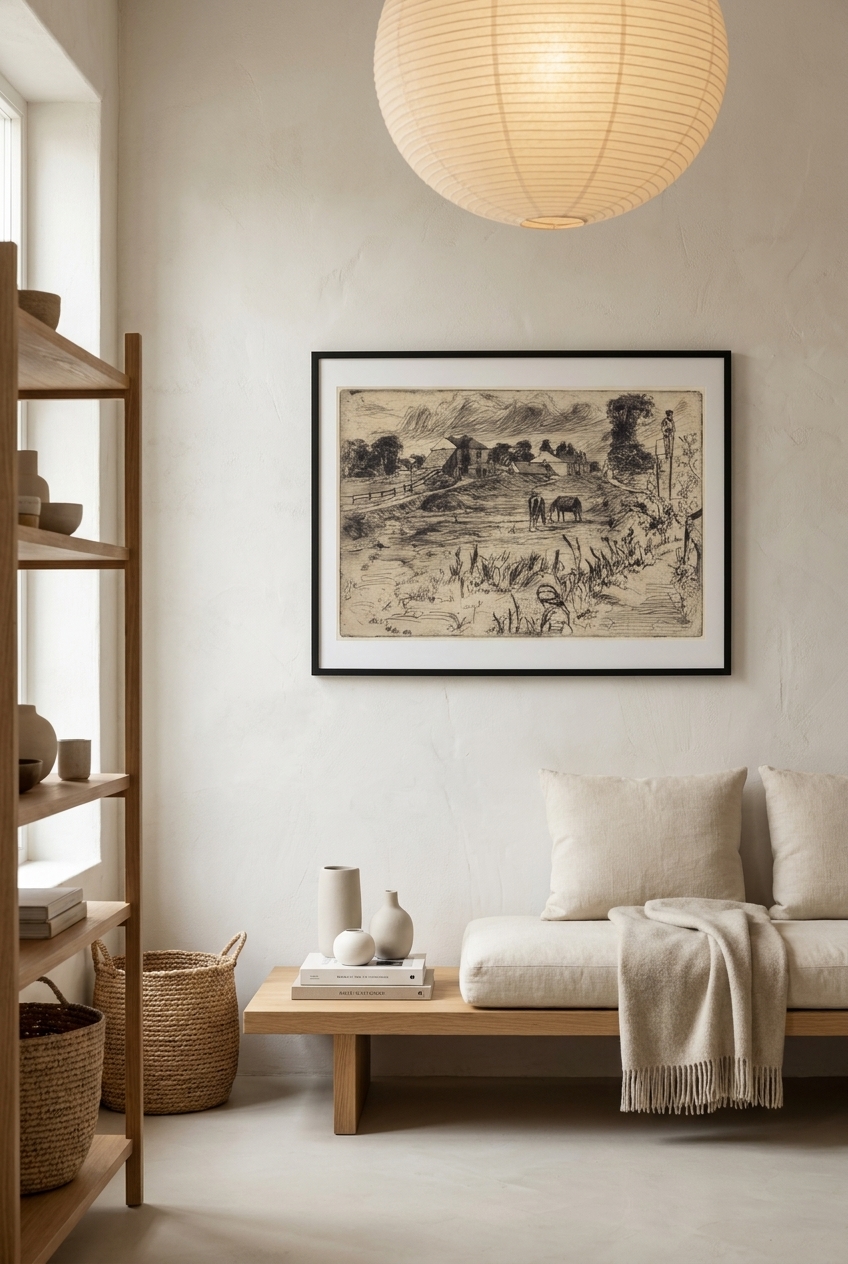
His brushwork was fluid and calligraphic, heavily influenced by Japanese woodblock prints. He applied thin washes of paint that seemed to float on the surface, capturing the fleeting, ethereal quality of light. Even in his early, more grounded works like Landscape with Horses (1859), you can see the beginnings of his lifelong fascination with atmosphere and light.
Abstracting the Everyday
Whistler’s genius lay in his ability to simplify. He stripped away unnecessary details to focus on the underlying structure and tonal balance of a scene. He wasn't interested in a literal, photographic representation of a place. He wanted to capture its essence, its mood.
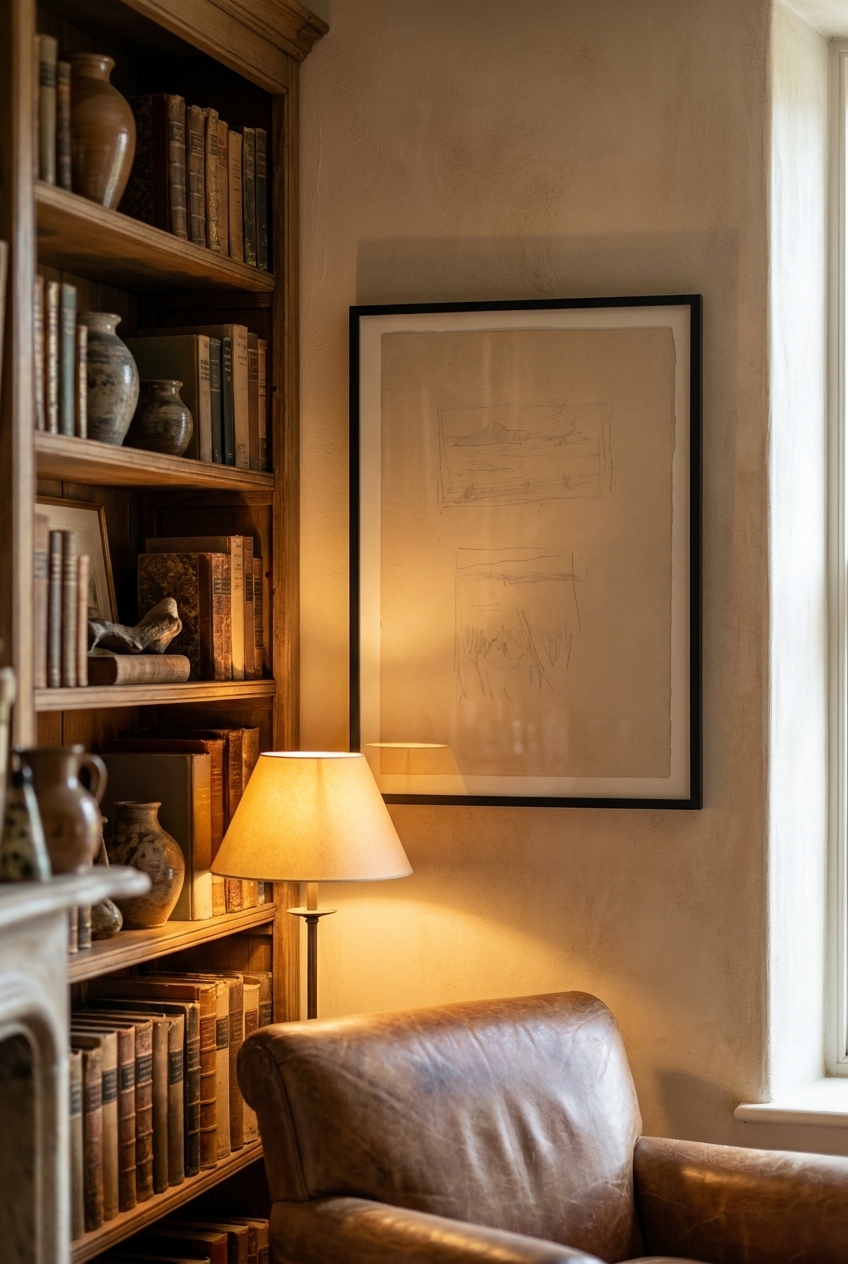
In pieces like his Two Sketches of Landscape Pictures hung at the Society of British Artists, we see how masterfully he could suggest form and depth with just a few gestural strokes. By treating landscapes and portraits as exercises in tonal abstraction, he paved the way for modern art, proving that what you leave out of a painting is just as important as what you put in.
Why Whistler Belongs in the Modern Home
There is a quiet, classical restraint to Whistler's work that makes it incredibly well-suited for contemporary living spaces. In an age of constant digital noise and bright screens, his paintings offer a visual sanctuary. A high-quality canvas print of a Whistler nocturne or arrangement brings a sense of calm, meditative depth to a room.
Because his color palettes are so beautifully restrained—relying on subtle gradations of charcoal, slate, soft cream, and deep indigo—his works blend seamlessly with modern interior design. They don't shout for attention; instead, they whisper, drawing you in and inviting you to pause, breathe, and appreciate the quiet harmony of the visual world.
Frequently asked questions
What does "art for art's sake" mean in Whistler's work?
It was the guiding philosophy of the Aesthetic Movement, which Whistler championed. It argued that art should be valued purely for its visual beauty and formal qualities—like color, line, and composition—rather than its ability to tell a moral story, teach a lesson, or depict historical events.
Why did Whistler name his paintings after musical terms?
Whistler frequently used terms like "nocturne," "arrangement," "symphony," and "harmony" for his titles. He did this to emphasize that his paintings were about visual music—the abstract relationship between colors and shapes—rather than the literal subject matter.
What is a "nocturne" in art?
Coined by Whistler, a nocturne refers to a painting that depicts a night scene, or a scene in twilight or mist. These works focus on the poetic, atmospheric qualities of low light and are characterized by a highly simplified, monochromatic color palette.