Nicoletto da Modena: The Renaissance Master of Ruins and Grotesques
In short: Nicoletto da Modena was an early Italian Renaissance printmaker who captured the mystery of ancient Rome through meticulous, fine-line engravings of ruins, classical myths, and intricate ornament panels.
The Archaeology of the Imagination
In the late fifteenth and early sixteenth centuries, northern Italy was swept by a fever of rediscovery. As shovel hit earth in Rome, the long-buried wonders of the ancient world came tumbling into the light. Among the artists captivated by this archaeological awakening was Nicoletto da Modena. Operating in the vibrant cultural currents of the early Italian Renaissance, Nicoletto was not just an observer of antiquity; he was its poetic translator, turning the silent stone of Roman ruins into intricate, living paper landscapes. His work stands today as a vital conduit of his era's profound obsession with classical antiquity.
While many of his contemporaries sought to paint grand, sweeping frescoes on church walls, Nicoletto found his voice in the quiet, demanding art of engraving. His works capture the solemn grandeur of crumbling arches, classical deities, and the highly stylized decorative patterns that lay hidden for centuries beneath the Italian soil. This was an era of transition, where medieval mysticism was giving way to a rigorous, humanistic exploration of the physical world, and Nicoletto was at the very forefront of this intellectual shift.
Precision Meets Poetry
What makes Nicoletto's work so instantly recognizable is his unique stylistic signature. He possessed a meticulous, fine-line technique that beautifully balanced the sharp, analytical precision of northern European printmakers with the warm, intellectual ideals of Italian humanism. Every brick in his decaying walls, every leaf on an overgrown column, and every fold of classical drapery is rendered with a breathtaking clarity.
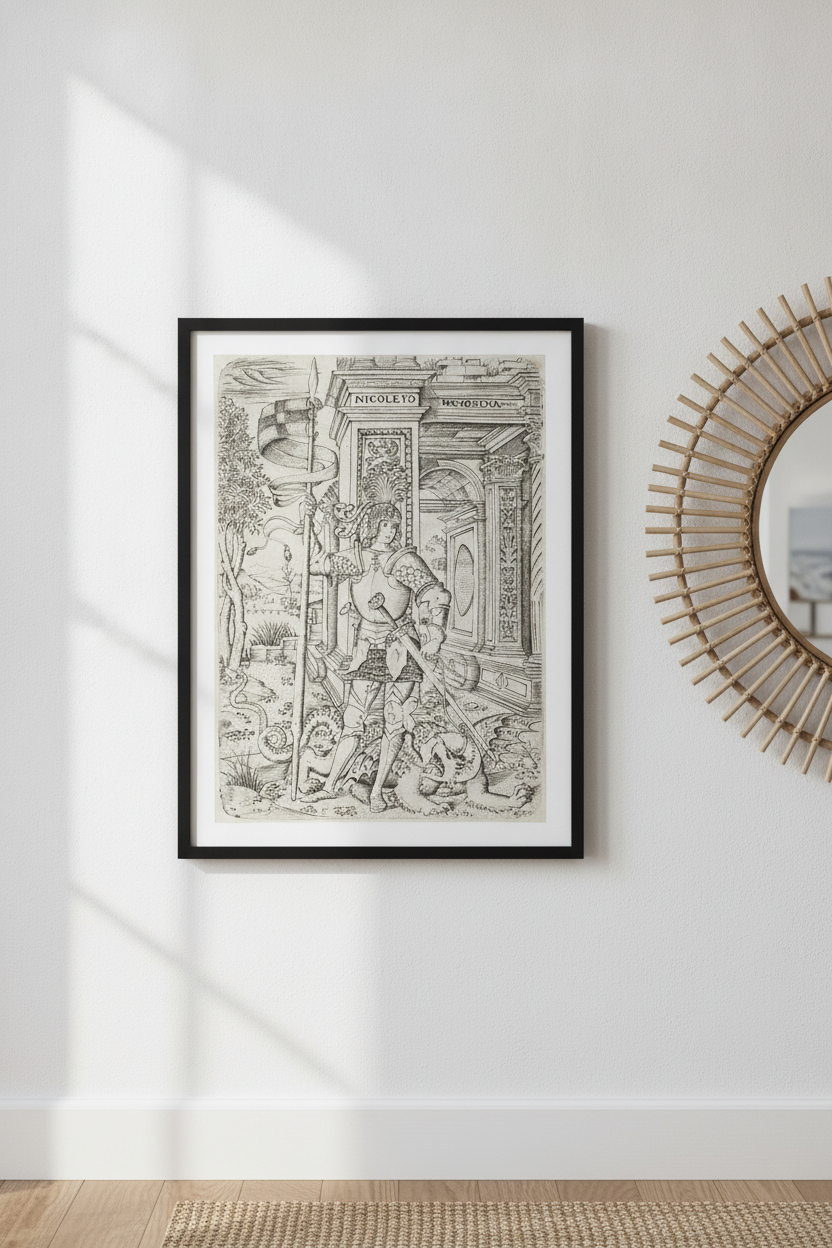
His compositions are often enigmatic, populated by allegorical figures and classical deities who seem lost in contemplation. For instance, in his masterpiece Saint George, we see a legendary figure framed not by a medieval castle, but by the imposing, geometric weight of classical architecture. It is a perfect marriage of Christian narrative and Renaissance humanism, rendered with fine, silvery lines that reward close inspection.
The Charm of the Grotesque
One of Nicoletto's most fascinating contributions to Renaissance art was his mastery of "grotesque" ornamentation. Inspired by the newly excavated ruins of Emperor Nero’s Golden House (the Domus Aurea), which artists climbed into with torches, these designs features fantastical, symmetrical arrangements of mythical beasts, foliage, urns, and strange hybrid creatures. In Nicoletto's hands, these ancient motifs became highly stylized, elegant patterns of pure imagination that delighted the eye and challenged the mind.
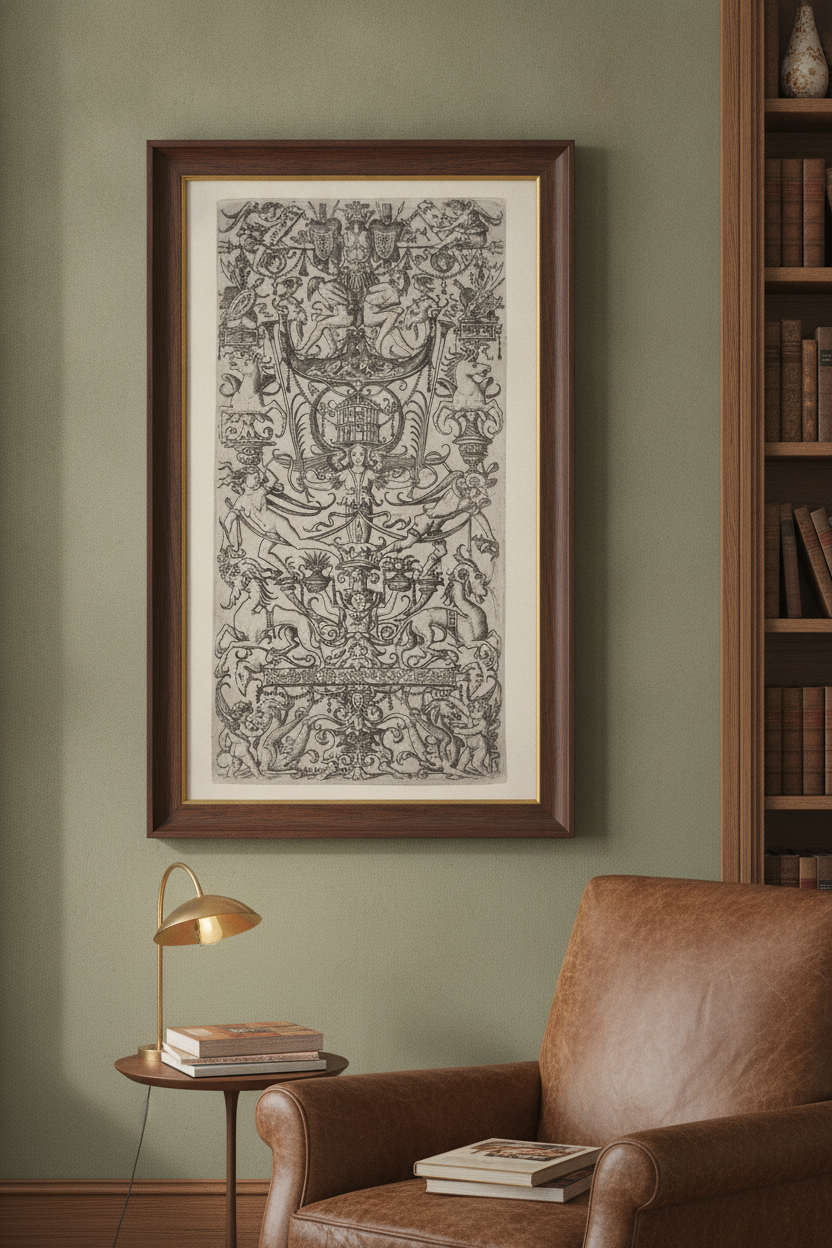
A stunning example of this is his Ornament Panel with a Birdcage. This piece showcases his ability to weave disparate elements—vines, classical vessels, and a central birdcage—into a harmonious, vertical design. It is intellectual, playful, and deeply decorative, representing a visual testament to the Renaissance revival of the antique. Such panels were not merely decorative; they were expressions of a mind fascinated by the underlying order and symmetry of the natural and classical worlds.
Classical Elegance for Modern Spaces
There is a timeless, graphic quality to Nicoletto's engravings that makes them exceptionally well-suited for modern interiors. Because his work relies on fine line work rather than heavy color, these prints offer a sophisticated, monochromatic elegance. They bring a sense of history, intellect, and quiet drama to a room without overwhelming its existing color palette.
Whether framed as a striking standalone piece or arranged as a gallery wall of classical studies, Nicoletto's art bridges the gap between the ancient world and contemporary design. Exploring the Nicoletto da Modena collection reveals a world of quiet contemplation, architectural beauty, and Renaissance mystery that can elevate any living space into a gallery of intellectual curiosity.
Frequently asked questions
What is "grotesque" ornamentation in Nicoletto's work?
The term "grotesque" comes from "grotte," the Italian word for caves, referring to the excavated underground ruins of ancient Rome where these whimsical, symmetrical designs of mythical creatures and foliage were rediscovered.
What technique did Nicoletto da Modena use?
Nicoletto was primarily an engraver, cutting fine lines directly into metal plates to create highly detailed, precise prints that combined northern European technical precision with Italian humanist themes.
Why do his prints feature so many ruins?
During the early Renaissance, artists were fascinated by the physical remnants of the Roman Empire. Nicoletto used ruins to symbolize the passage of time, the rebirth of classical knowledge, and the grand geometry of ancient architecture.