Painting the Spirit of Nature: The Atmospheric Landscapes of George Inness
In short: George Inness was a visionary American painter who moved beyond literal, detailed realism to capture the mood, light, and spiritual essence of the natural world.
The Painter of Air and Soul
In the mid-nineteenth century, American landscape art was dominated by the grand, literal depictions of the Hudson River School. Painters scaled mountains to capture every leaf, rock, and riverbend with scientific precision. But George Inness wanted something different. He did not just want to paint the trees; he wanted to paint the air between them.
Inness stands as a monumental figure in American art, bridging the heroic realism of his early contemporaries with a deeply subjective, classical sensibility. Heavily influenced by the French Barbizon school during his travels to Europe, he abandoned the idea of art as mere topographical reporting. Instead, he came to believe that the physical landscape was a vessel for philosophical and emotional inquiry. To explore his evolution, you can browse the complete George Inness collection.
From Detail to Mist: The Artist's Journey
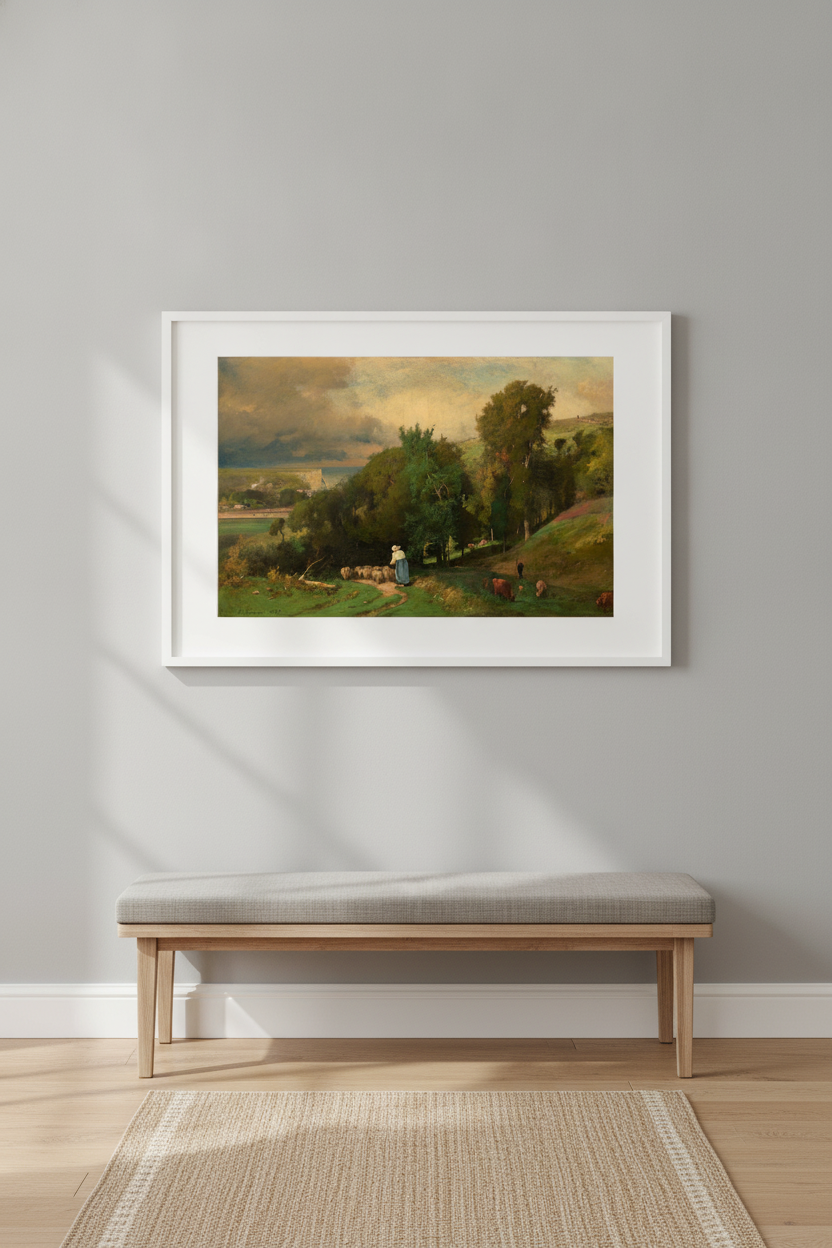
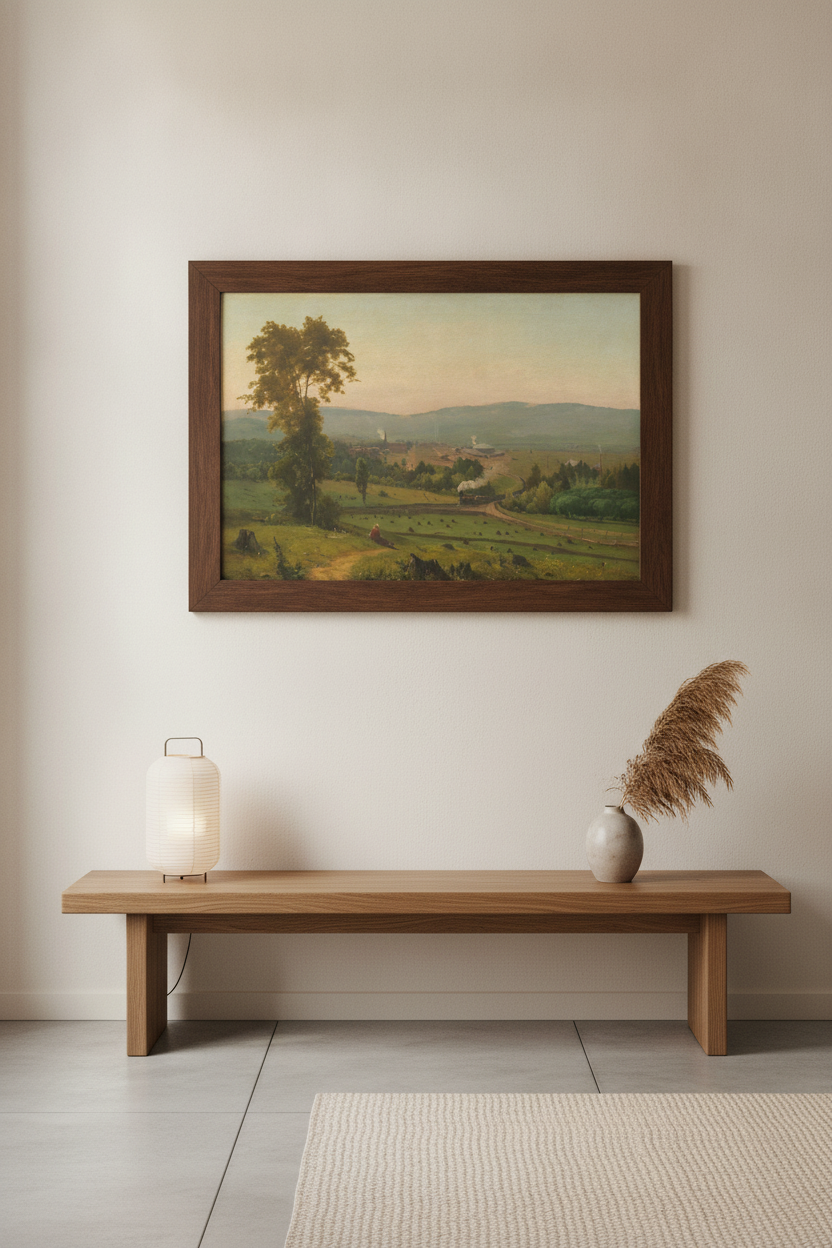
Inness’s career was a journey of gradual simplification. His early works show a respect for structure and detail, yet they already hinted at a unique interest in light and atmosphere. A prime example is The Lackawanna Valley (c. 1856), which beautifully balances a developing industrial landscape with a soft, expansive sky.
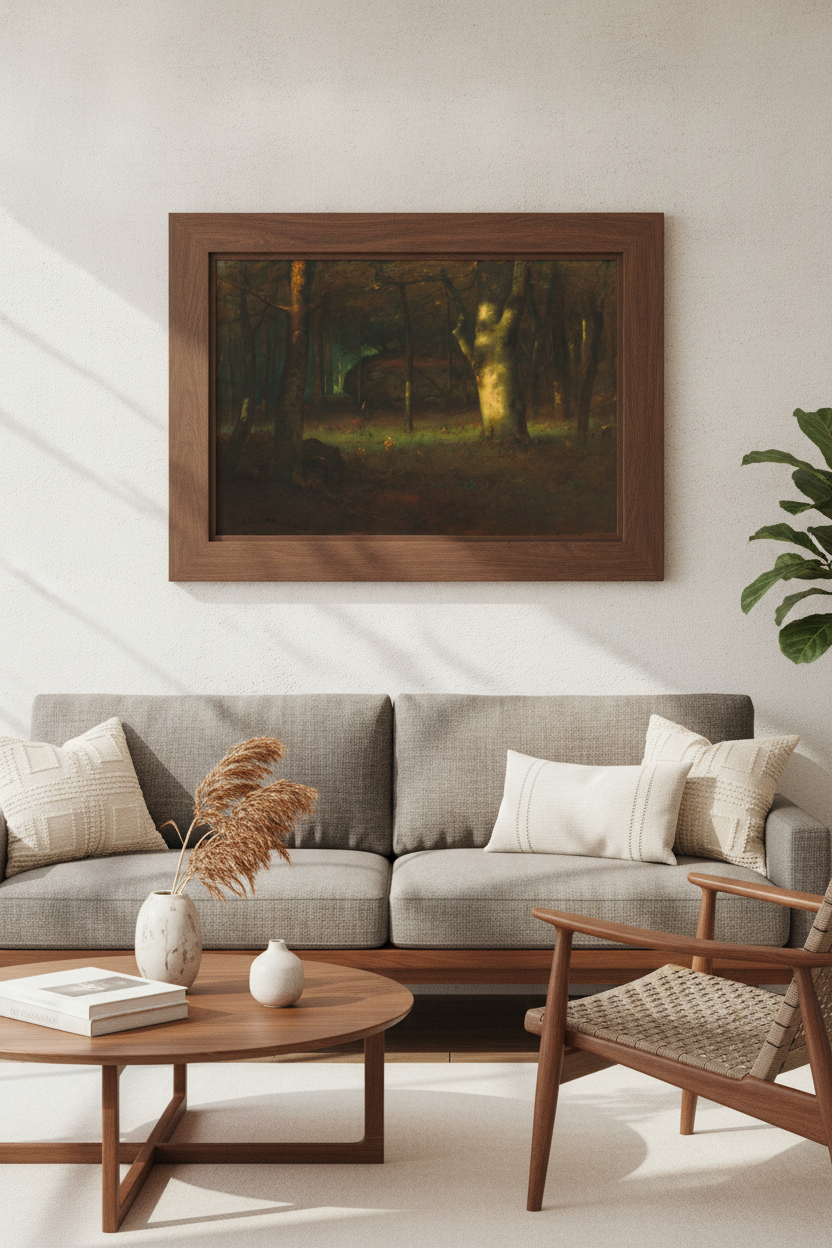
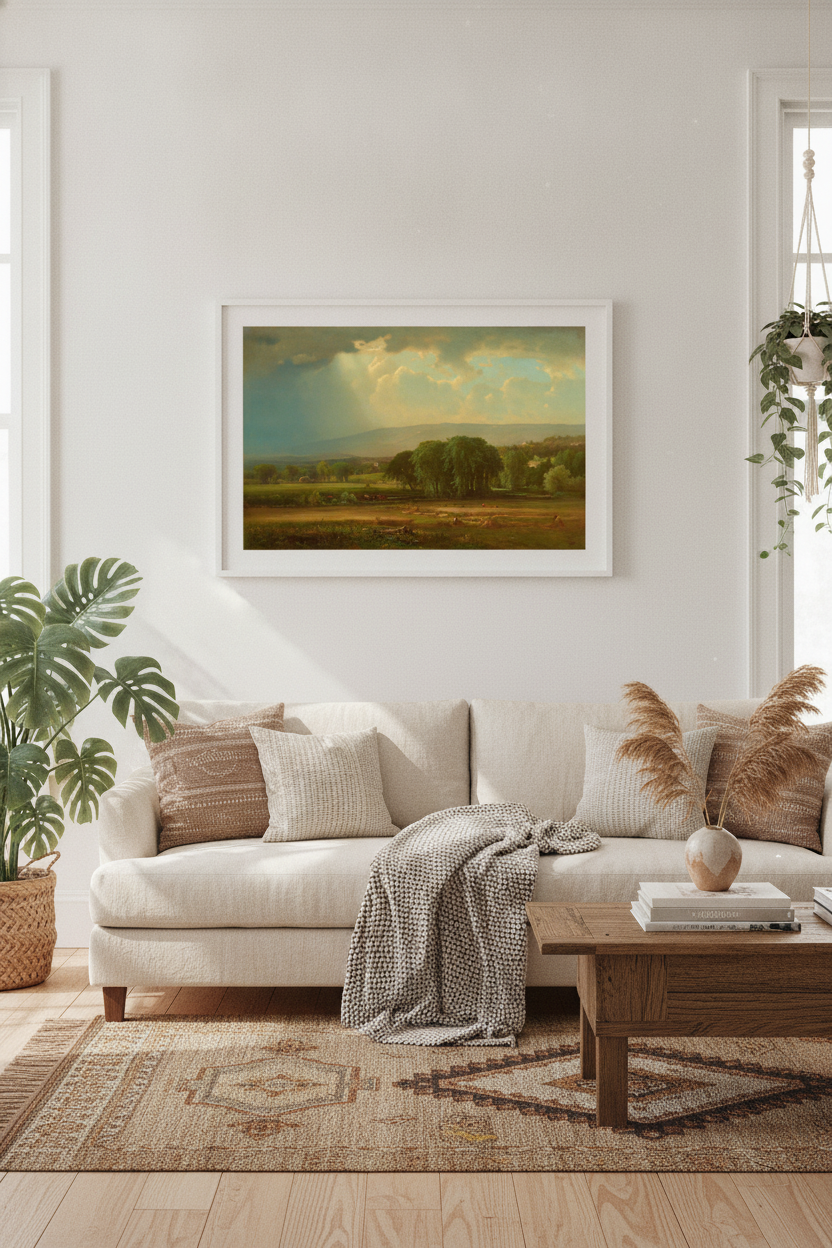
As the decades progressed, Inness’s brushwork grew looser and his compositions more abstract. He began to dissolve solid forms into hazy, mist-shrouded atmospheres. By the late 1880s and 1890s, his paintings had become deeply poetic, bordering on mysticism. In masterpieces like Sunset in the Woods (1891), we see the culmination of this style: trees lose their hard edges, the forest floor glows with an inner light, and the entire scene feels like a half-remembered dream.
What to Look For: Light, Tone, and Quietude
When studying a painting by George Inness, your eyes should adjust the way they do when walking into a dimly lit room. He masterfully employed a restricted, tonal palette—often dominated by earthy ochres, deep forest greens, and soft, glowing ambers. Rather than using bright, jarring colors, he relied on subtle gradations of tone to create depth.
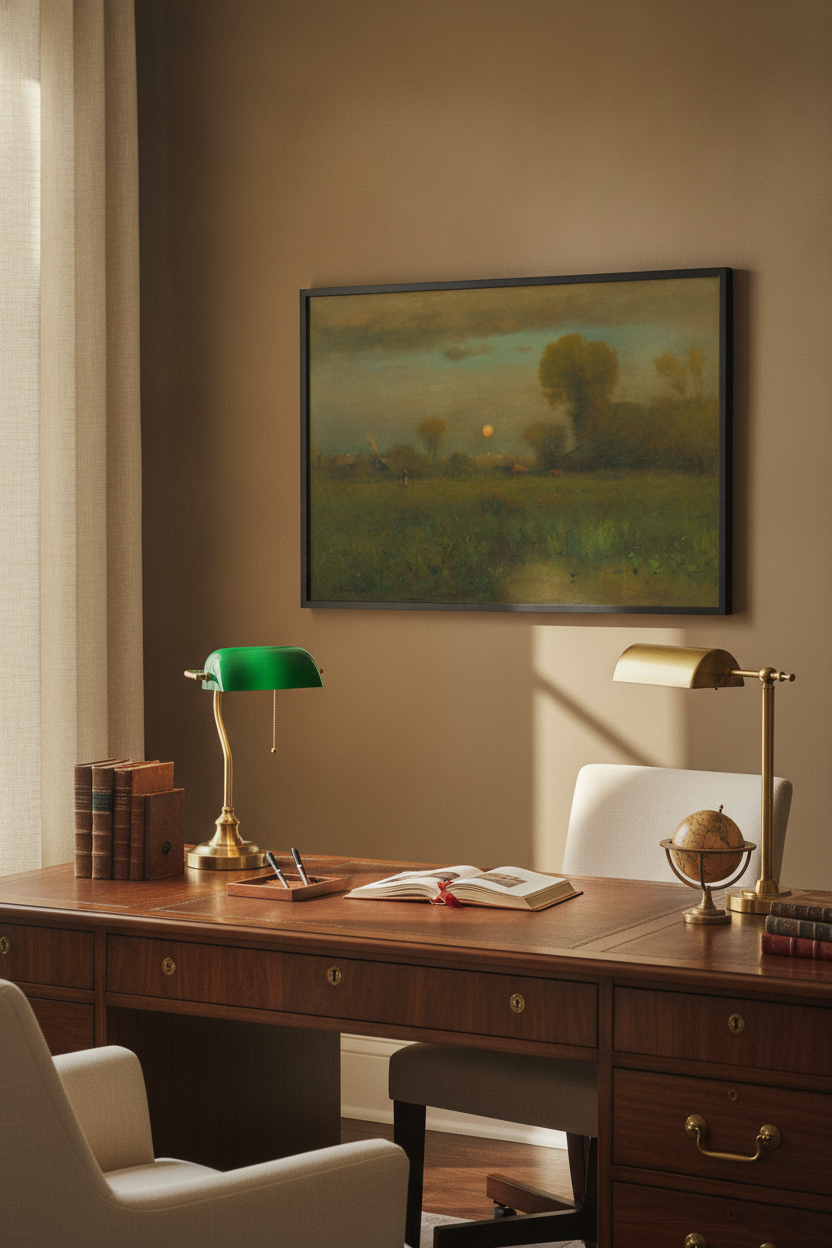
Look closely at how he handles light. In works like Harvest Moon (1891), the light does not merely strike the surface of objects; it seems to emanate from within the canvas itself. This technique blurs the boundary between the physical earth and the ethereal, inviting the viewer into a state of quiet, introspective meditation.
Why Inness Suits the Modern Home
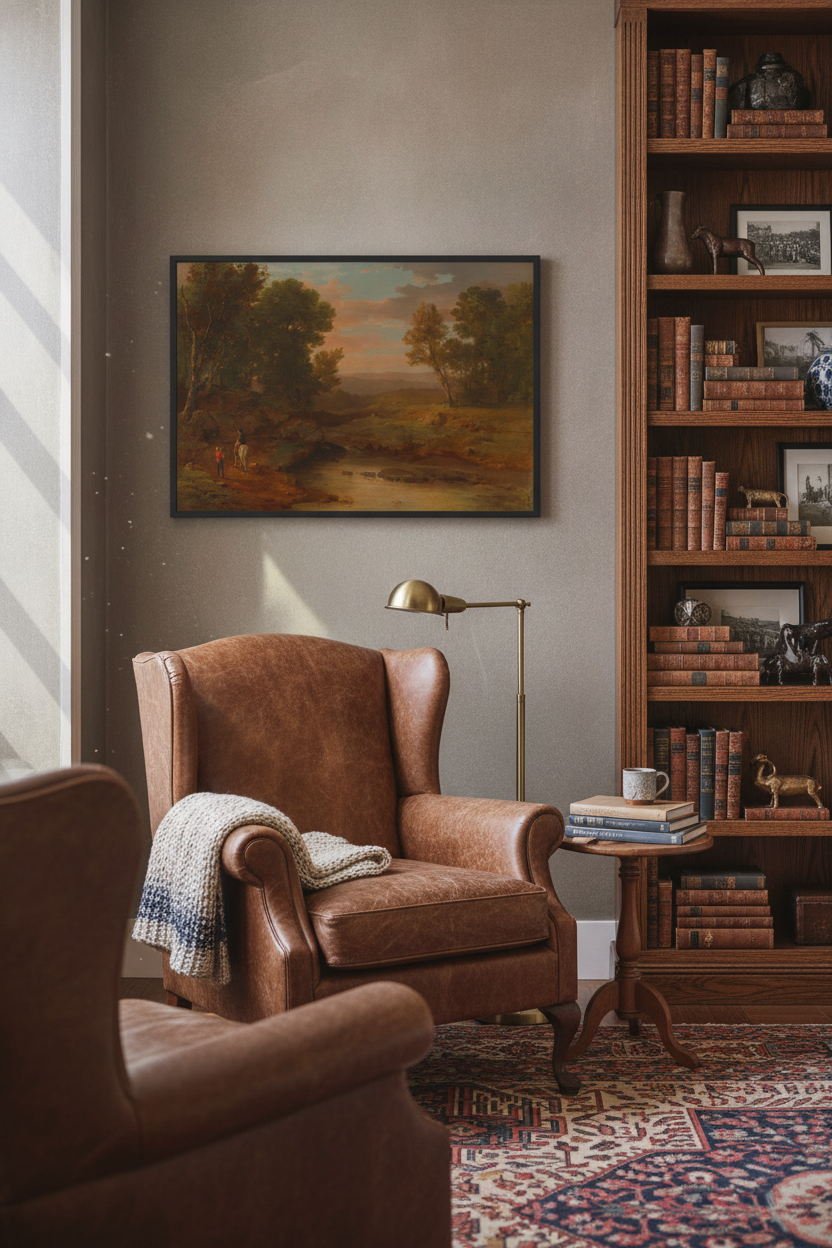
There is a unique versatility to Inness’s landscapes that makes them exceptionally well-suited for modern living spaces. Because his late works rely on mood, atmosphere, and simplified shapes rather than busy, distracting details, they bring an instant sense of calm to a room. They do not demand your attention with loud colors; instead, they offer a quiet, comforting presence on the wall.
Whether framed as a fine-art print or stretched as a textured canvas, an Inness reproduction acts as a visual sanctuary. His warm, earthy tones ground contemporary minimalist interiors, while his classical compositions add depth and history to more traditional decor.
Frequently asked questions
Was George Inness part of the Hudson River School?
While Inness began his career under the influence of the Hudson River School, he quickly grew away from their highly detailed, literal style. He found their approach too rigid and scientific, choosing instead to follow the emotional, subjective path of the French Barbizon school and classical European landscape traditions.
What is 'Tonalism' and how does it relate to Inness?
Tonalism is an artistic style that emerged in the late 19th century, characterized by misty, atmospheric landscapes painted with a limited range of muted colors. Inness is widely considered one of the pioneering masters of this movement, using soft focus and tonal harmony to evoke spiritual and emotional moods.
How do George Inness prints look on canvas versus paper?
Because Inness's paintings feature rich, layered textures and soft, dissolved edges, they translate beautifully to both mediums. Canvas prints emphasize the painterly, physical texture of his brushwork, while fine-art paper prints highlight the delicate, hazy gradients of his atmospheric lighting.