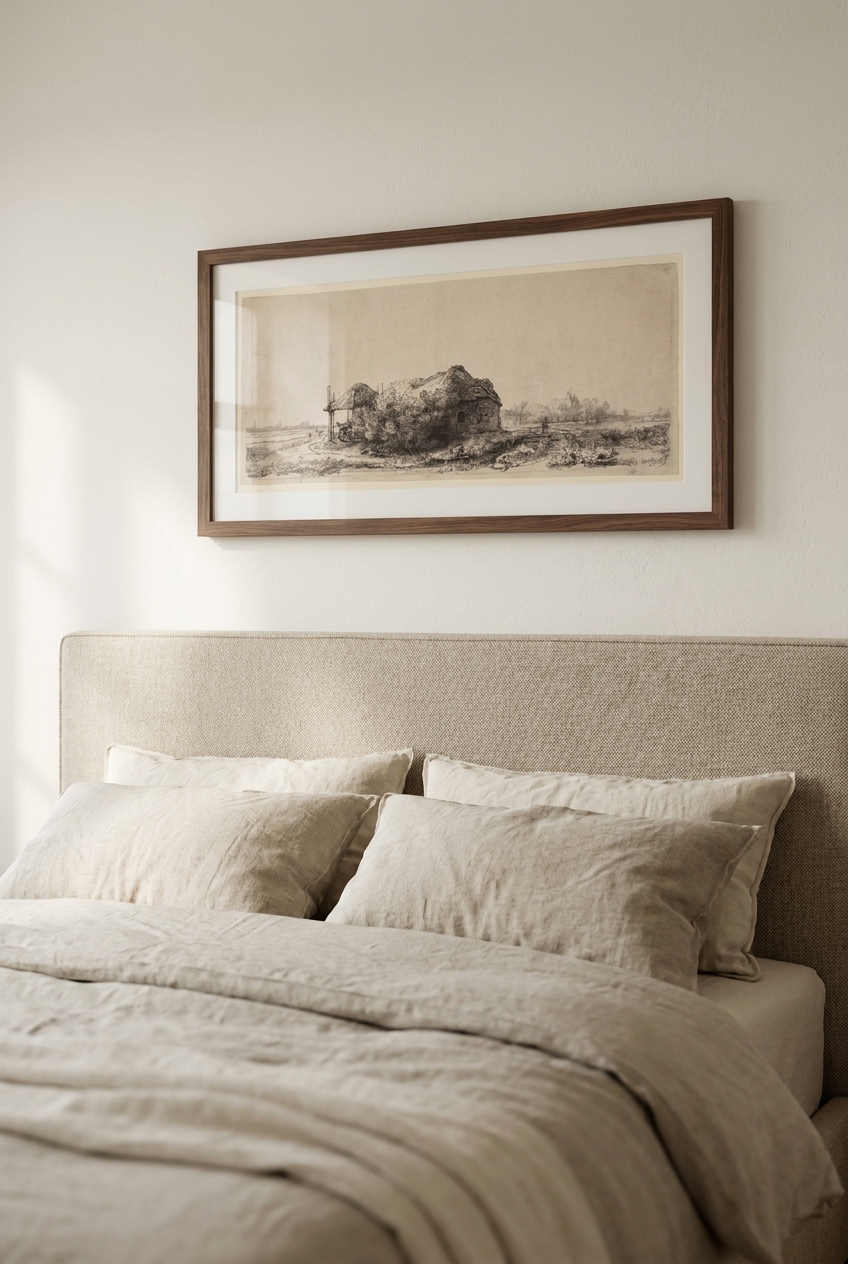
Rembrandt's Living Shadow: Why the Dutch Master Still Speaks to Us
In short: Rembrandt revolutionized art by painting human vulnerability rather than perfection. Through dramatic light and shadow, his landscapes and portraits bring an unmatched, soulful warmth to contemporary spaces.
The Master of the Human Soul
Rembrandt van Rijn did not paint gods or flawless heroes. While his contemporaries in the seventeenth century often chased idealized perfection, this son of a Leiden miller chose a different path. He looked closely at the world around him and painted the human soul—wrinkles, worry, joy, and all. As the towering figure of the Dutch Golden Age, Rembrandt redefined what art could do by making it deeply, unapologetically human.
His genius lay in his refusal to tidy up reality. Whether depicting a biblical scene, a self-portrait, or a quiet countryside, he captured life in mid-breath. This commitment to raw observation is why his work feels just as alive today as it did nearly four centuries ago. It is art that looks back at you, carrying the weight and warmth of real experience.
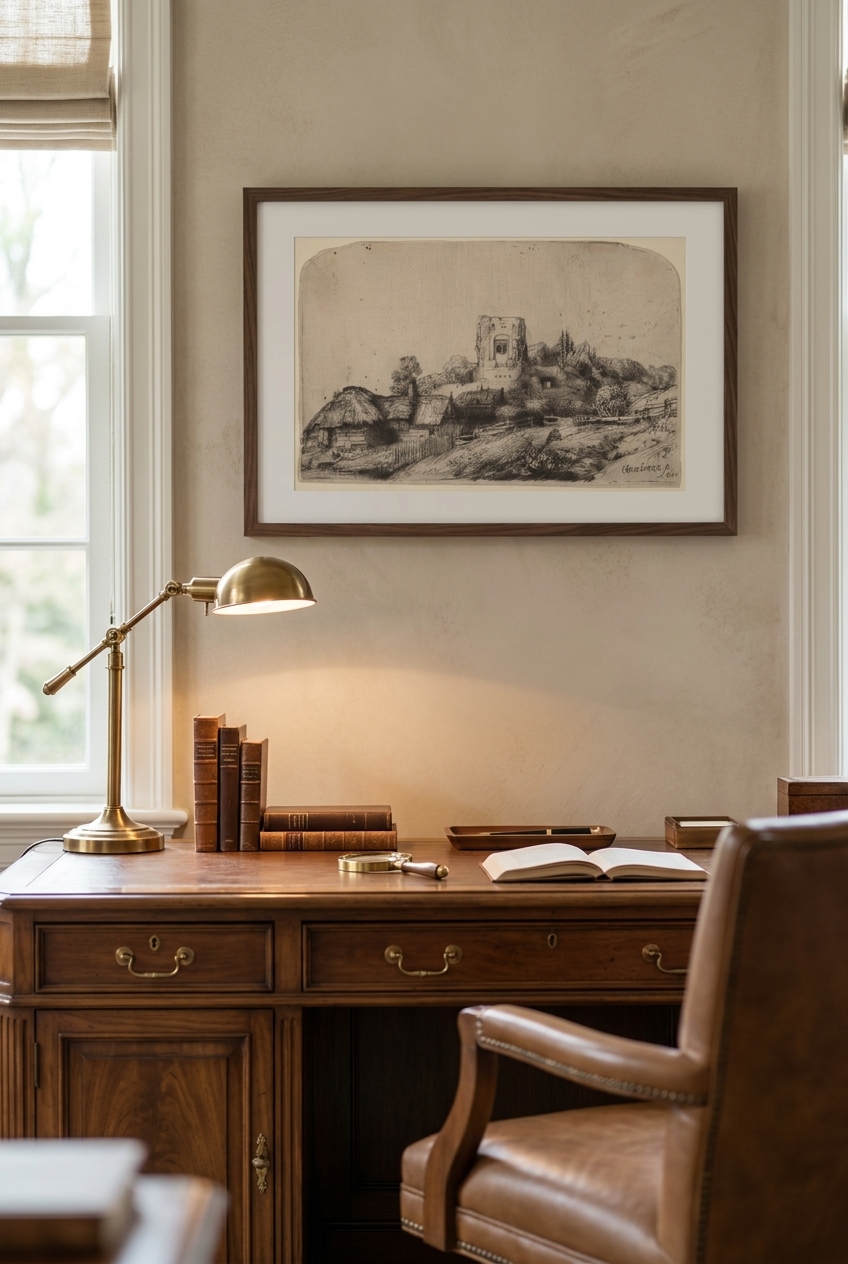
Painting with Light and Shadow
To understand Rembrandt is to understand his obsession with light. He was the ultimate master of chiaroscuro—the dramatic contrast between light and dark. In a Rembrandt painting or print, light is never just illumination; it is a storyteller. It sweeps across a dark room, catching the edge of a collar, the curve of a cheek, or the rough texture of a wooden barn.
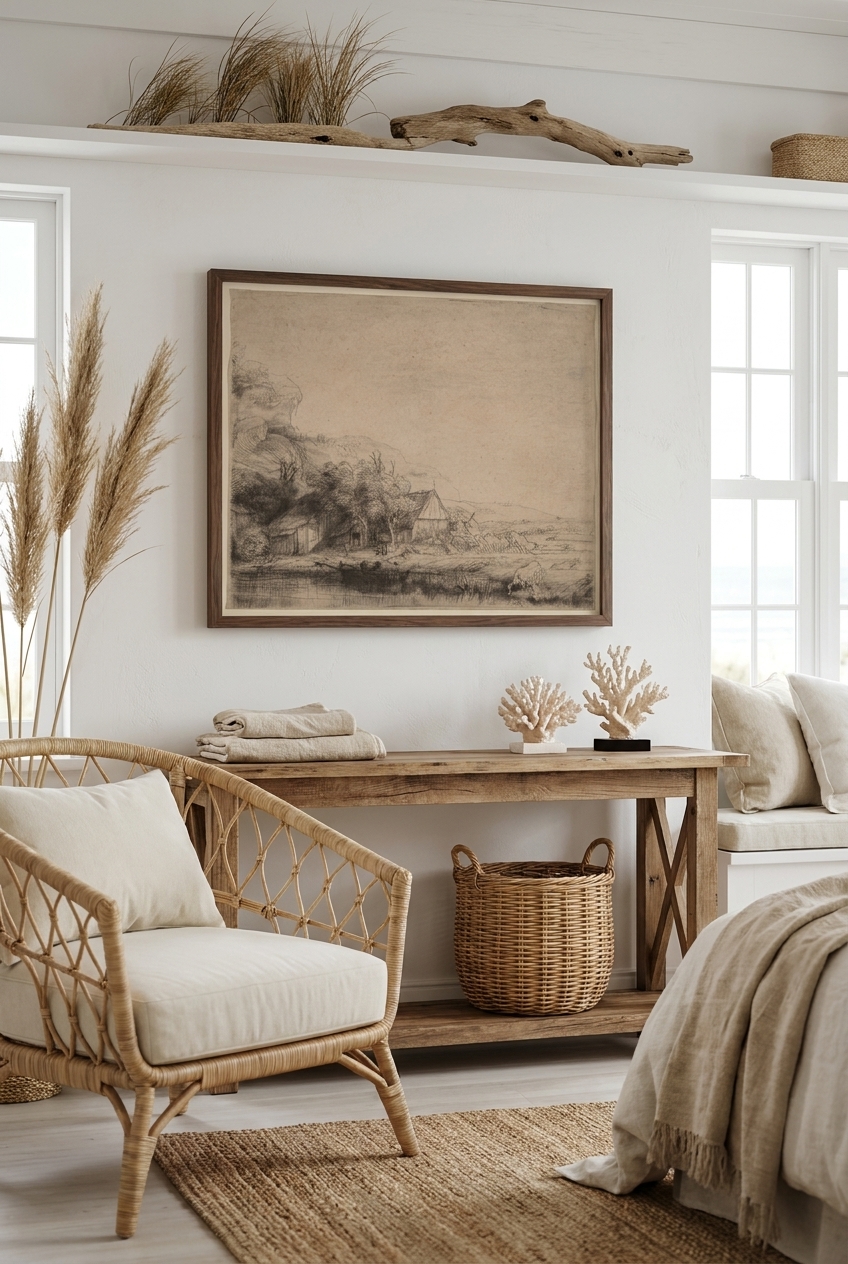
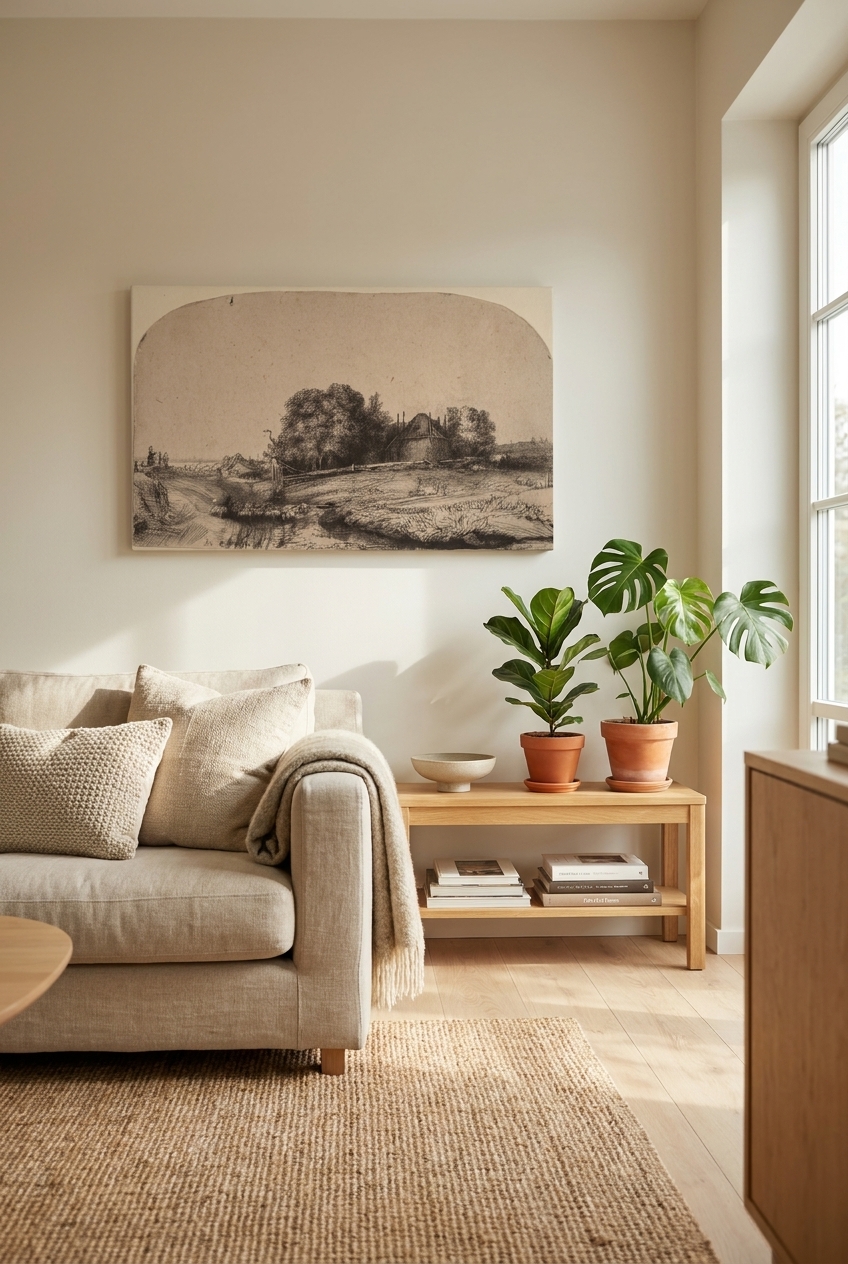
This directional light seems to emerge from deep, atmospheric darkness, creating an incredible sense of intimacy. It draws our eyes exactly where the artist wants them, forcing us to slow down and feel the quiet drama of the moment. His landscapes are particularly brilliant examples of this technique. In works like Landscape with a Square Tower (1650), the sky and earth seem to wrestle, with sudden bursts of light revealing the quiet, rustic beauty of the Dutch countryside.
The Quiet Magic of His Landscapes
While many know Rembrandt for his grand historical paintings, his quieter landscape works reveal a deeply personal side of his artistry. He loved to wander the fields outside Amsterdam, sketching the simple, everyday scenes of rural life. These pieces are masterpieces of atmosphere, rendering wind, damp air, and shifting sunlight with incredible economy of line.
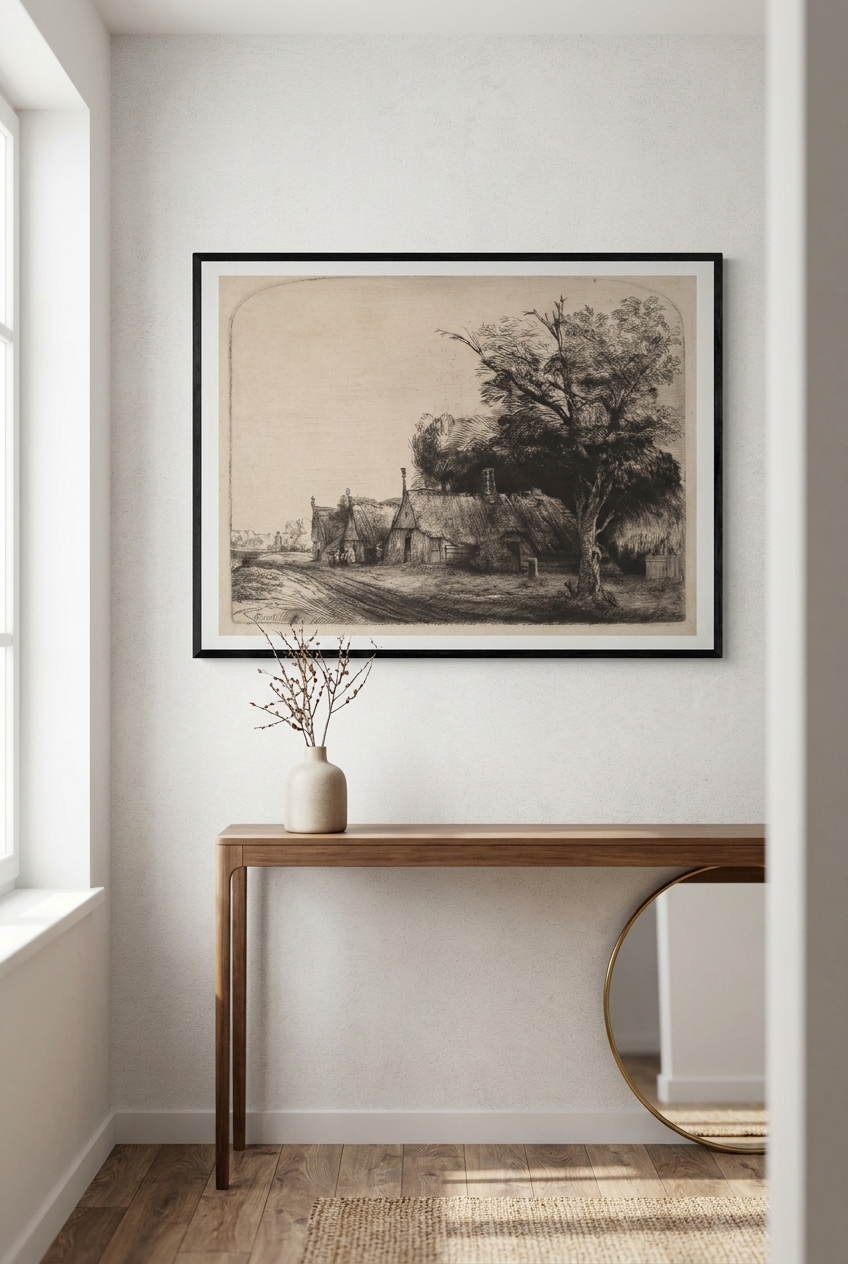
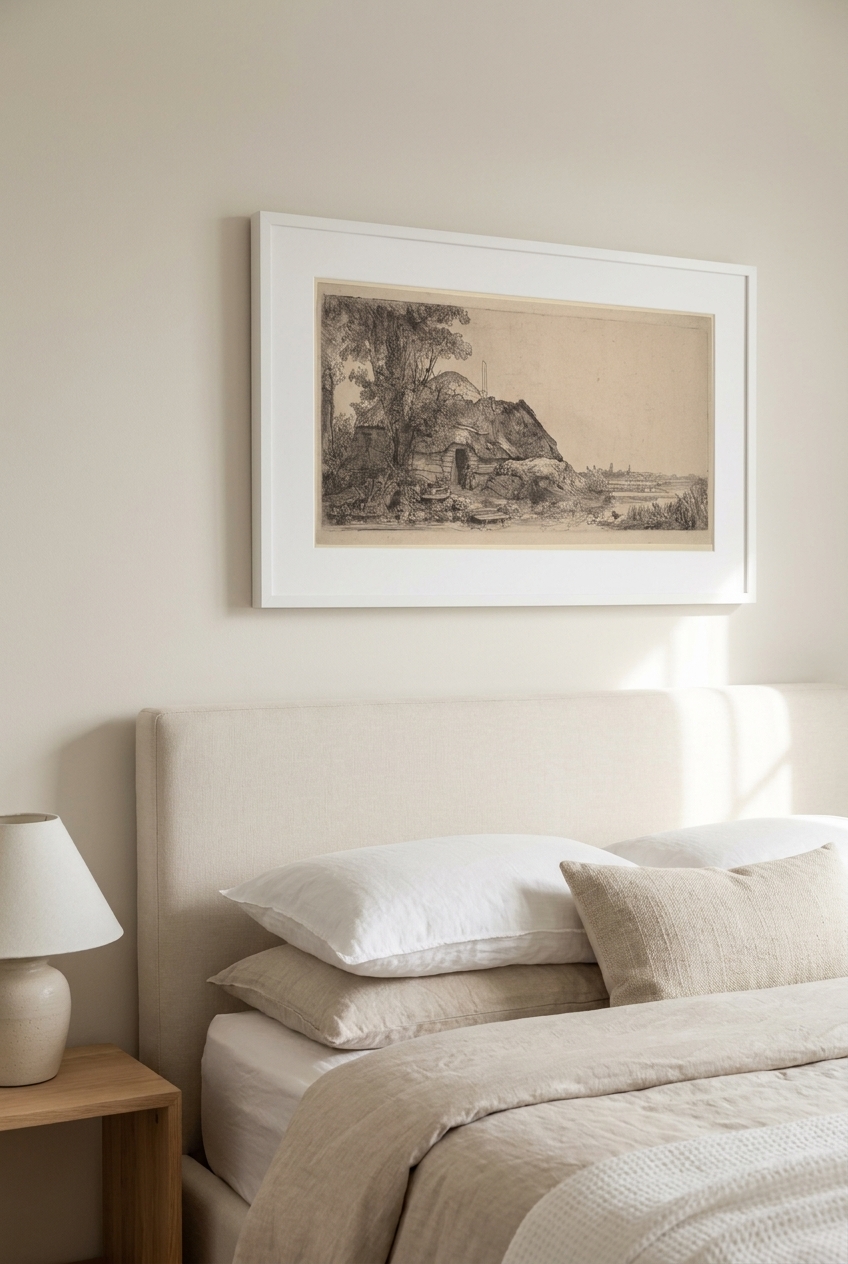
For instance, Landscape with Three Gabled Cottages beside a Road (1650) captures a fleeting moment of rural stillness, where the thatched roofs and winding paths feel entirely tactile. Similarly, in Landscape with a Cottage and a Large Tree (1641), he contrasts the massive, gnarly presence of nature with the humble, human-scale shelter of a cottage. These works show that Rembrandt did not need grand subjects to create something monumental; he found the extraordinary in the ordinary.
Bringing the Dutch Golden Age into the Modern Home
There is a common misconception that classical art only belongs in traditional, dark-wood libraries. In truth, Rembrandt's work has a striking graphic quality and emotional warmth that beautifully grounds modern, minimalist, or eclectic interiors.
A high-quality giclée print of his work acts as an anchor in a room. The deep, velvety blacks and warm, golden highlights create an instant focal point, adding a layer of history and soul to clean modern lines. Whether you choose a framed print of a moody landscape or explore the wider Full Rembrandt van Rijn collection for a striking canvas, these pieces bring a sense of quiet contemplation to our fast-paced lives. They are not merely decorative; they are conversations with history, rendered in exquisite, lasting detail.
Frequently asked questions
What makes Rembrandt's use of light so unique?
Rembrandt mastered chiaroscuro—the contrast between light and dark. Instead of lighting a scene evenly, he used a focused, directional beam of light that seems to emerge from deep shadow. This technique creates a dramatic, intimate atmosphere and draws the viewer's eye directly to the emotional heart of the piece.
Did Rembrandt only paint portraits?
No, while he is famous for his self-portraits and group portraits, Rembrandt was an incredibly versatile artist. He produced numerous dramatic biblical and mythological scenes, as well as highly atmospheric landscapes, drawings, and innovative etchings that captured the Dutch countryside.
How do Rembrandt prints look on canvas versus paper?
Both options look stunning but offer different vibes. A fine-art paper print preserves the crisp, delicate lines of his etchings and drawings, making them look like authentic gallery acquisitions. Canvas prints, on the other hand, emphasize the rich, tactile textures of his painted brushwork and the deep warmth of his dark tones.