Styling Botanical Art in Kitchens and Dining Rooms: An Elevated Guide
In short: Bring life to your culinary and dining spaces by layering botanical prints with natural wood, choosing thoughtful scales, and opting for museum-quality frames that bridge the gap between nature and architecture.
The Culinary Canvas
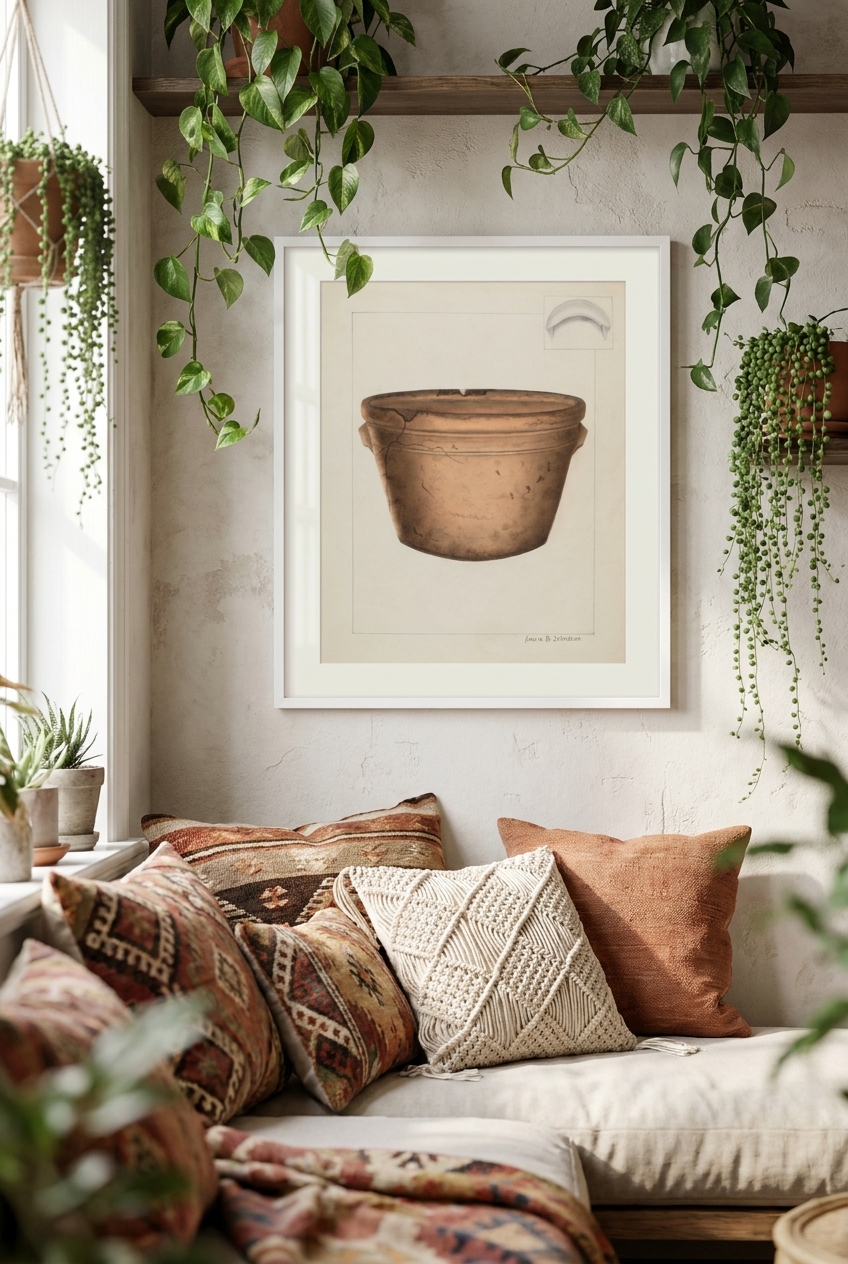
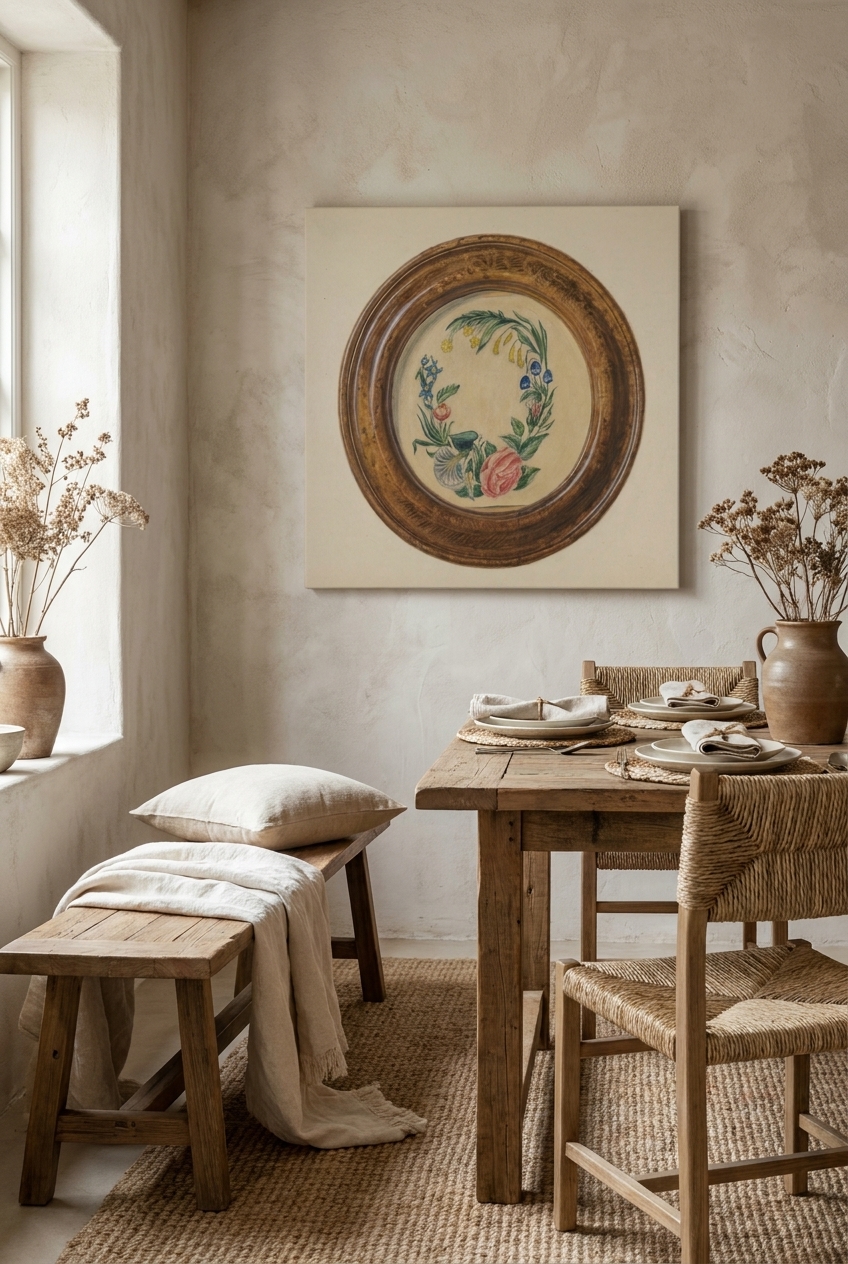
Kitchens are often filled with hard, cold surfaces like marble, stainless steel, and tile. Botanical art acts as an organic counterpoint, softening these textures with warmth and life. Instead of predictable culinary motifs, look for classical floral studies that bring a sense of history and artistry to the space. A smaller, framed work like the Wall Pocket for Flowers tucked onto an open shelf next to stacked ceramic bowls adds instant character. To protect your prints, keep them away from direct steam or grease, choosing spots like breakfast nooks, near a window, or beside a pantry door.
Dining Room Drama
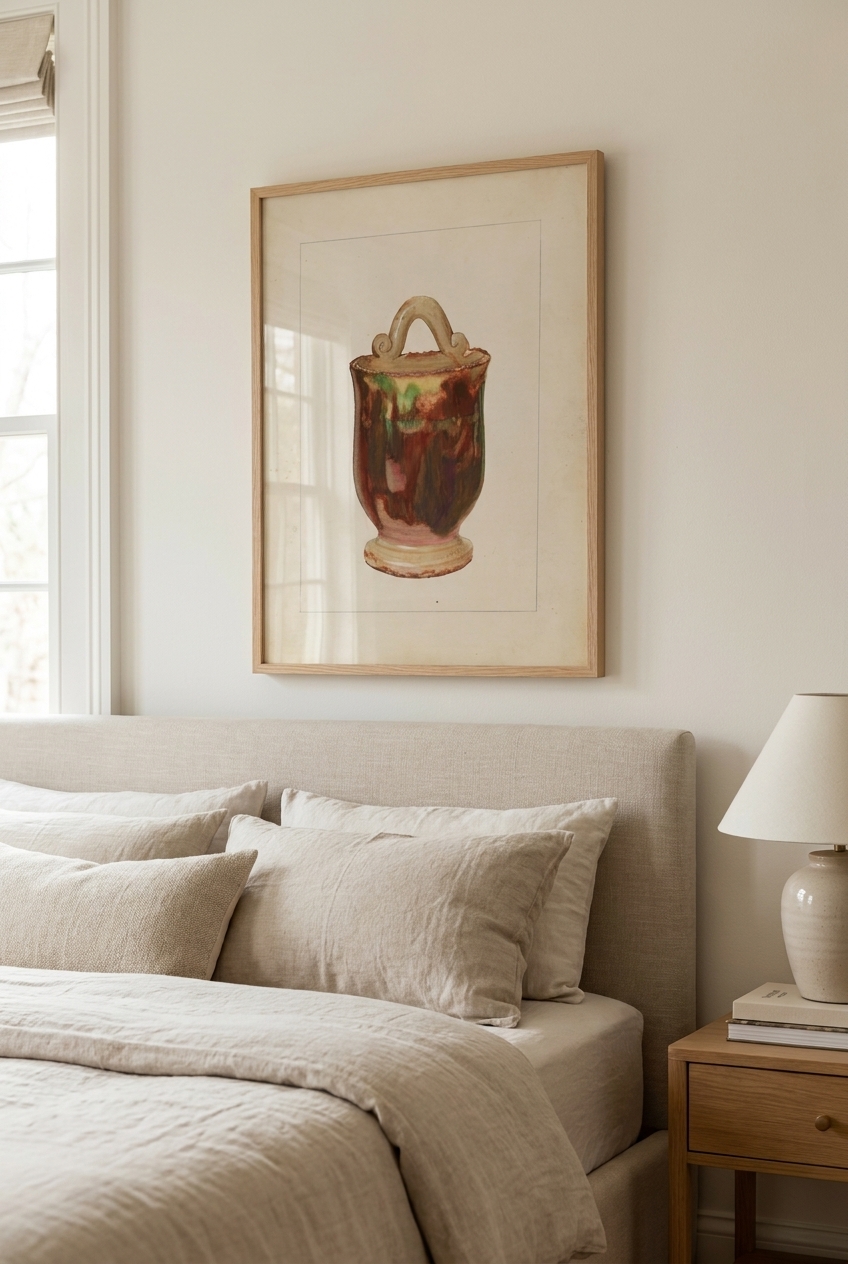
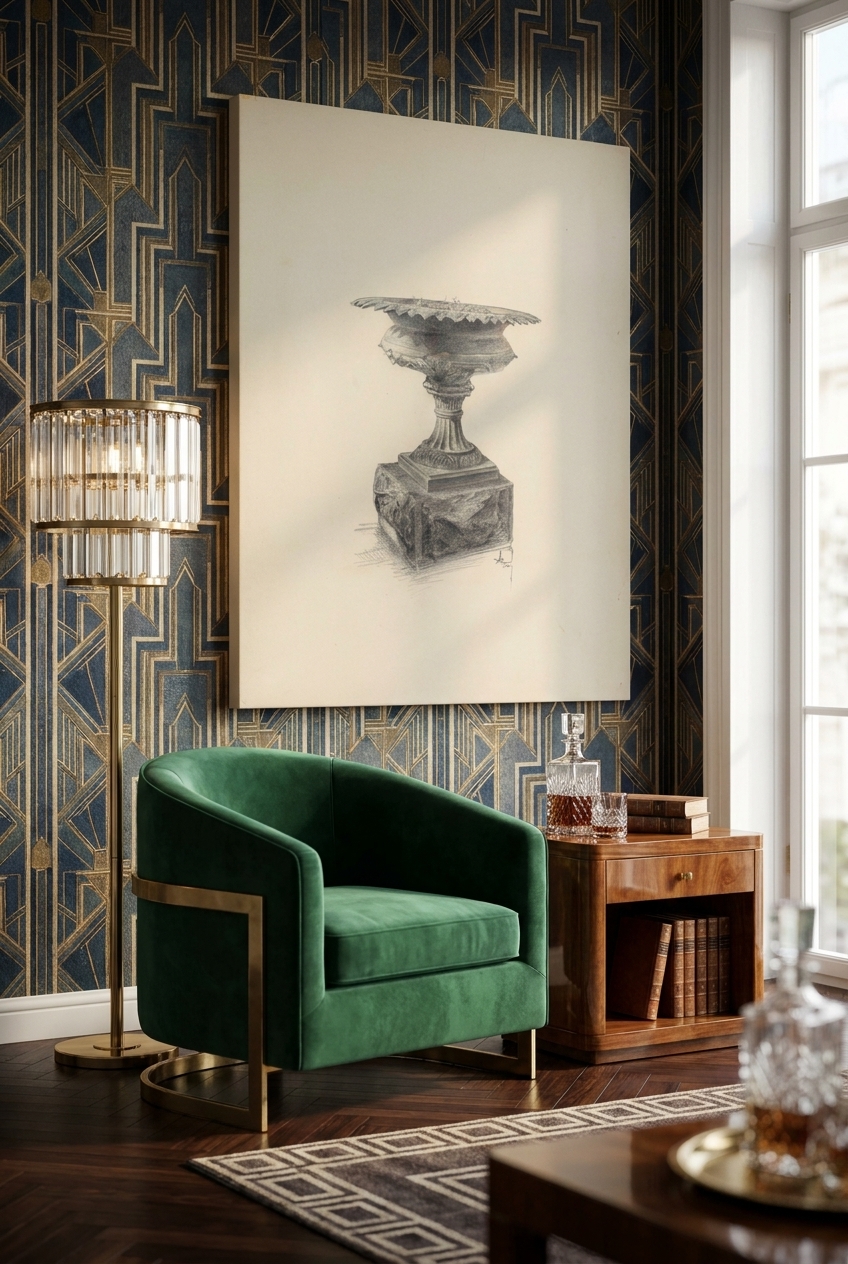
In the dining room, art sets the tone for long, lingering conversations. This space allows for larger scales and deeper, richer palettes that command attention. A grand floral arrangement on paper, such as the Urn for Flowers, makes an elegant focal point above a sideboard or credenza. It anchors the room, drawing the eye and establishing a sophisticated color story that you can pull into your table linens, taper candles, and dinnerware.
Framing and Material Harmony
To make botanical prints look like curated gallery pieces rather than temporary decor, pay close attention to framing. Warm, tight-grained woods like oak or walnut complement the organic subject matter beautifully. For a more formal dining room, a slim, distressed gilt frame adds a touch of historical romance. Consider pairing these prints with other natural materials in the room: linen tablecloths, turned wood candleholders, and hand-thrown stoneware. The goal is a layered, collected look that feels as though it evolved over decades.
Curating the Perfect Pair
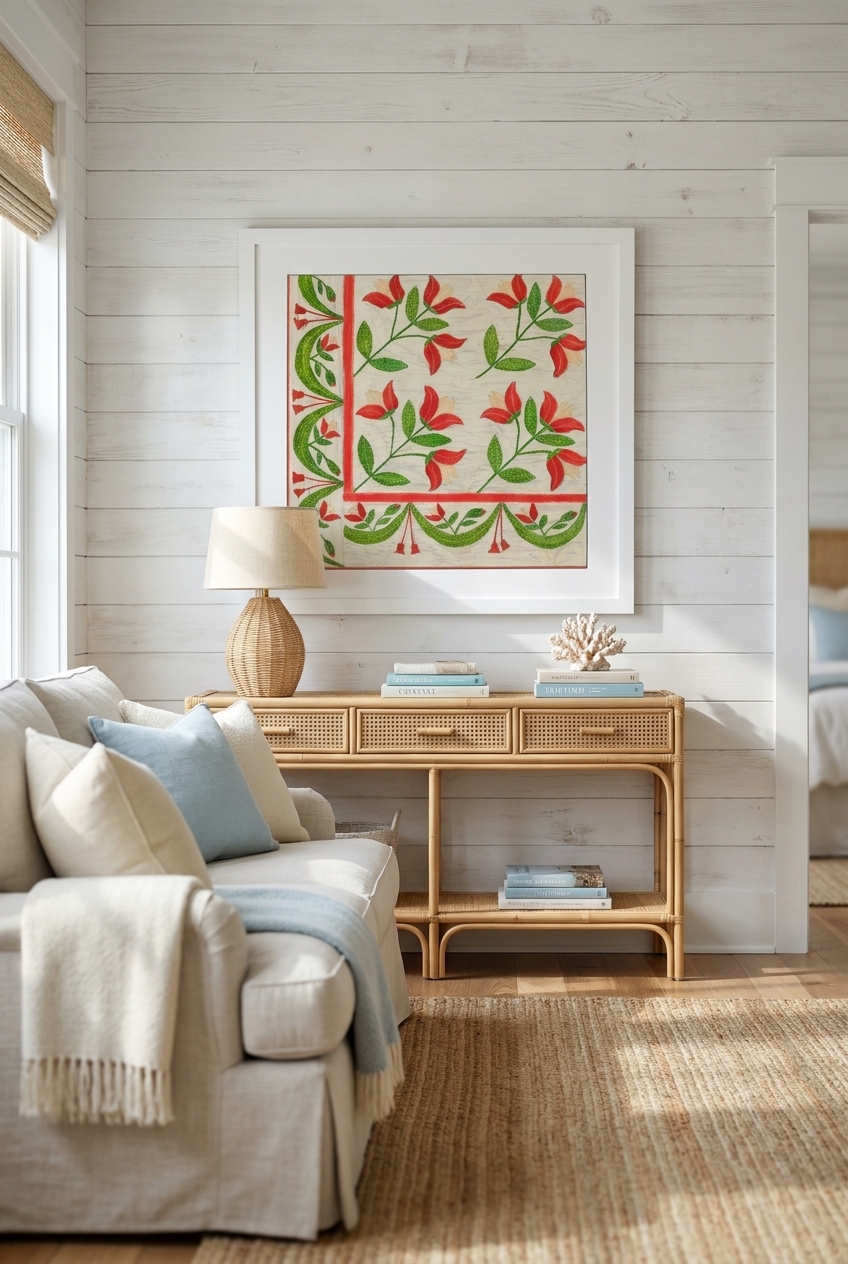
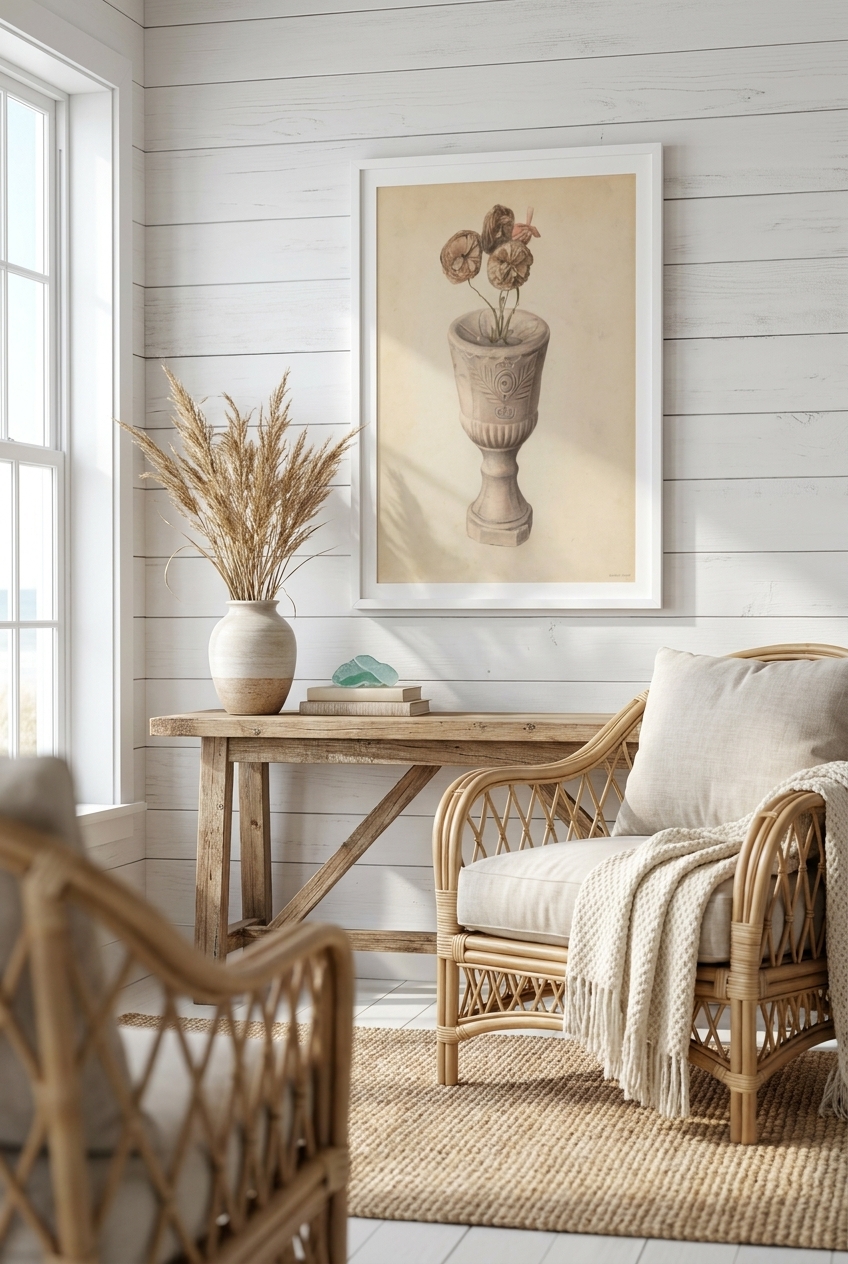
If you have a larger wall to fill, resist the urge to hang a massive, single modern canvas. Instead, create a sophisticated pairing or a small triptych of related botanical works. Look for prints that share a similar historical feel but offer contrasting compositions. For example, pairing a structured, vessel-focused piece with a more intimate, close-up study like the Framed Flower Painting creates a visual dialogue that keeps the eye moving and adds depth to your dining space.
Frequently asked questions
How do I protect botanical prints in a kitchen environment?
Keep prints framed under glass or acrylic and hang them away from high-moisture zones like the immediate backsplash behind the stove or sink. Well-ventilated areas, open shelving, or dining nooks are ideal.
Should I match the wood of the frame to my kitchen cabinets or dining table?
Not necessarily. A perfect match can feel sterile. Instead, aim for harmony. If you have dark walnut cabinets, try a warm oak or a gilded frame to create a subtle, sophisticated contrast.
What size art works best above a dining room sideboard?
As a rule of thumb, the artwork or grouping should span roughly two-thirds to three-quarters of the width of the sideboard. This creates a balanced visual anchor without overwhelming the furniture.