The Art of Calm: A Guide to Classical Landscapes
In short: Classical landscapes offer an idealized, beautifully balanced vision of nature. From the golden light of Claude Lorrain to the atmospheric woods of George Inness, these timeless works bring order, warmth, and a sense of peace to modern homes.
The Poetry of Order
What makes a landscape "classical"? It isn't just a painting of the outdoors; it is an act of gentle curation. The movement began in the seventeenth century with masters like Claude Lorrain, who looked at the wild, untamed Italian countryside and decided it needed a bit of poetic structure. Instead of painting nature exactly as it was, classical landscape artists arranged it. They used trees like stage curtains to frame the view, winding rivers to lead the eye gently toward the horizon, and a soft, golden light that made everything feel ancient, peaceful, and permanent. It is nature, but elevated to its most harmonious state.
The Evolution of Light and Atmosphere
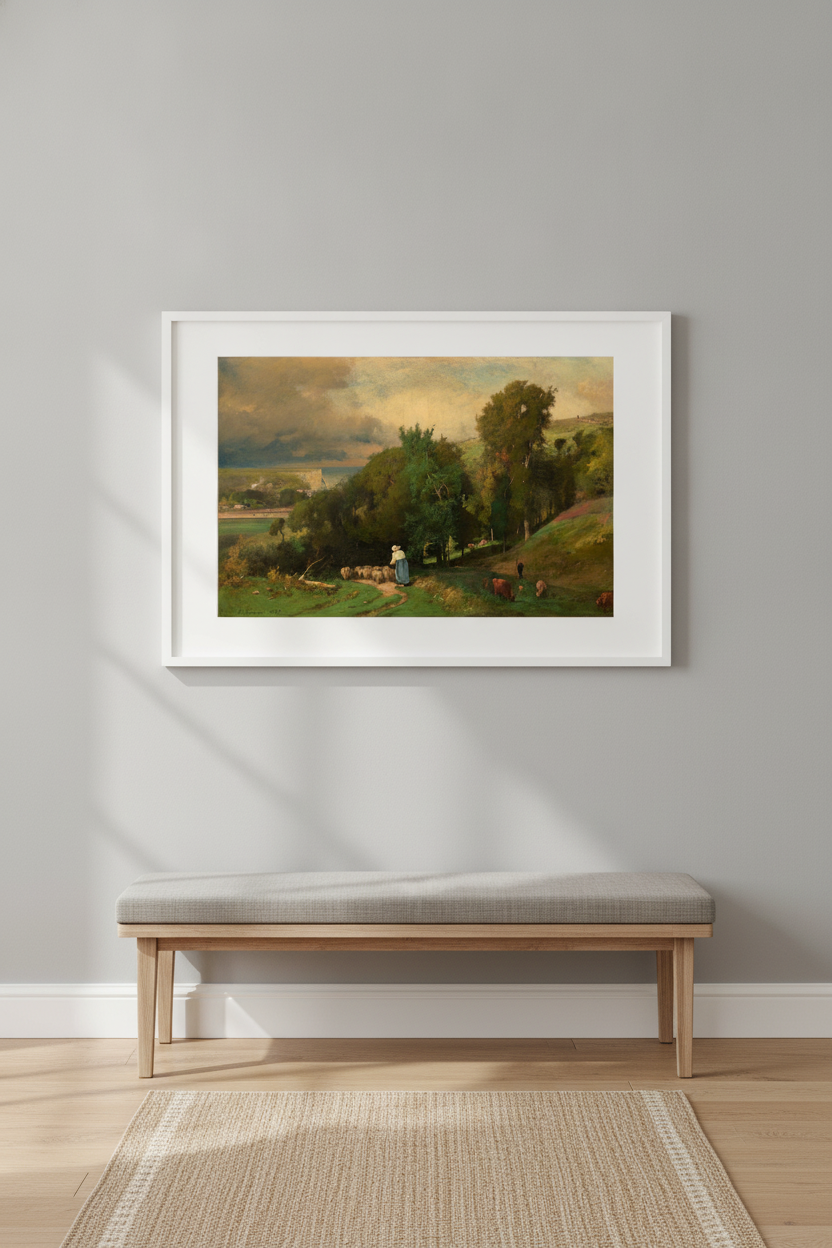
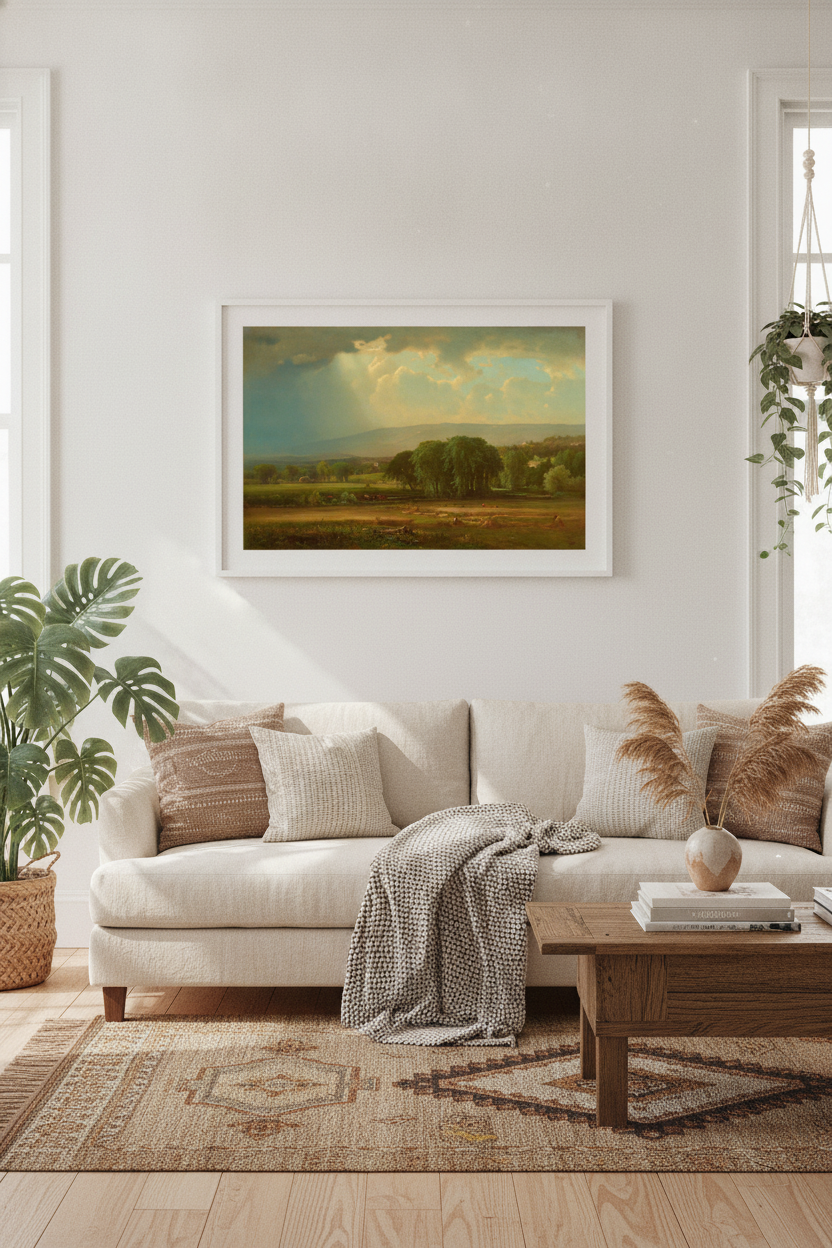
As the centuries progressed, this desire for balance traveled across the globe. In Great Britain, artists like John Laporte captured the quiet, rolling hills with a delicate touch, proving that classical balance didn't require Italian ruins to feel poetic. But it was in nineteenth-century America that the style found a radical new life through the brush of George Inness. Inness began his career painting grand, detailed scenes like Harvest Scene in the Delaware Valley (1867), where the vastness of the American landscape is rendered with magnificent, orderly clarity. In this work, we see a country of abundance, laid out with a geometric precision that feels both natural and divine.
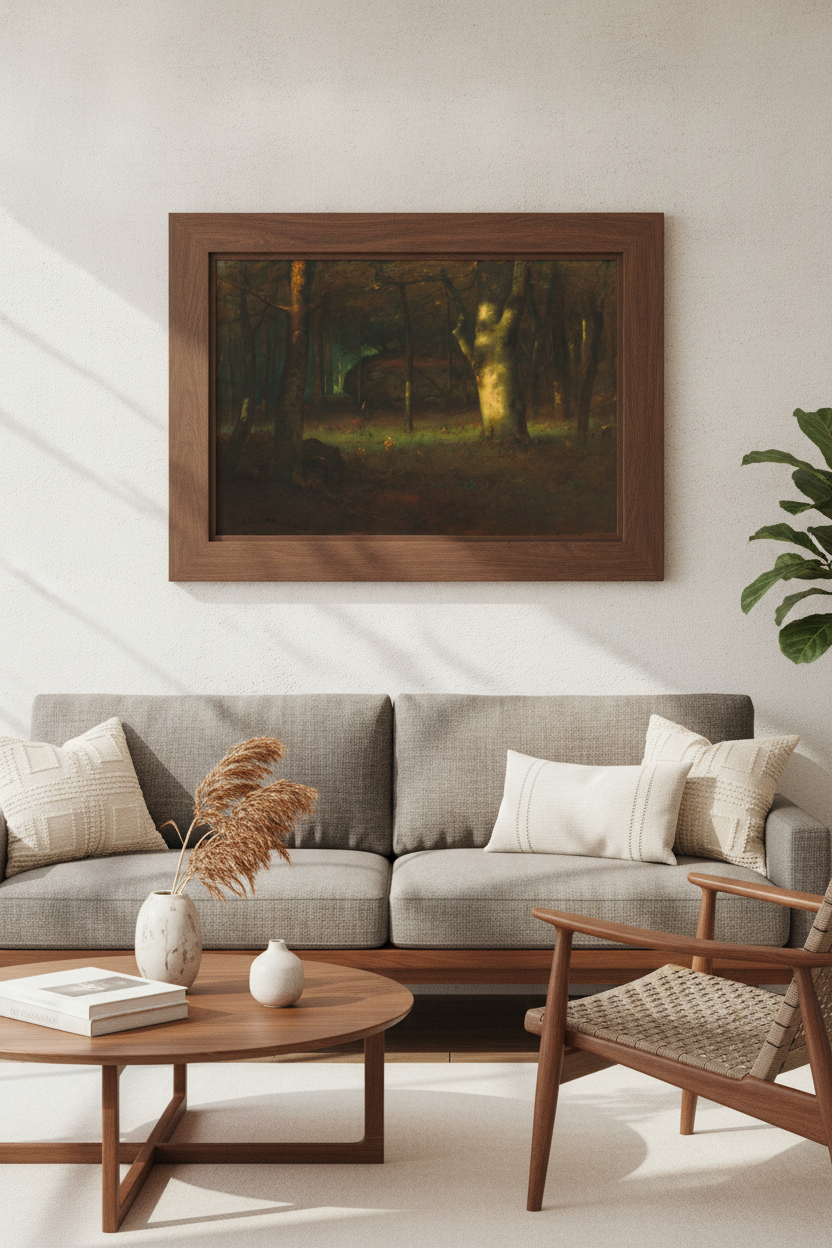
Over time, however, Inness moved away from literal details and leaned into the pure emotion of light. His later masterpiece, Sunset in the Woods (1891), shows how the classical tradition evolved into Tonalism. Here, the tight structure of the past dissolves into a glowing, misty dream of amber and deep green, capturing the spiritual essence of the forest rather than its botanical facts. It is a masterclass in how a landscape can feel deeply structured yet entirely mysterious.
The Classical Eye in the Everyday
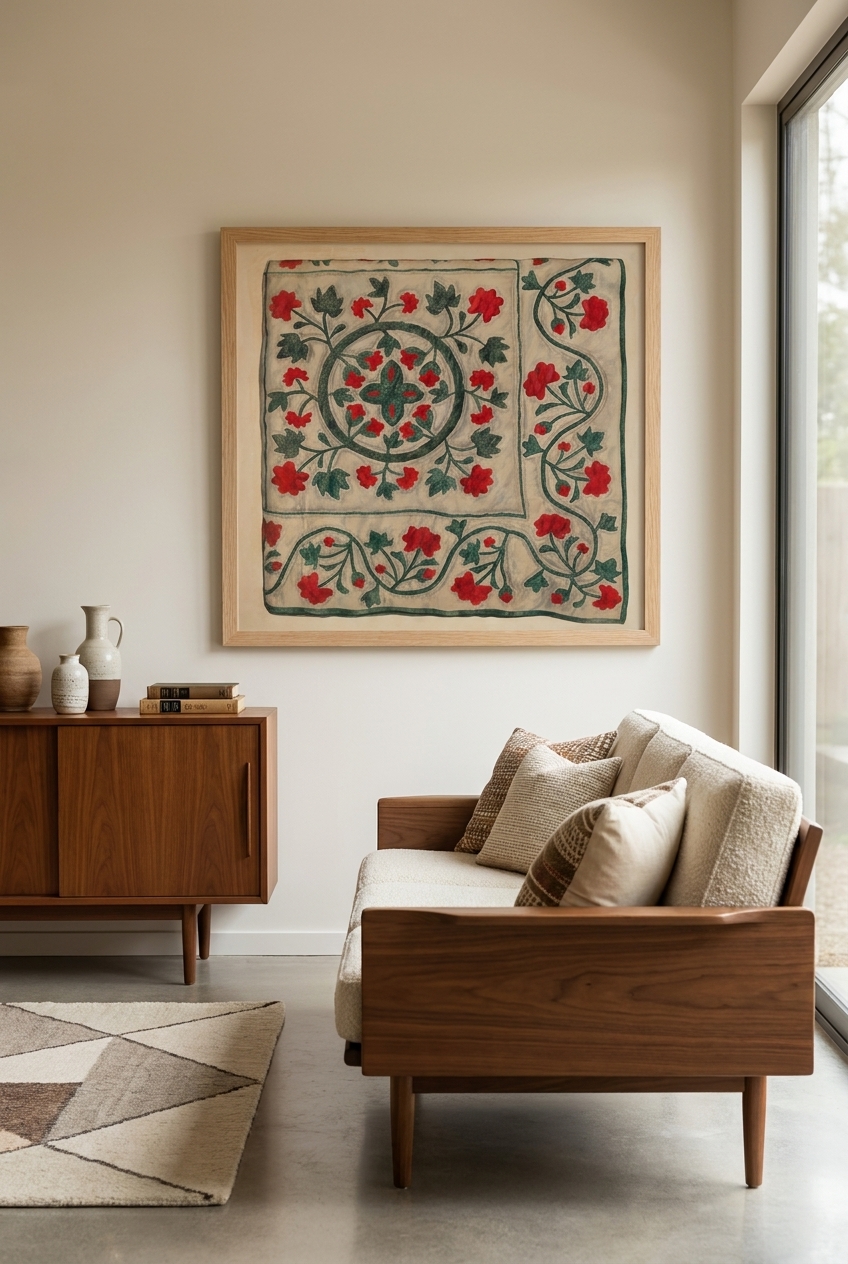
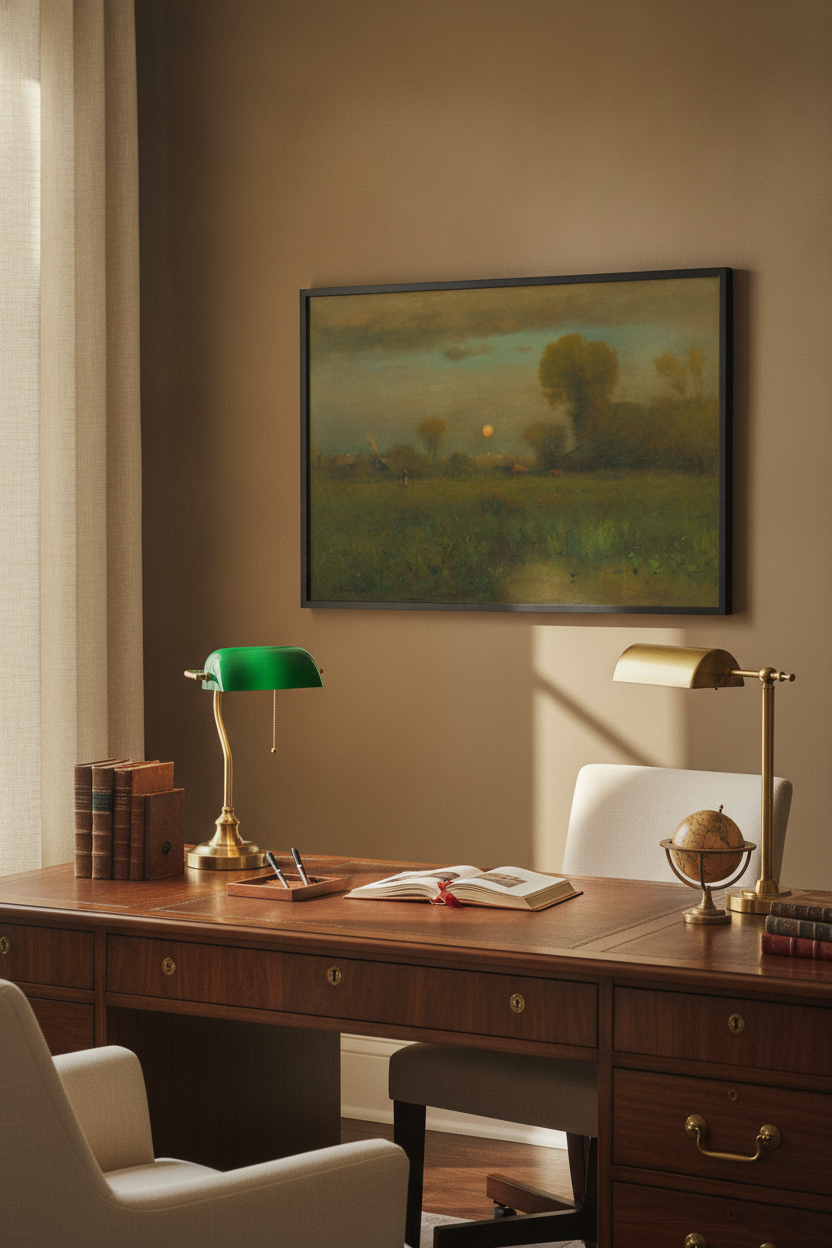
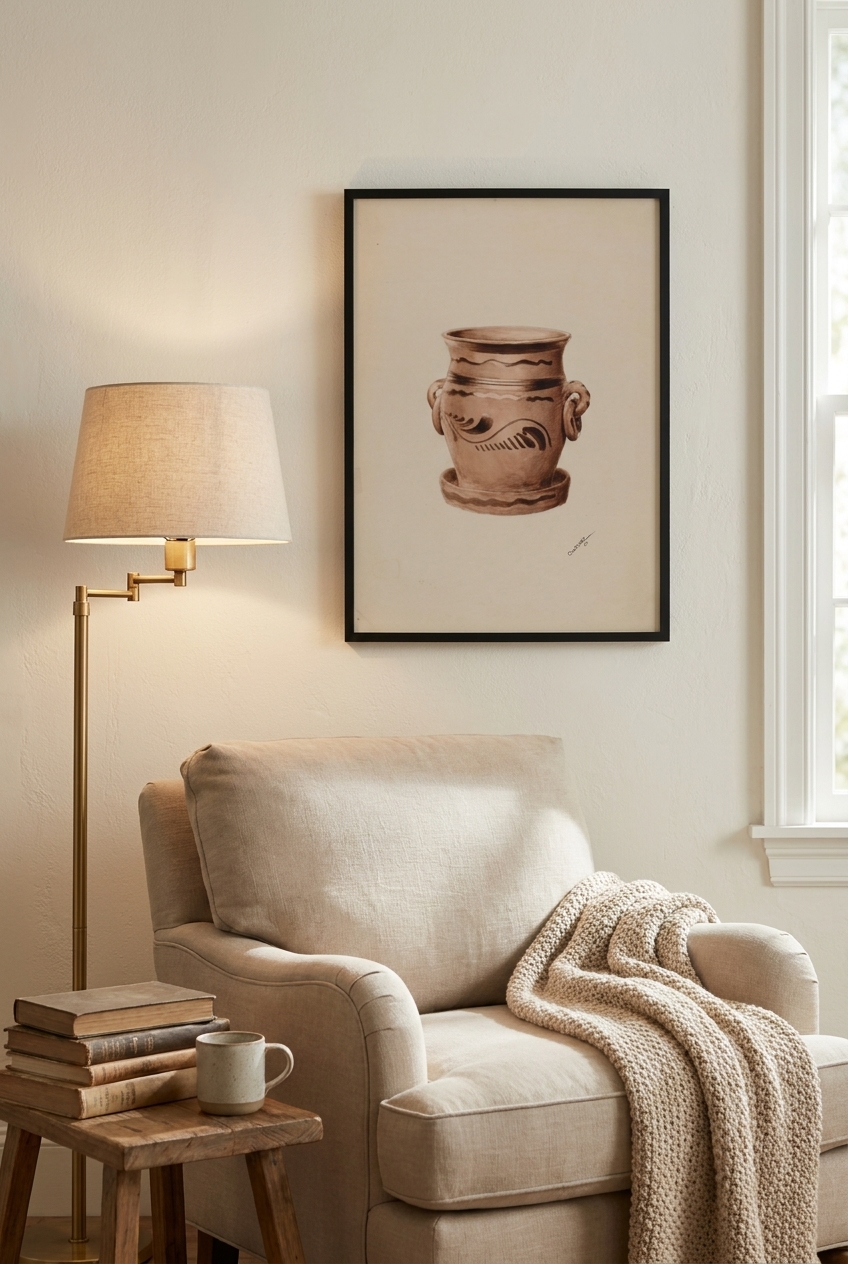
While grand vistas define the movement, the classical spirit—that deep craving for balance, rhythm, and quietude—also found its way into more intimate subjects. In the early twentieth century, artists like Ralph Atkinson and Charles Moss participated in documenting the simple, enduring designs of American material culture. While a work like Harvest Moon (1891) shows the grand sky hanging over a silent field, Moss and Atkinson found that same sense of quiet, classical geometry in domestic life.
The classical eye recognizes that harmony is a universal principle, whether it is found in the curve of a valley or the shape of an everyday object. Whether capturing the clean, balanced lines of a handmade quilt or the steady, grounded presence of a simple terracotta vessel, these artists proved that the classical search for harmony is just as powerful on a kitchen table as it is on a mountain peak. It is all about finding a sense of quiet permanence in a fast-moving world.
Bringing the Classical Calm Home
There is a reason classical landscapes have remained a staple of interior design for centuries: they are incredibly easy to live with. Unlike modern abstract art, which often demands attention, or highly dramatic romantic scenes that can feel restless, a classical landscape acts as a visual anchor. Its natural color palette—warm ochres, deep forest greens, and soft, twilight blues—grounds a room instantly.
These pieces are particularly magical in spaces where you want to encourage quiet conversation or reflection, such as a study, a dining room, or right above a bedroom dresser. They offer a window into a world where everything is in its proper place, bringing a sense of timeless, restorative order to our busy modern walls.
Frequently asked questions
What is the difference between a classical landscape and a romantic landscape?
While romantic landscapes emphasize the wild, unpredictable, and sometimes terrifying power of nature (think stormy seas and jagged cliffs), classical landscapes focus on harmony, balance, and human-scale peace. Classical scenes are carefully structured to feel timeless, orderly, and serene.
Who started the classical landscape movement?
The movement was pioneered in the 17th century by French painters working in Rome, most notably Claude Lorrain and Nicolas Poussin. They drew inspiration from classical mythology, ancient ruins, and the golden light of the Roman countryside.
How do I choose the right frame for a classical landscape print?
Because these works carry a sense of history and quiet dignity, they pair beautifully with traditional framing. A dark wood frame (like walnut or mahogany) or a warm, antiqued gold frame will complement the rich, earthy tones of the art and enhance its vintage appeal.