The Art of the Balanced Rebel: A Guide to Classical Modernism
In short: Classical Modernism bridges the gap between radical abstraction and traditional form. It offers structured, soulful art that brings a sense of calm, intellectual sophistication to any modern home.
The Return to Order
There is a unique magic that happens when artists decide to look forward and backward at the same exact time. In the early decades of the twentieth century, after the world had been shaken by war and rapid industrialization, the art world found itself at a crossroads. The wild, chaotic experiments of early abstraction and Dadaism had broken all the rules. But many artists felt a sudden, deep craving for stability, structure, and timelessness. This gave rise to Classical Modernism—an era, rather than a single rigid movement, where creators sought to marry the revolutionary freedom of modern art with the enduring grace of classical tradition.
Often referred to in Europe as the "return to order," this style did not mean going back to stuffy, academic paintings. Instead, it was an attempt to find the eternal in the everyday. Artists stripped away unnecessary clutter to focus on strong lines, balanced compositions, and robust forms. The result is art that feels both incredibly fresh and reassuringly permanent.
The Visual Language of the Era
How do you recognize a Classical Modernist piece? Look for a sense of weight and quiet monumentality. Unlike the fleeting, light-dappled surfaces of Impressionism, Classical Modernist works feel anchored to the ground. The shapes are simplified, the outlines are bold, and there is a clear, deliberate geometry at play. It is art that values structure over chaos, yet never feels cold or mechanical.
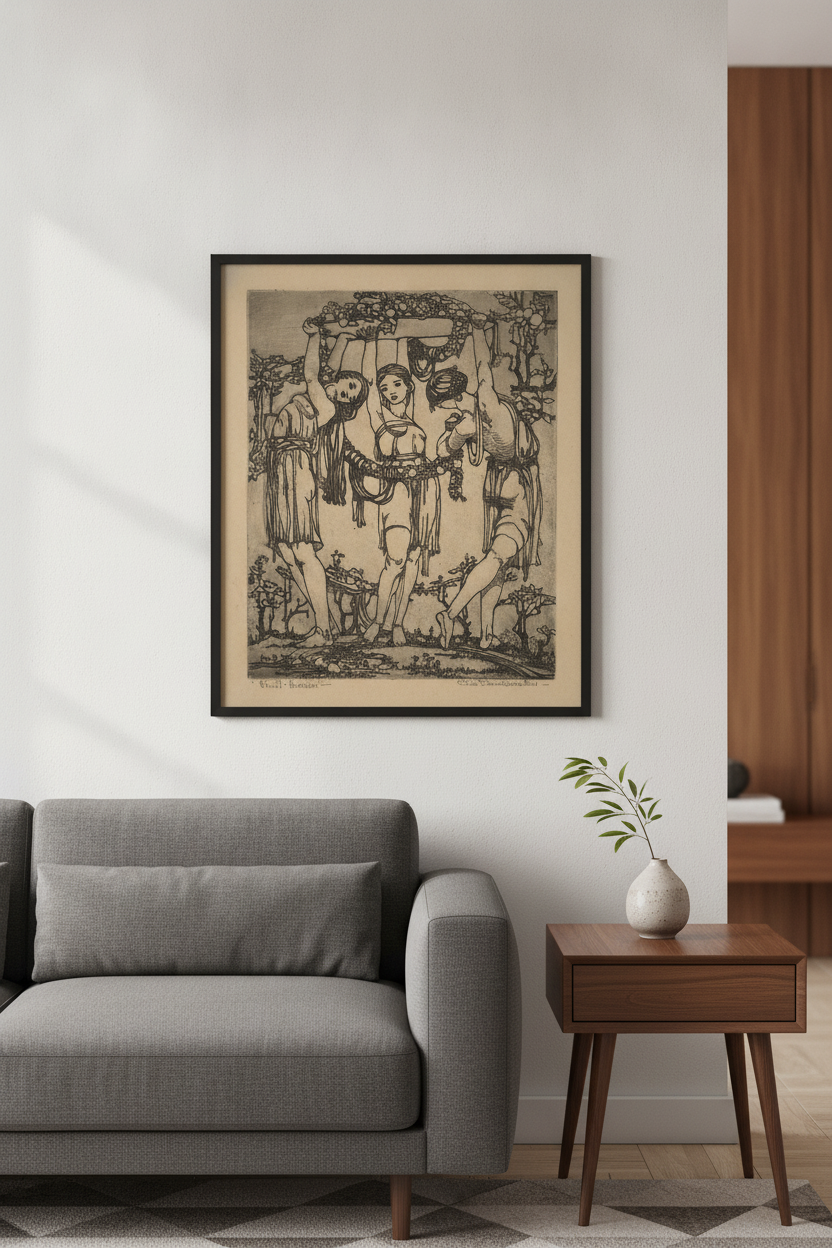
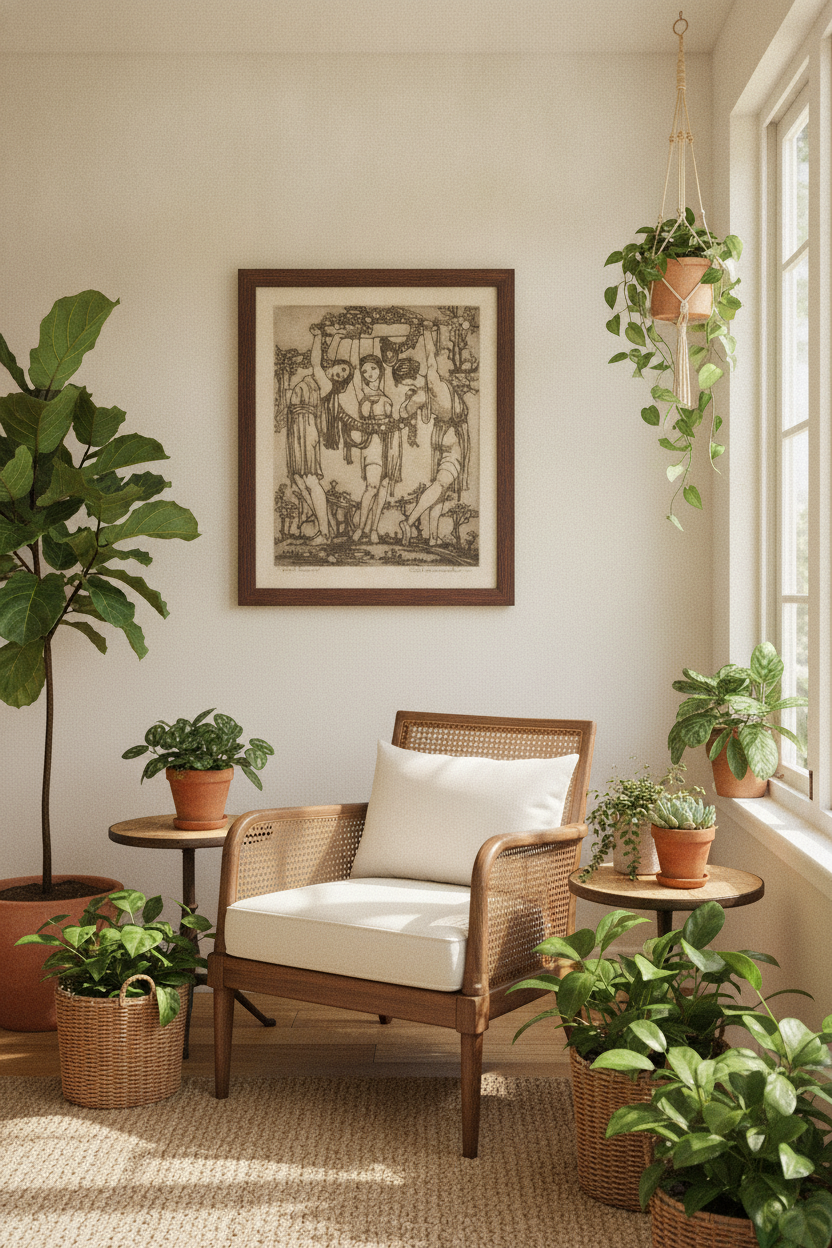
A perfect illustration of this balance is the work of Cleo Damianakes. In her celebrated print "Fruit Bearers" (c.1922), we see figures that look as though they could have been carved onto an ancient Greek temple. Yet, the clean, sweeping lines and the stylized, rhythmic composition are entirely modern. It is a beautiful dialogue between antiquity and the jazz age, capturing a sense of timeless grace that looks spectacular on a contemporary wall.
Meet the Masters of Form
The beauty of Classical Modernism lies in its diversity. Across different countries and mediums, artists interpreted this balance of old and new in deeply personal ways. In Germany, Max Beckmann brought a powerful, almost sculptural intensity to his canvases, using thick black outlines to lock his expressive figures and landscapes into place. In the United States, artists like John Marin captured the raw energy of nature through structured, semi-abstract compositions, while sculptor Ivan Mestrovic carved heroic, muscular forms that felt both ancient and radically new.
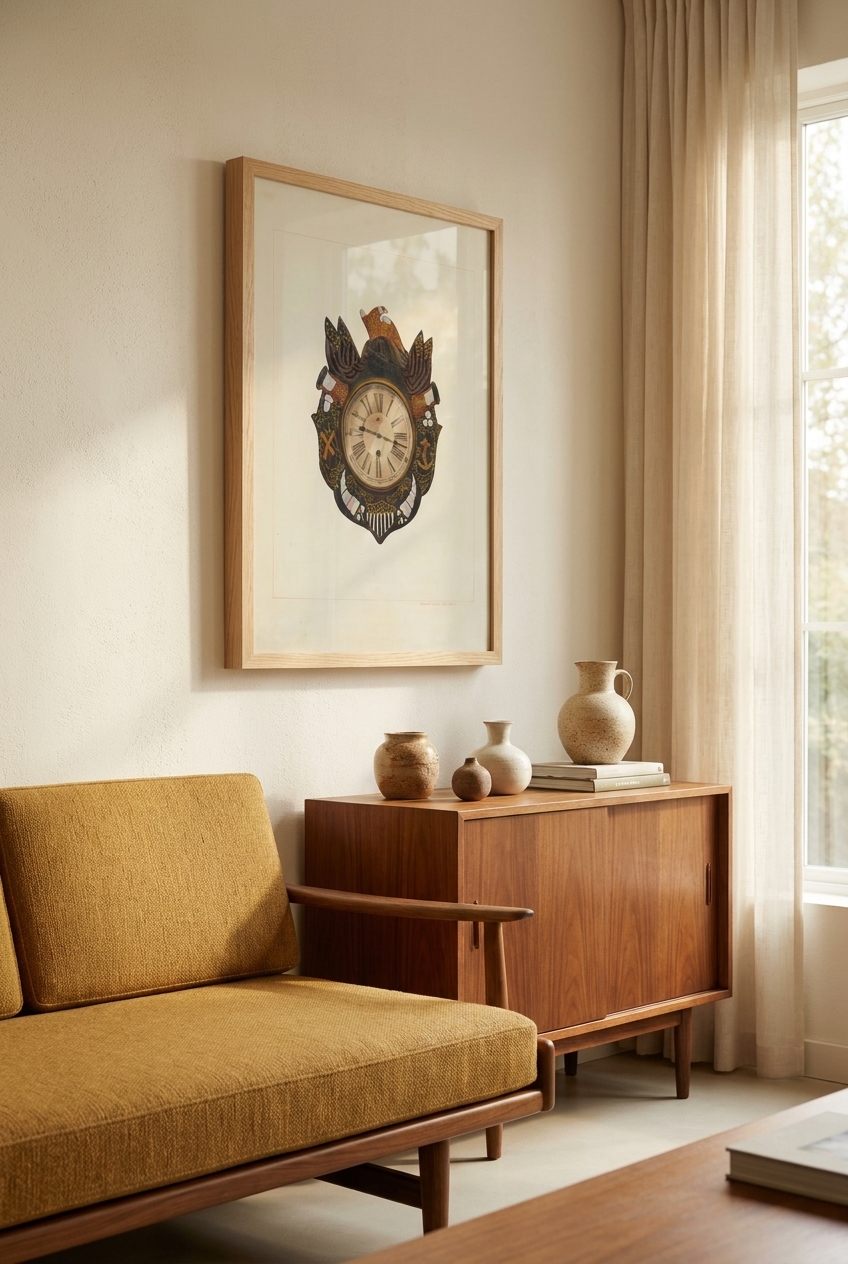
We also see this philosophy applied to the quiet corners of daily life. The African American painter Edward L. Loper brought an extraordinary sense of structure to ordinary scenes. His painting "Eight Day Marine Clock" (c. 1938) transforms a simple household timepiece into a study of rich color, deep shadows, and solid, satisfying geometry. It proves that the classical search for order can elevate even the most humble subject matter.
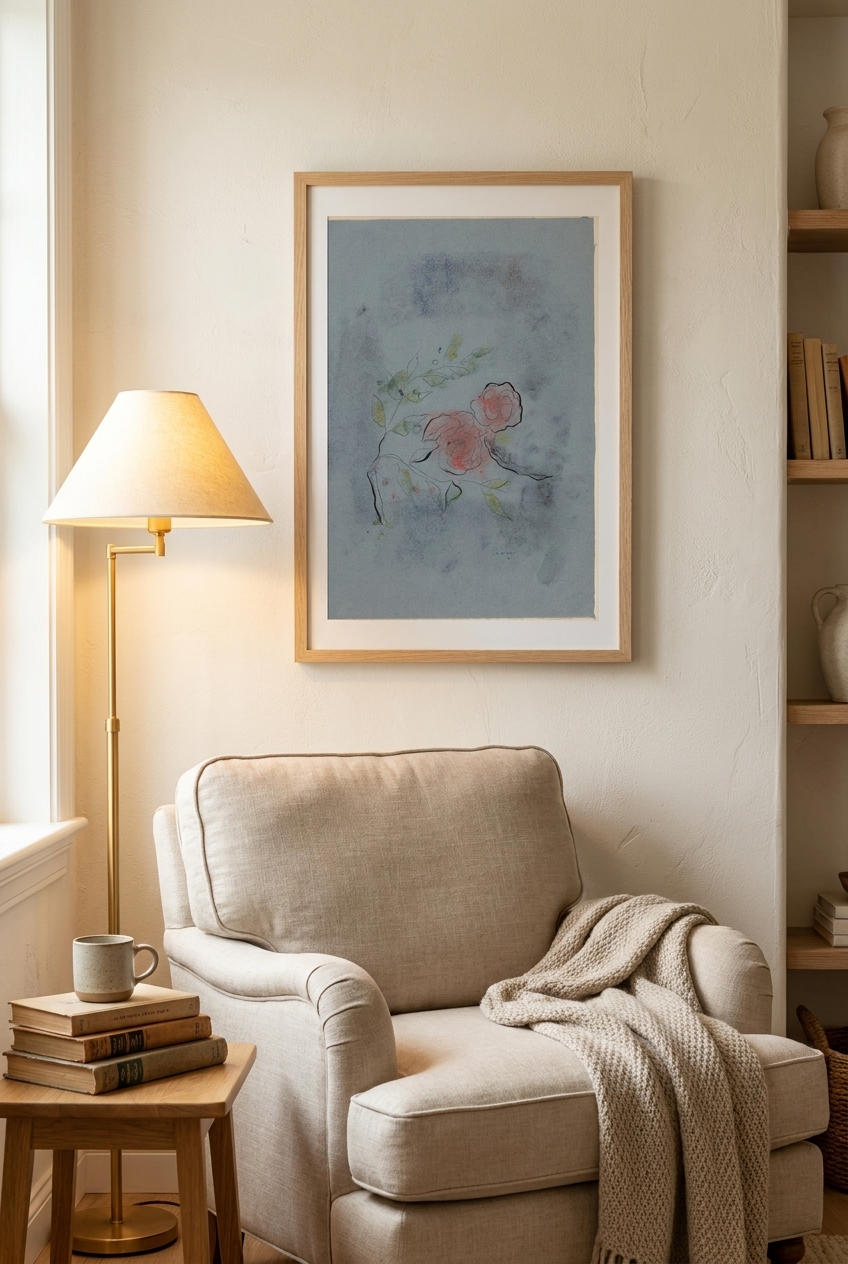
Meanwhile, Hungarian-born artist and designer Imre Reiner showed how this sensibility could transform graphic art. His lithograph "Flowers" (1932) takes a traditional botanical subject and injects it with loose, energetic, yet perfectly controlled lines. It is elegant, expressive, and light on its feet, showing the playful side of the modernist spirit.
Why Classical Modernism Belongs on Your Walls
For the modern art lover, Classical Modernism is the ultimate sweet spot. Purely abstract art can sometimes feel detached or clinical, while traditional academic art can feel dated. Classical Modernist prints offer the perfect compromise: they possess the intellectual depth and bold styling of the avant-garde, but they are anchored by a sense of harmony and human warmth.
When styling these pieces in your home, think about balance. Because these artworks feature strong lines and structured compositions, they pair beautifully with organic materials like warm wood, linen, and stone. A bold, graphic piece works wonderfully as a focal point in a quiet study or living room, offering a sense of calm focus. They are pieces that do not demand attention with loud gimmicks, but rather invite you to sit, look, and linger.
Frequently asked questions
What is the difference between pure Modernism and Classical Modernism?
While pure Modernism often sought to break completely with the past—pushing toward total abstraction or conceptual experimentation—Classical Modernism deliberately kept one foot in tradition. Artists used modern techniques of simplification and bold color to reinterpret classical themes, structures, and figures, creating a sense of grounded order.
When did the Classical Modernist period take place?
It flourished primarily between the two World Wars, roughly from the late 1910s through the 1940s. This was a period when artists globally sought stability, structure, and a return to enduring values after a time of immense global upheaval.
How do I choose a frame for a Classical Modernist print?
Because the art itself features strong lines and structured compositions, simple and elegant frames work best. A clean black wood frame, deep walnut, or a natural oak frame will beautifully complement the graphic qualities of the artwork without distracting from its quiet strength.
![Strandlandschaft mit Badenden (Seascape with Bathers) [p. 1]](https://pub-13a1a0fce6b84e01bbb44f17cde61fc9.r2.dev/social/lifestyle/c3c93181ee35a46a/1.jpg)
![Meeresstudie (Seascape) [p. 41]](https://pub-13a1a0fce6b84e01bbb44f17cde61fc9.r2.dev/social/lifestyle/85224dc5f9acdda4/1.jpg)