The Art of the Beautifully Strange: A Guide to Northern Mannerism
In short: Northern Mannerism rejected High Renaissance perfection in favor of theatricality, elegant distortion, and highly imaginative landscapes. Flourishing in Haarlem and Prague around 1600, this movement produced some of the most stylistically daring and visually arresting prints in art history—making them spectacular, conversation-starting pieces for contemporary homes.
The Elegant Rebellion
In the late sixteenth century, artists across Northern Europe found themselves facing an artistic dilemma. The masters of the High Renaissance had seemingly perfected the art of balance, harmony, and realistic proportion. Where was there left to go? The answer, it turned out, was not to copy nature, but to outdo it. This was the birth of Mannerism—or more specifically, Northern Mannerism, a style that flourished in the Low Countries, Germany, and Bohemia between roughly 1580 and 1620.
Derived from the Italian word maniera, meaning style or elegance, Mannerism was art about art. It was a movement that celebrated virtuosity, artificiality, and intellectual playfulness. Instead of quiet balance, Northern Mannerist artists offered swirling compositions, elongated figures, dramatic lighting, and a sense of restless energy. They wanted to surprise, delight, and occasionally mystify their viewers.
Hendrick Goltzius and the Haarlem Visionaries
One of the great beating hearts of this movement was the city of Haarlem in the Netherlands, and its undisputed champion was Hendrick Goltzius. Goltzius was a true phenomenon. Despite a childhood accident that left his right hand permanently crippled, he became one of the most brilliant printmakers and draftsmen in European history. He possessed an uncanny ability to mimic the styles of other masters while pushing his own work to thrilling, expressive extremes.
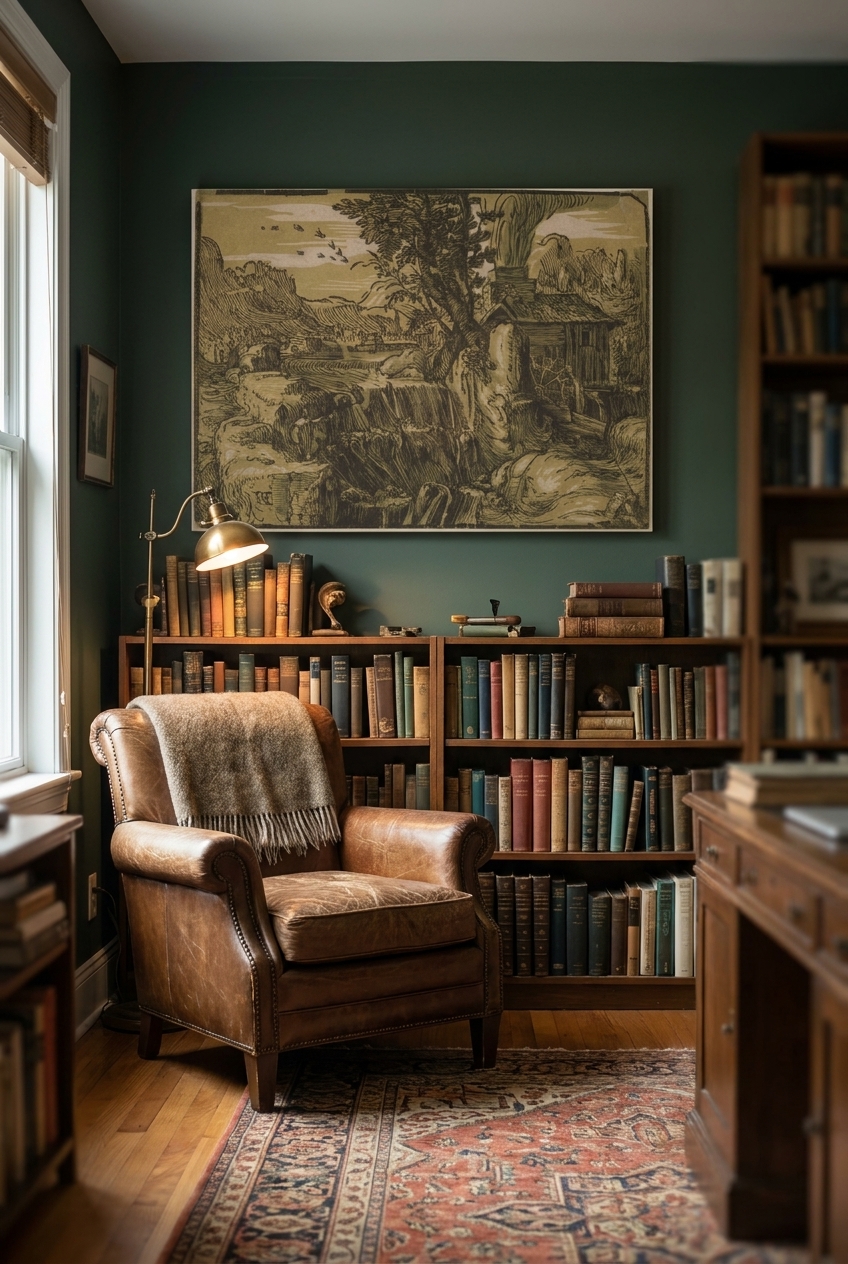
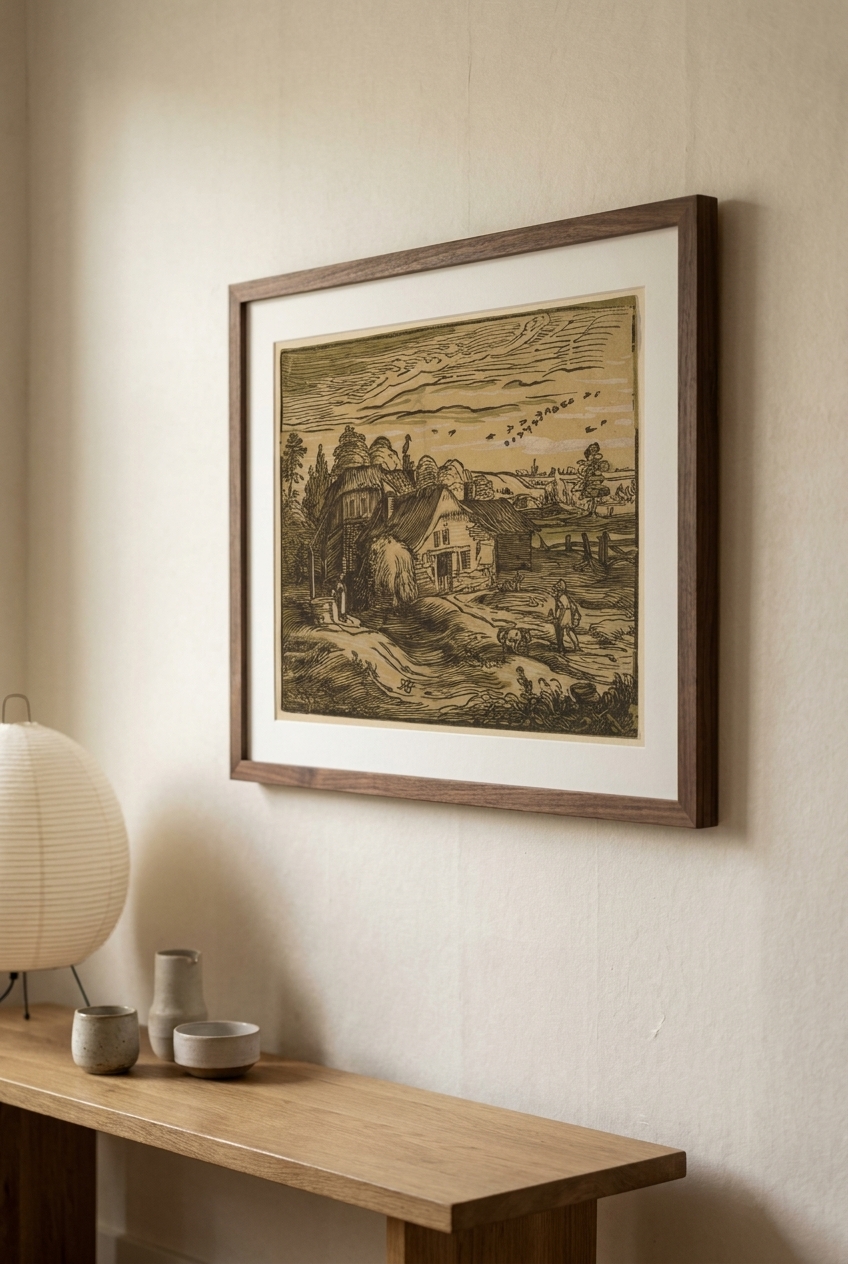
In the hands of Goltzius, even a simple landscape became a stage for dramatic movement. His lines were calligraphic, swelling and tapering to create a sense of breathing life. For instance, in his Landscape with a Waterfall, the water does not merely fall; it churns and cascades with a stylized, rhythmic energy that feels almost modern. In contrast, his Landscape with a Farmhouse takes a humble, rustic subject and elevates it through a masterclass in light, shadow, and intricate linework, proving that even the everyday could be rendered with Mannerist grace.
The Alchemical Court of Prague
While Haarlem hummed with civic pride and artistic competition, another major center of Northern Mannerism was brewing in Prague. Here, the Holy Roman Emperor Rudolf II—an eccentric patron obsessed with magic, science, and the arts—assembled a court of extraordinary talents. Rudolf loved the rare, the curious, and the fantastical, and the artists he hired catered perfectly to his taste.
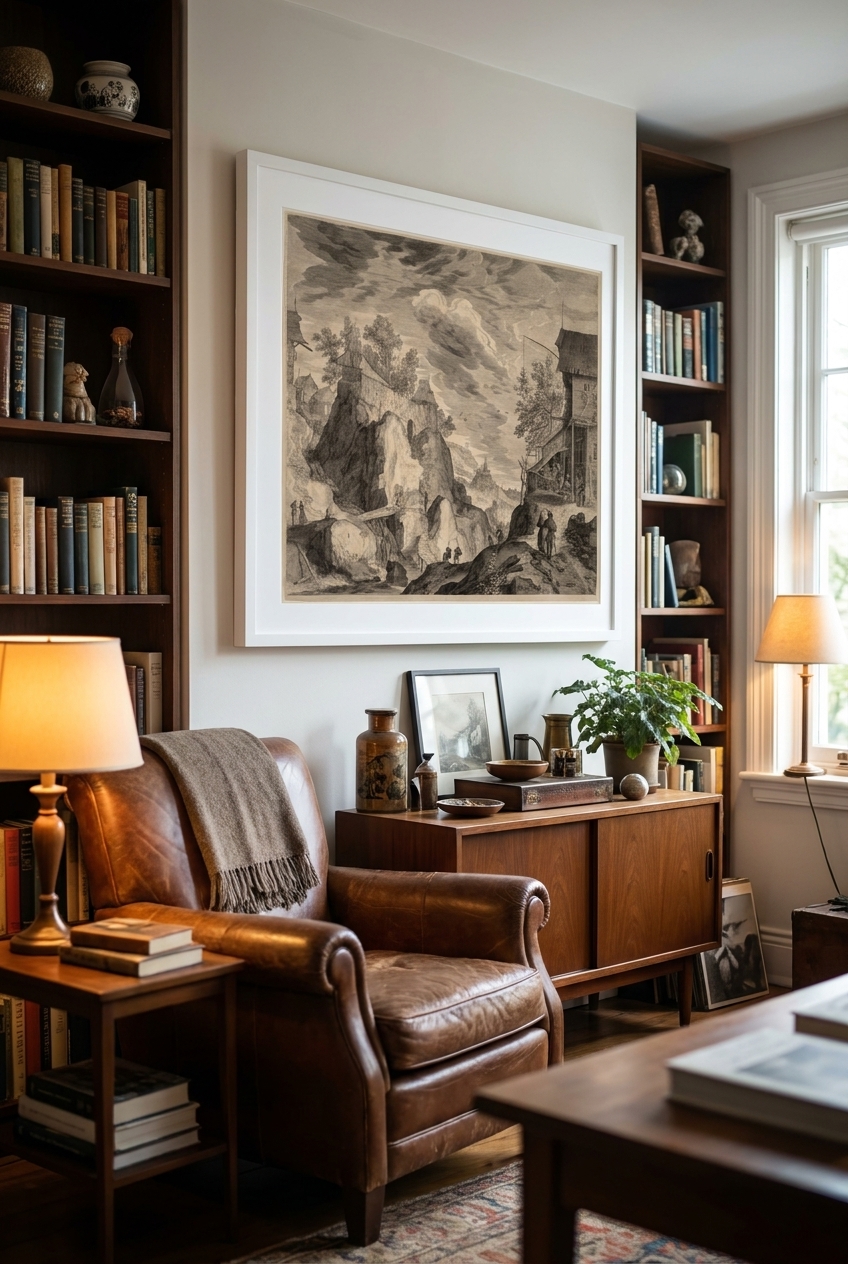
Among them was Roelandt Savery, a painter who specialized in wild, rugged alpine scenes filled with strange rock formations and dense forests. Savery’s imaginative visions of nature were translated into exquisite, widely distributed engravings by the imperial printmaker Aegidius Sadeler II. A prime example of this collaboration is the breathtaking Landscape with an Inn to the Right and House on Rocks to the Left. This print captures the essence of the Prague court style: towering, impossible cliffs, a tiny inn nestled in the shadows, and a lingering sense of mystery and adventure. It is a landscape of the mind, designed to transport the viewer to another realm.
Why Northern Mannerism Belongs on Your Walls
There is a unique pleasure in decorating with prints from the Northern Mannerist era. Because these works were originally created as engravings and woodcuts, they rely on high-contrast lines and rich, velvety shadows. This graphic quality gives them a striking presence from across a room, while their dense, intricate details invite you to step closer and linger.
These pieces bridge the gap between historical weight and contemporary style. They possess the intellectual depth of old master art, but their stylized, almost surreal approach to nature and form feels remarkably fresh. Whether placed in a minimalist room to add a touch of complex texture, or hung in a cozy, book-filled study, a Mannerist print acts as a window into an era when art dared to be wonderfully, beautifully strange.
Frequently asked questions
What is the main difference between Italian Mannerism and Northern Mannerism?
While Italian Mannerism focused heavily on the human form—think of elongated limbs, elegant postures, and complex mythological or religious scenes—Northern Mannerism took those same principles of elegance and complexity and applied them heavily to the natural world. This resulted in highly atmospheric, dramatic, and imaginative landscapes that helped pioneer landscape art as an independent genre.
Why are so many famous Northern Mannerist works prints rather than paintings?
In Northern Europe during the 16th and 17th centuries, printmaking (such as engraving and etching) was considered a highly sophisticated fine art, not just a method of reproduction. Masters like Hendrick Goltzius used the medium to showcase their incredible draftsmanship. Prints also allowed these complex, innovative styles to be easily collected and shared across Europe.
How do these prints fit into modern home decor?
Because Northern Mannerist prints are highly graphic and rely on black-and-white linework, they are incredibly versatile. They pair beautifully with simple, modern frames and off-white mats. Their intricate details offer a sophisticated focal point in clean, contemporary spaces, while their historical character adds warmth to traditional or eclectic interiors.