
The Art of the Hunt: How Robert Havell, Jr. Brought Audubon’s Birds to Life
In short: When naturalist John James Audubon met master engraver Robert Havell, Jr., they created the most celebrated ornithological art in history. Discover how Havell's aquatint genius brought Audubon's birds to life with dramatic, classical flair.
The Meeting of Two Masters
In the early nineteenth century, a monumental artistic partnership was born. John James Audubon, a passionate and visionary naturalist, had spent years traversing the American wilderness, documenting its birds in vivid, life-sized watercolors. But to share his vision with the world, he needed someone who could translate his raw, energetic paintings onto copper plates without losing their soul. Enter Robert Havell, Jr., a master English engraver whose technical brilliance matched Audubon’s wild ambition.
Working together in London, Havell undertook the colossal task of engraving Audubon’s masterpieces. This was not mere copying; it was a profound translation. Through their collaboration, they produced some of the most influential natural history art ever created, a body of work you can explore in our Robert Havell, Jr. after John James Audubon collection. Havell’s ability to capture the vital energy and anatomical precision of Audubon’s subjects elevated these illustrations from scientific records to high art.
The Art and Alchemy of Aquatint
How did Havell achieve such extraordinary depth and texture? The secret lay in his mastery of aquatint, a highly complex printmaking technique. Unlike standard engraving, which uses simple lines, aquatint allows for rich, tonal gradations that mimic the wash of watercolors. Havell meticulously etched copper plates, using acid and resin to create subtle variations in light and shadow.
This technique gave the feathers a soft, tactile quality and made the water look fluid and reflective. Havell’s delicate line work defined the sharp contours of beaks and talons, while his sophisticated control of tone brought a classical sense of volume to each bird. The result was a stunning tension between rigorous scientific observation and dramatic, painterly beauty.
Nature as High Drama
Audubon and Havell did not paint birds as passive museum specimens. Instead, they presented them as active, theatrical participants in their own environments. Each composition is alive with narrative. A hawk swoops down on its prey, a heron stands poised in a quiet swamp, and small songbirds flit through meticulously detailed foliage.
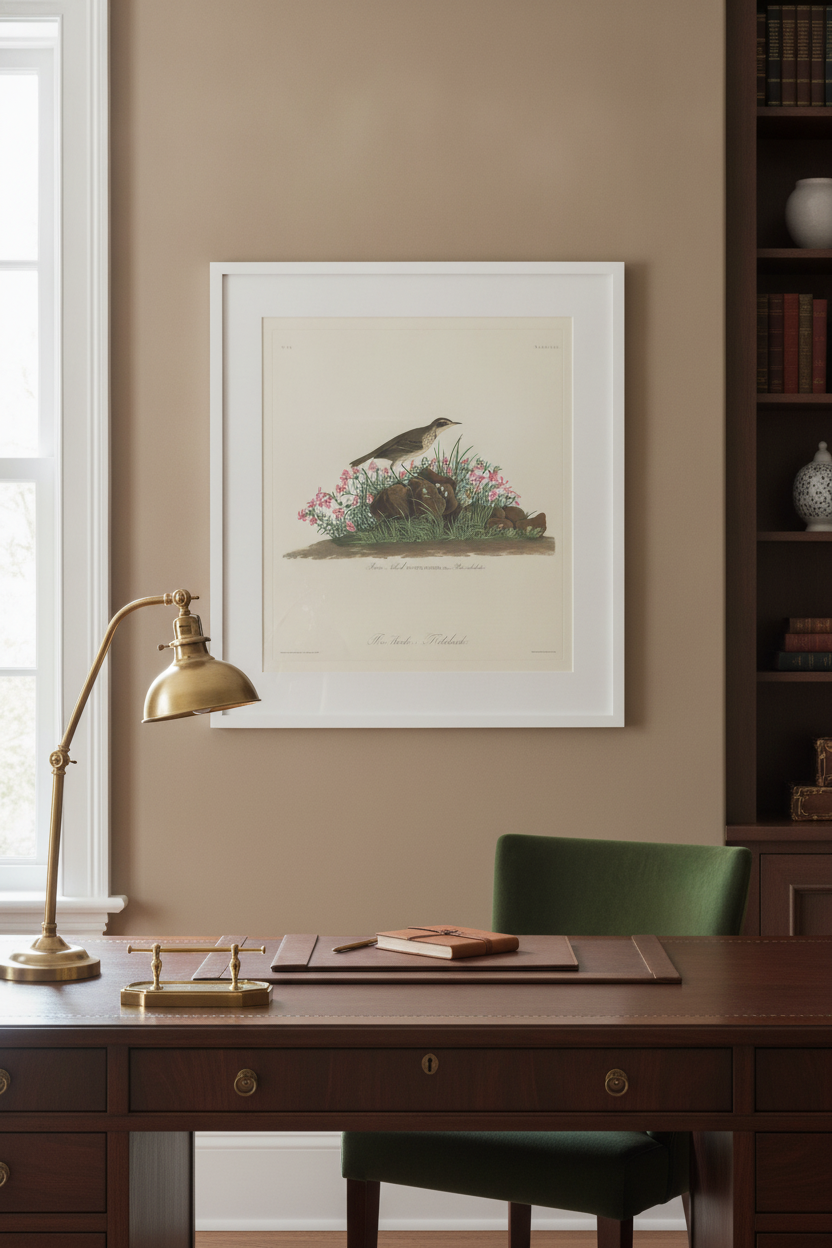
Take, for instance, the Prairie Titlark. In this piece, the birds are set against a stylized, classical landscape that feels both intimate and grand. Havell’s hand ensures that the background elements—the soft sky, the textured earth, and the delicate flora—complement rather than distract from the main subject. This theatrical staging elevates the scene, turning a simple study of a bird into a compelling story of survival and beauty.
A Timeless Statement for the Modern Home
Why do these nineteenth-century prints continue to captivate us today? It is because they strike a perfect balance between the organic and the structured. The classical compositions fit seamlessly into contemporary interiors, offering a window into the natural world that feels both wild and sophisticated.
When displayed as high-quality fine-art prints or stretched canvases, these works bring a sense of history, adventure, and quiet elegance to a room. Whether hung in a minimalist living space or a cozy, book-filled study, Havell’s masterful engravings after Audubon serve as a powerful reminder of the beauty of the natural world and the heights that human collaboration can reach.
Frequently asked questions
What is an aquatint engraving?
Aquatint is a printmaking technique that uses acid and a textured resin ground to create tonal variations rather than just lines. It allowed Robert Havell, Jr. to recreate the soft washes and subtle gradients of Audubon's original watercolor paintings on copper plates.
Why are these prints described as "after" John James Audubon?
In art history, "after" indicates that the printmaker (Robert Havell, Jr.) created the engraving based on an original artwork by another artist (John James Audubon). It highlights the collaborative nature of the final print.
How large were the original prints?
The original prints for "The Birds of America" were printed on "double elephant folio" paper, which measured approximately 39.5 by 26.5 inches. This massive size allowed Audubon to depict every bird at its actual, life-sized scale.
How do these prints fit into a modern interior design style?
Their blend of clean, classical composition and rich natural detail makes them incredibly versatile. They add organic warmth to minimalist spaces and a sense of historic depth to traditional or eclectic rooms.