The Art of the Threshold: Elevating Entryways and Hallways
In short: Entryways and hallways are transitional spaces that deserve intentional curation. Use large-scale statement pieces for first impressions, or create a rhythmic gallery walk in narrow corridors with smaller, highly detailed works.
First Impressions: The Entryway Statement
The entryway is the opening line of your home's story. It is the first space guests encounter and the final view you have when leaving. Yet, too often, these thresholds become cluttered drop-zones for keys, coats, and mail. To elevate your entryway, treat it as a formal introduction. A single, commanding piece of art hung above a console table or bench immediately establishes a sense of purpose and refinement.
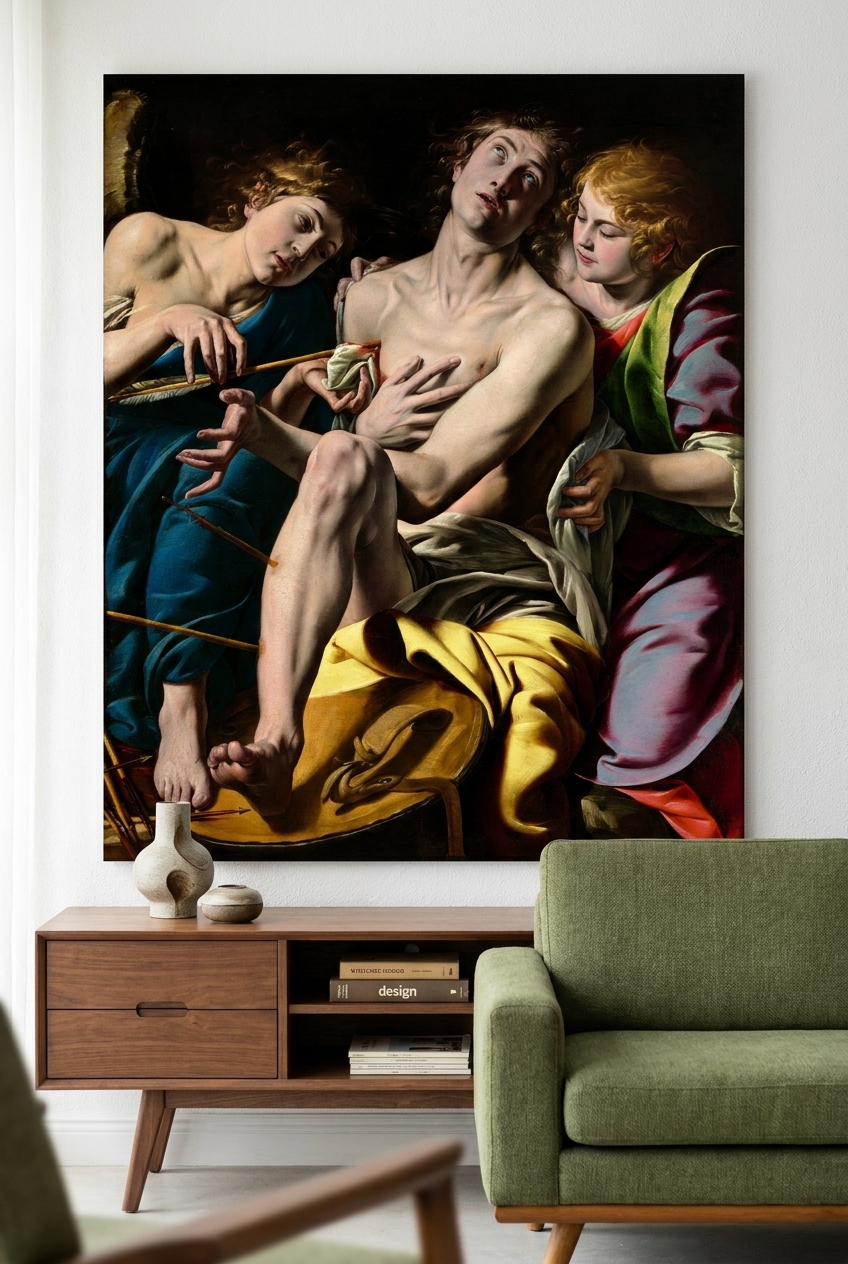
When selecting a statement piece for a foyer, look for works with dramatic presence and rich narrative depth. A classical masterpiece, such as Tanzio da Varallo's Saint Sebastian, brings an immediate sense of history and gravitas. The theatrical play of light and shadow characteristic of the Baroque era creates an arresting focal point, drawing the eye inward and signaling that your home is a place where art and beauty are celebrated.
The Rhythmic Walk: Styling Narrow Hallways
Hallways present a unique architectural challenge: they are narrow, often dimly lit, and primarily experienced in motion. Because you cannot step back to view a massive canvas, large-scale works can feel oppressive in a tight corridor. Instead, think of your hallway as a kinetic gallery walk. The goal is to create a rhythmic, engaging journey that invites viewers to slow down and appreciate the details as they pass through.
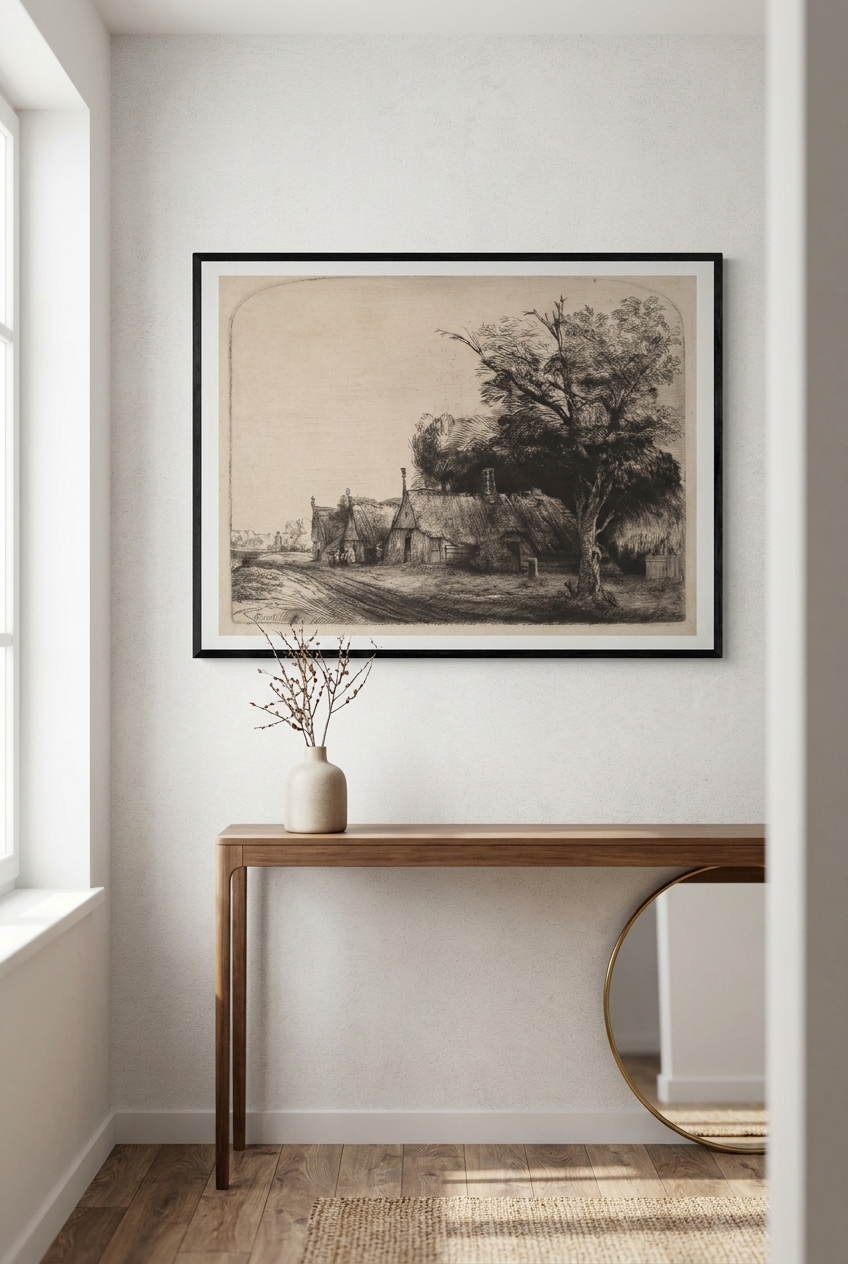
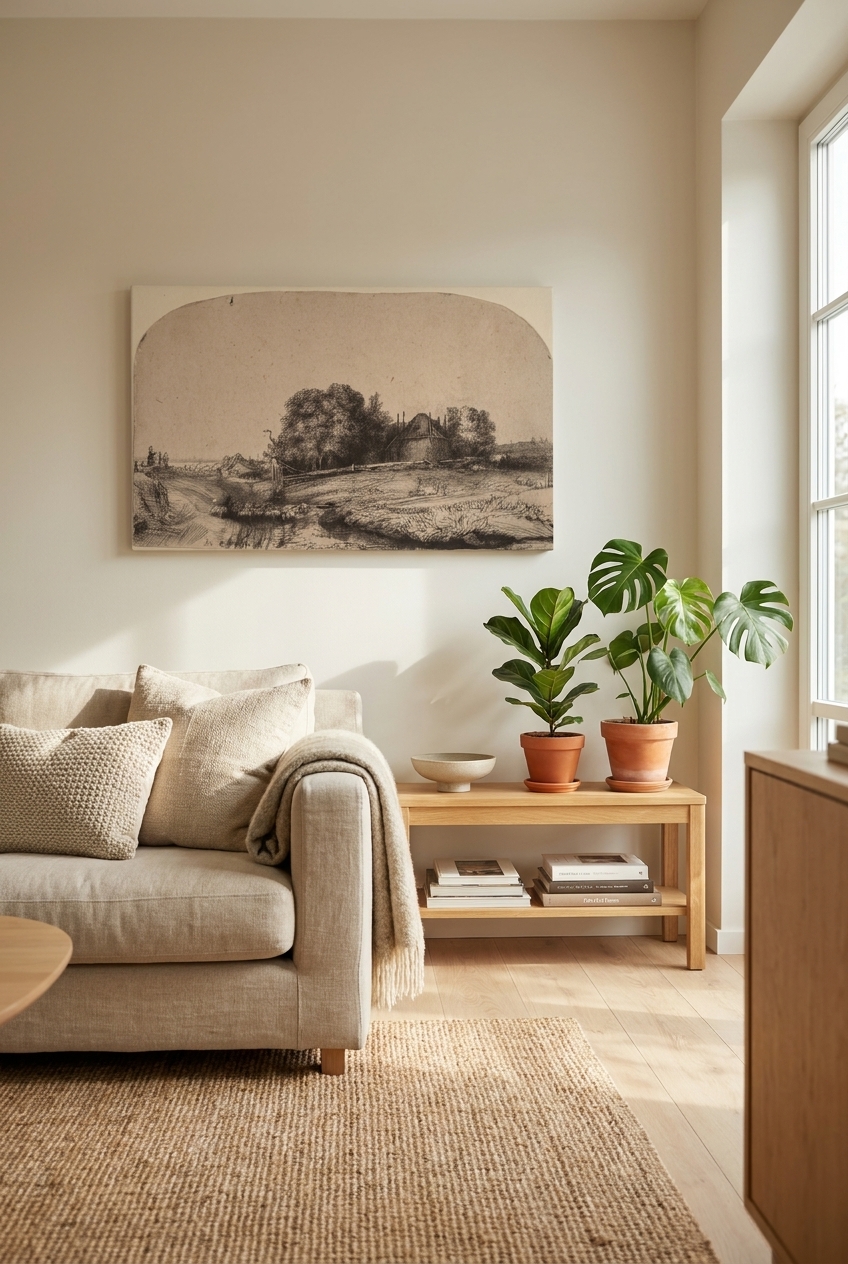
For these transitional spaces, a series of smaller, highly detailed works hung in a row is incredibly effective. Intricate etchings and drawings are perfect for this close-up viewing. Consider pairing Rembrandt's quiet masterpieces, such as Landscape with Three Gabled Cottages beside a Road and Landscape with a Hay Barn and a Flock of Sheep. Hanging these side-by-side creates a cohesive visual narrative, transforming a functional passage into an intimate exhibition of classical draftsmanship.
Scale, Lighting, and Framing for Narrow Walls
When styling narrow walls, precision is everything. The scale of your frames should leave at least a few inches of breathing room on either side to prevent the wall from feeling cramped. If a wall is exceptionally narrow, a vertical stack of two medium-sized prints can draw the eye upward, making the ceiling feel higher and the space more expansive.
Framing choices also dictate the mood of the space. For a clean, architectural look, use identical frames and mats for your hallway series. This creates a sense of order and intentionality. If you prefer a warmer, more lived-in aesthetic, select frames in varying tones of the same material, such as different warm hardwoods or complementary antique golds. Finally, do not overlook lighting. Because hallways rarely receive adequate natural light, installing dedicated picture lights or adjustable ceiling spotlights will bring out the rich textures and subtle tones of your archival prints, making them glow from within.
Frequently asked questions
How high should I hang art in a narrow hallway?
In transitional spaces where people are standing or walking, art should be hung at standard standing eye level—roughly 57 to 60 inches from the floor to the center of the image. If the pieces are small and highly detailed, you can hang them slightly lower to encourage closer inspection.
Should all frames in a hallway gallery match?
Matching frames create a clean, rhythmic, and architectural feel, which works beautifully for a series of prints by the same artist. However, mixing frames of similar tones (like various warm woods or antique golds) can make the collection feel organically assembled over time.
How do I prevent large art from overwhelming a small entryway?
Balance is key. If you use a large statement piece, pair it with a minimalist console table or bench beneath it. Keep the surrounding walls completely clear to give the artwork breathing room, allowing it to act as a window rather than a barrier.
![Madonna of Humility, The Blessing Christ, Two Angels, and a Donor [obverse]](https://pub-13a1a0fce6b84e01bbb44f17cde61fc9.r2.dev/social/lifestyle/01cf994cd635229a/1.jpg)