The Blue and White Magic of Andrea della Robbia
In short: Andrea della Robbia transformed glazed terracotta from a simple craft into a high Renaissance art, combining brilliant cobalt blue, pure white clay, and lush botanical frames.
The Clay that Captured the Sky
In the bustling workshops of fifteenth-century Florence, a quiet artistic revolution was taking place. While painters experimented with perspective on flat canvases and sculptors labored over heavy marble, one family discovered how to make humble clay shine like glass. Andrea della Robbia, inheriting the pioneering workshop of his uncle Luca, took the art of glazed terracotta to its absolute peak. He created a visual language so distinct and luminous that it still feels remarkably fresh and modern today.
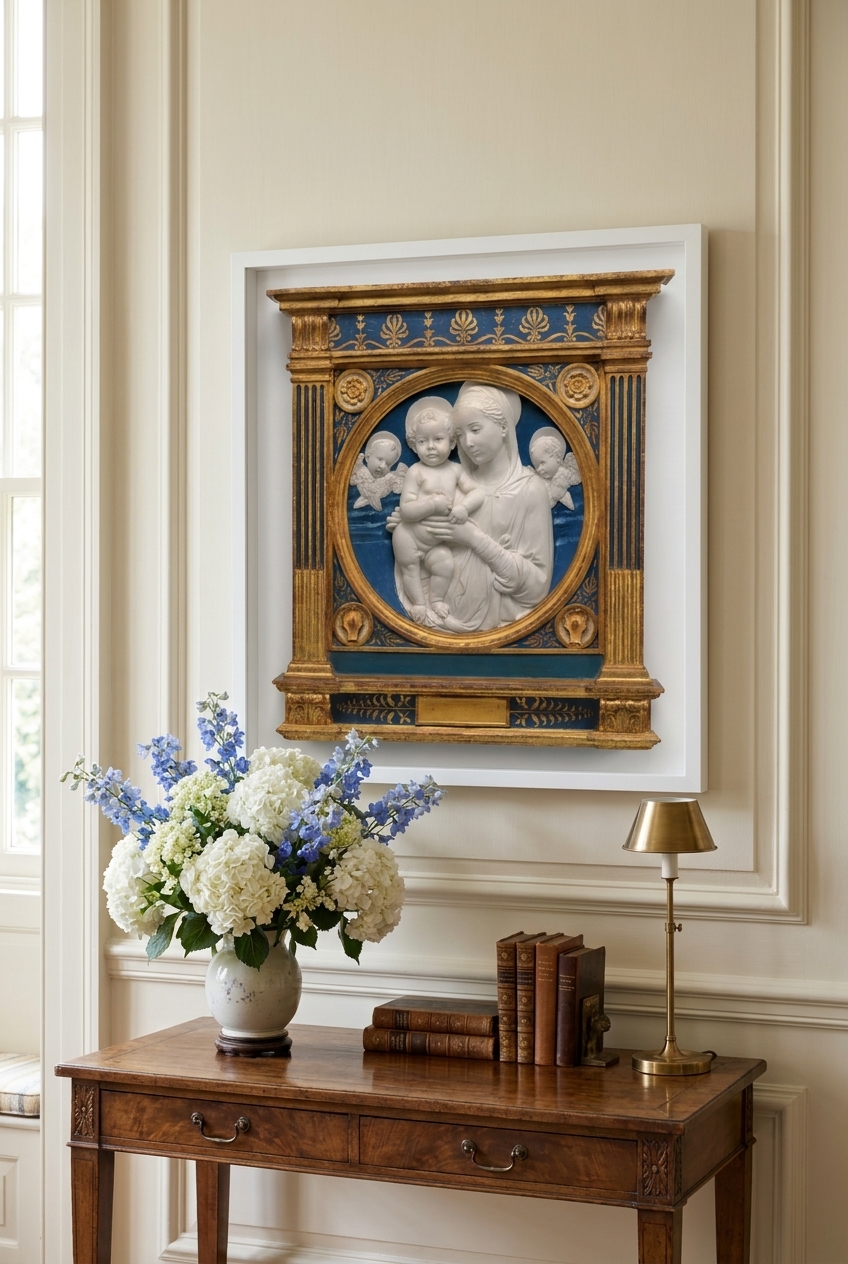
At the heart of Andrea's work is a striking, minimalist color palette: pure, milk-white figures set against a deep, glowing cobalt blue backdrop. By mastering the complex chemistry of tin-glazing, he achieved a brilliant, glass-like finish that protected the delicate clay modeling beneath. This technique did not just preserve the art; it gave it a radiant, reflective quality that seemed to capture the very light of Tuscany.
A Masterclass in Color and Contrast
What makes Andrea's work so instantly recognizable is his perfect balance of human emotion and natural beauty. His figures are not distant or cold; they possess a soft, lifelike quality that reflects the humanist spirit of the Renaissance. He captured tender glances, gentle gestures, and a quiet, serene grace that speaks directly to the viewer across the centuries.
Framing these central figures are his signature naturalistic garlands. Andrea surrounded his reliefs with lush, heavy wreaths of pinecones, lemons, grapes, and foliage. These botanical frames are not just decorative; they bring a sense of organic vitality and earthly abundance to the sacred scenes. You can explore these rich details and brilliant colors in our full Andrea della Robbia collection, which showcases his mastery of both human form and natural frame.
The Human Touch in Sacred Art
One of the finest examples of this emotional and technical mastery is his famous Madonna and Child with Cherubim. In this piece, the gentle relationship between mother and child is surrounded by a heavenly host of winged cherubs, all rendered in that signature crisp white against a sea of deep, luminous blue. The glaze catches the light in a way that makes the figures seem to emerge from the background, creating an incredible sense of three-dimensional depth.
By focusing on these intimate, maternal moments, Andrea brought high art down to a deeply personal level. His works were designed to be lived with, offering comfort and inspiration to those who looked upon them in chapels, public guilds, and private homes alike. The emotional sensitivity he poured into the clay made his work beloved by everyday citizens and wealthy patrons alike.
Bringing Renaissance Luminosity Home
While the original glazed terracotta reliefs are permanently housed in historic Italian churches and world-class museums, their unique aesthetic translates beautifully into the modern home. The high-contrast combination of cobalt blue and pure white offers a clean, sophisticated look that complements both classic and contemporary interiors.
When reproduced as a high-quality fine-art print or canvas, the dramatic shadows and glossy texture of the original clay are preserved with stunning clarity. The rich blues bring a calming, serene energy to a room, while the classical composition adds a sense of history and intellectual depth. It is a perfect way to bring a piece of the Florentine Renaissance into your everyday living space, offering a window into a world of harmony, color, and grace.
Frequently asked questions
What is glazed terracotta?
Glazed terracotta is a sculptural technique where clay figures are modeled, fired, coated with a mineral-based glaze (often containing tin to make it opaque), and fired again. This creates a shiny, durable, and colorful glass-like surface that protects the clay.
How does Andrea's style differ from his uncle Luca's?
While Luca della Robbia pioneered the medium with simple, solemn designs, Andrea introduced more complex compositions, greater emotional expression, and highly detailed, realistic frames made of fruits, flowers, and foliage.
Why do these sculptural reliefs work well as flat prints?
The intense contrast between the bright white figures and the deep cobalt blue background creates a powerful sense of depth and three-dimensionality. When photographed and printed with archival precision, the highlights and shadows of the original clay relief are beautifully preserved, giving the print a tangible, tactile quality.