The Grand Vision of Sir Joshua Reynolds: Elevating the Portrait to Fine Art
In short: Sir Joshua Reynolds elevated 18th-century portraiture into "the Grand Manner," blending classical mythology, rich Venetian color, and deep psychological insight to create timeless masterpieces.
The Architect of British Portraiture
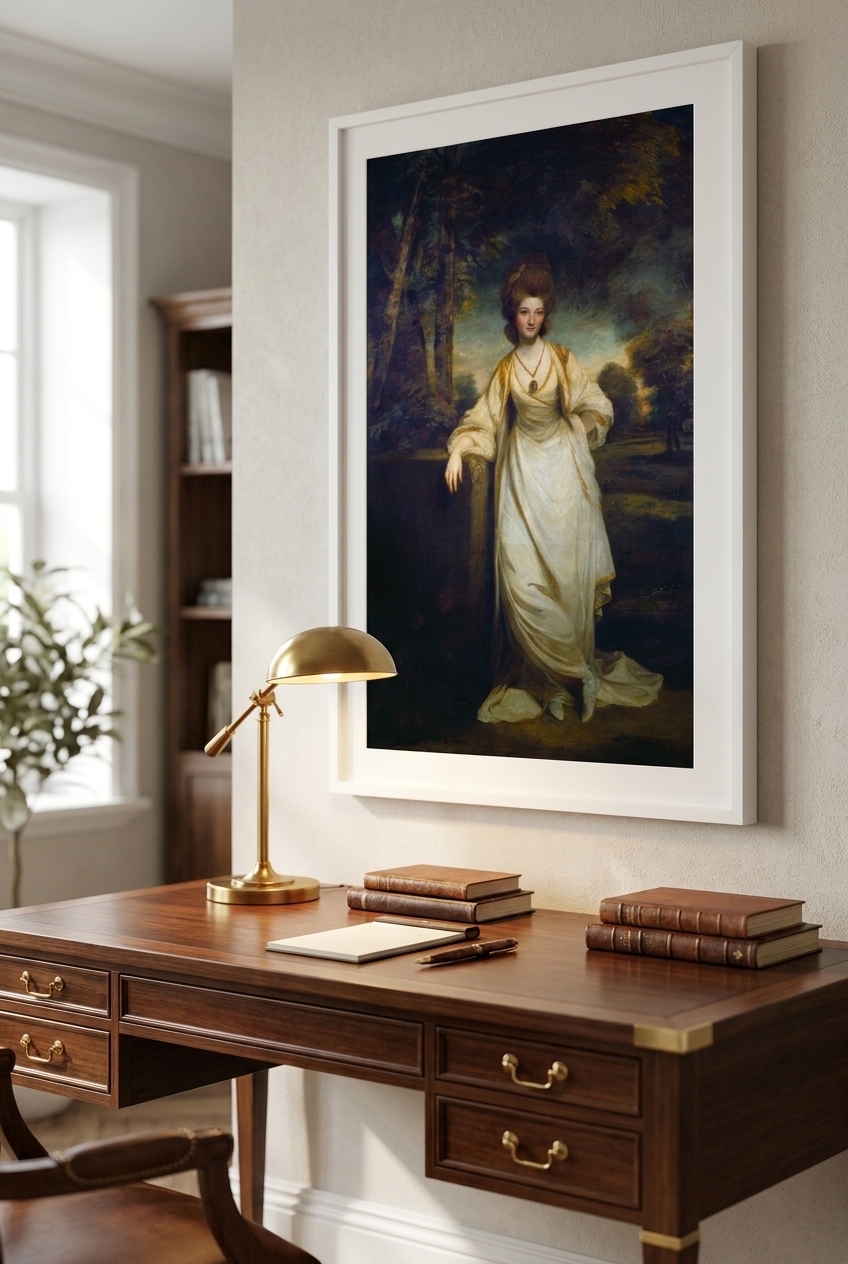
In the bustling cultural hub of eighteenth-century London, portraiture was often dismissed as a mere trade—a practical way to record a face, nothing more. Sir Joshua Reynolds changed all of that. As the founding President of the Royal Academy, Reynolds set out on a lifelong mission to elevate portraiture to the level of high history painting. He believed that a portrait should not just capture a physical likeness, but should speak to the soul, intellect, and timeless nobility of the subject.
To achieve this, Reynolds championed what he called the "Grand Manner." By blending the classical ideals of ancient Rome with the rich, painterly techniques of the Italian Renaissance, he transformed everyday aristocrats into timeless figures of myth and history. Today, exploring the full Sir Joshua Reynolds collection reveals an artist who didn't just paint people; he painted legends.
The Elements of the Grand Manner
What makes a Reynolds portrait so instantly recognizable? It begins with his masterful use of light and shadow, known as chiaroscuro. Influenced by Rembrandt and the great Venetian colorists like Titian, Reynolds bathed his subjects in warm, golden light that seems to glow from within, set against deep, atmospheric backgrounds.
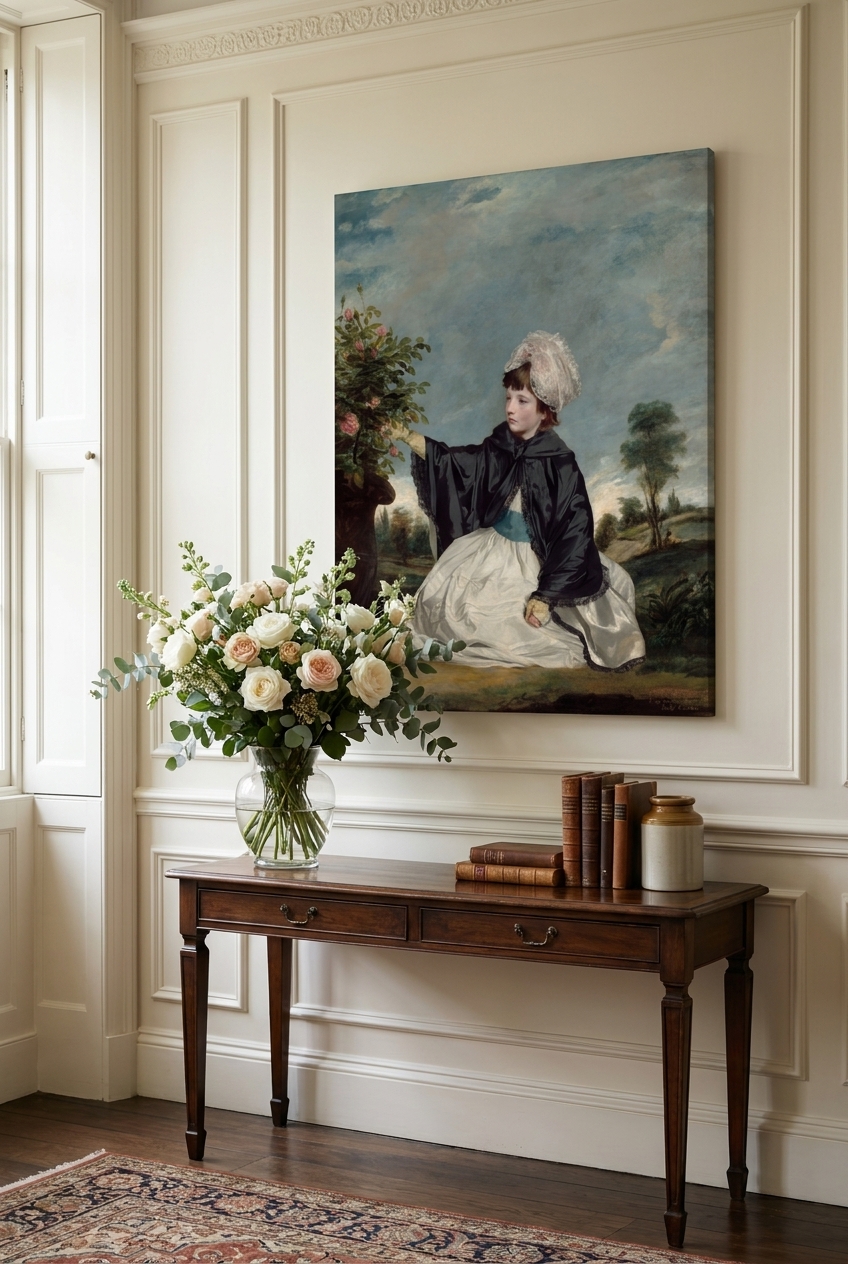
But his real genius lay in how he posed his subjects. Rather than capturing them in stiff, formal seated positions, Reynolds cast them as mythological muses or historical archetypes. He draped them in flowing, classical robes instead of the fleeting fashions of the day, ensuring their image would never look dated. A perfect example of this is his portrait of Lady Caroline Howard, where the young subject is captured in a moment of quiet, thoughtful simplicity, surrounded by soft, painterly foliage that heightens the painting's emotional depth.
Power, Grace, and the Natural World
Reynolds was also a master of setting his subjects within dramatic, moody landscapes. Instead of flat studio backdrops, his sitters stand before sweeping skies, ancient stone architecture, and gnarled, romantic trees. These natural settings were not merely decorative; they were carefully designed to mirror the inner life and social status of the subject.
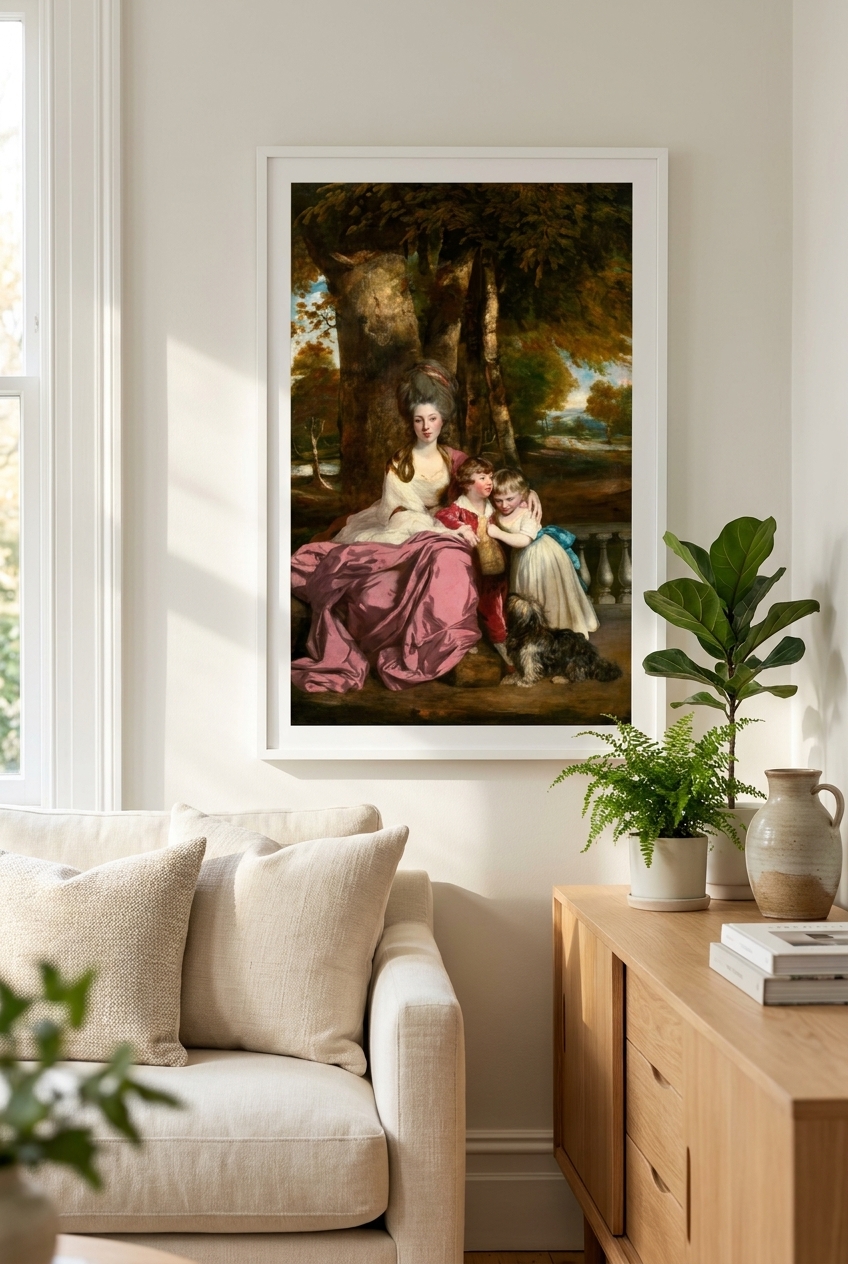
In his monumental work, Lady Elizabeth Delmé and Her Children, we see this synthesis at its peak. The family is nestled into a rich, shadowed landscape, their pale skin and elegant garments catching a brilliant, theatrical light. The composition is tight, warm, and deeply human, yet it carries the weight and dignity of a classical frieze. Reynolds captures the tender bond of family while maintaining an air of aristocratic poise.
Why Reynolds Belongs in the Modern Home
While these paintings were originally created for the grand, candlelit galleries of eighteenth-century estates, they possess a remarkable versatility that makes them perfect for contemporary interiors. The deep, earthy color palettes—dominated by rich ochres, forest greens, deep crimsons, and warm golds—add an instant sense of warmth, history, and grounding to modern, minimalist spaces.
When reproduced as a high-quality canvas or framed fine-art print, a Reynolds painting functions as a window into another era. The dramatic lighting and soft, painterly brushwork offer a soothing, sophisticated focal point for a living room, study, or bedroom. By bringing a piece of the Grand Manner into your home, you are not just hanging a portrait; you are inviting a tradition of intellectual curiosity, classical beauty, and timeless grace into your daily life.
Frequently asked questions
What is the "Grand Manner" in art?
The Grand Manner is an aesthetic style popularized by Sir Joshua Reynolds in the 18th century. It elevated portraiture by incorporating classical motifs, historical allusions, and noble poses reminiscent of ancient Roman sculpture and Italian Renaissance masters, making the subjects appear timeless and heroic.
How did Reynolds achieve the glowing, warm colors in his paintings?
Reynolds was heavily inspired by Venetian painters like Titian. He achieved his rich, glowing effects through complex layering of glazes and paints. While some of his experimental paint mixtures faded over time, his surviving works still showcase a masterful command of warm golden light, deep shadows, and rich, velvety textures.
Why did Reynolds paint his subjects in classical drapery instead of contemporary fashion?
Reynolds believed that contemporary fashion was fleeting and would quickly make a portrait look dated. By clothing his subjects in timeless, flowing drapery inspired by classical antiquity, he ensured that the portraits would remain elegant, noble, and relevant to viewers for generations to come.