The Kinetic Energy of Rubens: Drama, Flesh, and the Baroque Studio
In short: Sir Peter Paul Rubens combined classical antiquity with Flemish Baroque dynamism. His highly organized Antwerp studio produced luminous, muscular, and dramatic masterpieces that still captivate today.
The Diplomat-Painter of Antwerp
In the seventeenth century, one name dominated the European art world like no other: Sir Peter Paul Rubens. He was not just a painter; he was a scholar, a collector, and a diplomat who brokered peace treaties between rival empires. Rubens possessed a rare ability to blend the intellectual rigor of classical antiquity with the raw, theatrical energy of the Baroque. He took the cold marble forms of Greco-Roman sculptures and translated them into breathing, pulsing, flesh-and-blood compositions.
To explore his world is to enter a realm of unmatched dynamism, which you can experience today in our curated Sir Peter Paul Rubens and Studio collection.
The Genius of the Collaborative Studio
Rubens’s vision was so grand, and his commissions so massive, that he established a highly organized studio in Antwerp. This was not a mere factory, but a collaborative powerhouse of exceptional talent. Rubens would paint a small, fluid oil sketch—known as a modello—which his highly skilled pupils and assistants would then scale up onto monumental canvases.
Master assistants captured the tactile qualities of heavy drapery, the gleam of armor, and the vitality of the human form. Rubens would then add the final, masterly brushstrokes, ensuring a remarkable unity of style across every piece that left his doors.
Luminous Flesh and Dramatic Light
If you look closely at a Rubens painting, you will notice a signature warmth. His palette is rich and inviting, defined by luminous, pearlescent skin tones that seem to glow from within. He achieved this by layering thin, translucent glazes of paint, allowing light to bounce off the canvas.
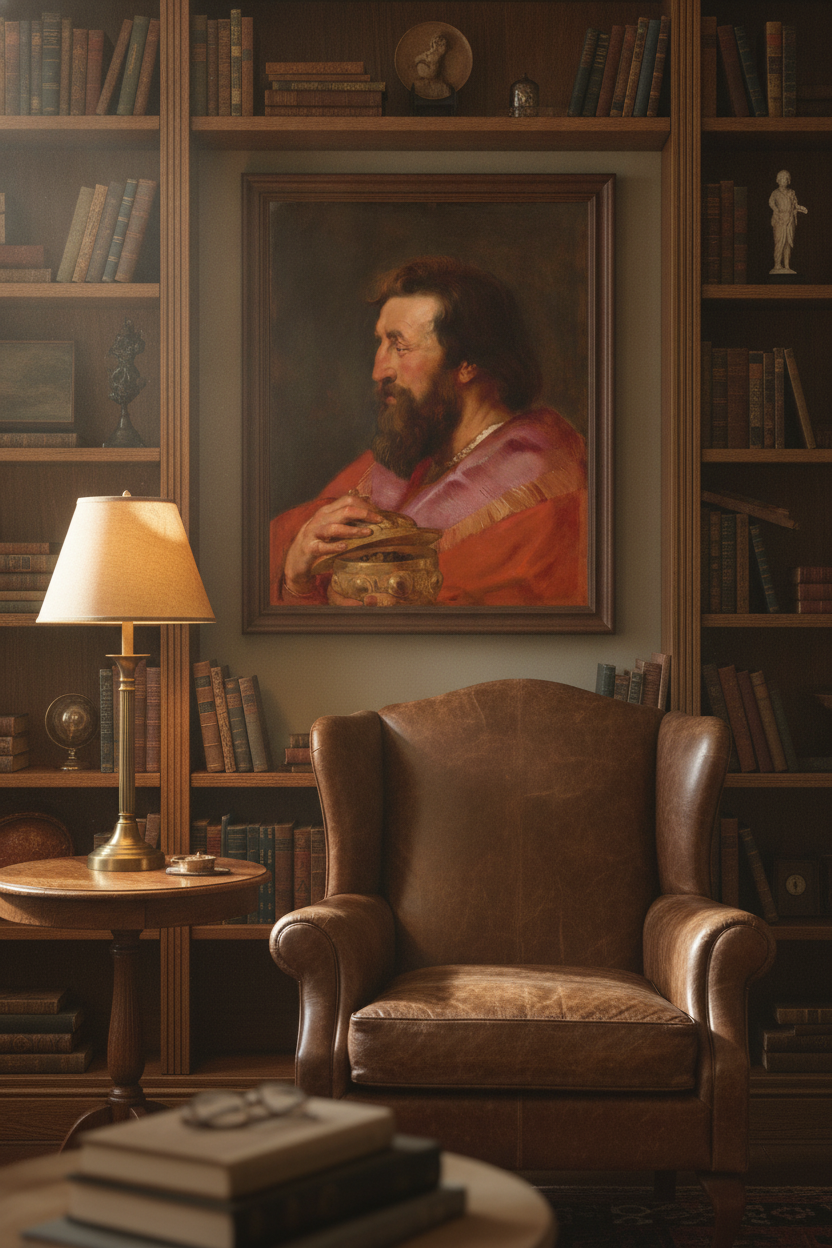
A perfect example of this intimate mastery is the study Head of One of the Three Kings: Melchior, The Assyrian King, where the dramatic command of light and shadow brings immense psychological depth and human warmth to the subject.
Living with the Baroque
Why do these seventeenth-century masterpieces work so beautifully in a modern home? The answer lies in their sheer vitality. Modern interiors often rely on clean lines, neutral tones, and minimalist structures. A high-quality canvas print of a Rubens work introduces a necessary counterpoint: organic energy, deep emotional resonance, and a rich color story.
Whether it is a dramatic mythological scene or a tender, expressive portrait, these works act as visual anchors, warming up a room and inviting endless contemplation.
Frequently asked questions
What made the Rubens studio system unique?
Unlike many artists who worked in isolation, Rubens ran a highly organized, collaborative workshop in Antwerp. He created the initial designs and oil sketches, his talented assistants painted the larger compositions, and Rubens returned to apply the final, defining details. This ensured both high output and a consistent, master-level quality.
How did classical antiquity influence Rubens's style?
Rubens spent years in Italy studying ancient Greco-Roman sculptures. However, instead of copying their cold, static stone appearance, he reimagined them as living, breathing human beings with warm skin, flowing drapery, and intense emotional expressions.
Are these prints suitable for contemporary interior design?
Absolutely. The rich, warm color palettes, dramatic lighting, and fluid compositions of Rubens's works provide an excellent contrast to the clean lines and neutral tones of modern homes, adding depth, history, and a touch of grand drama to any space.