
The Living Legacy of Peter Paul Rubens: Energy, Drama, and the Art of Emulation
In short: Works created "after" Peter Paul Rubens preserve the grand scale, swirling energy, and dramatic lighting of the Flemish Baroque master, translated by skilled printmakers and artists across centuries.
The Master of Movement and Muscle
To step into the world of Sir Peter Paul Rubens is to enter a theater of pure vitality. The Flemish Baroque master did not merely paint scenes; he unleashed them. His canvases are famous for their swirling motion, rich colors, and robust, expressive figures. But his influence did not end in his Antwerp workshop. For centuries, artists and printmakers studied his grand compositions, creating works "after" Rubens to master his dramatic techniques.
When we look at pieces from the after Sir Peter Paul Rubens collection, we are looking at a centuries-old tradition of artistic reverence. These are not simple duplicates. They are masterly interpretations by skilled artists who sought to capture the energy, light, and emotional weight of the original masterworks for new audiences.
Decoding the Baroque Drama
What makes a Rubens composition so instantly recognizable? It is the sense of unstoppable momentum. Where Renaissance art favored calm, geometric balance, Rubens embraced the curve, the diagonal, and the spiral. His figures—whether mythological gods, biblical heroes, or historical royals—possess a physical weight and a palpable sense of breath and life.
In these classical translations, look closely at the play of light and shadow. The dramatic contrast, known as chiaroscuro, pulls your eye through the scene, highlighting tense muscles, draped fabrics, and expressive faces. This theatricality makes every piece feel alive, as if the action is unfolding right before your eyes.
The Art of the Copy
In the academic traditions of the seventeenth, eighteenth, and nineteenth centuries, copying a master was the ultimate form of study. Printmakers and painters did not just replicate lines; they translated the texture of Rubens's brushwork into new mediums. Through engraving, etching, and oil studies, they preserved his monumental altarpieces and intimate portraits for posterity.
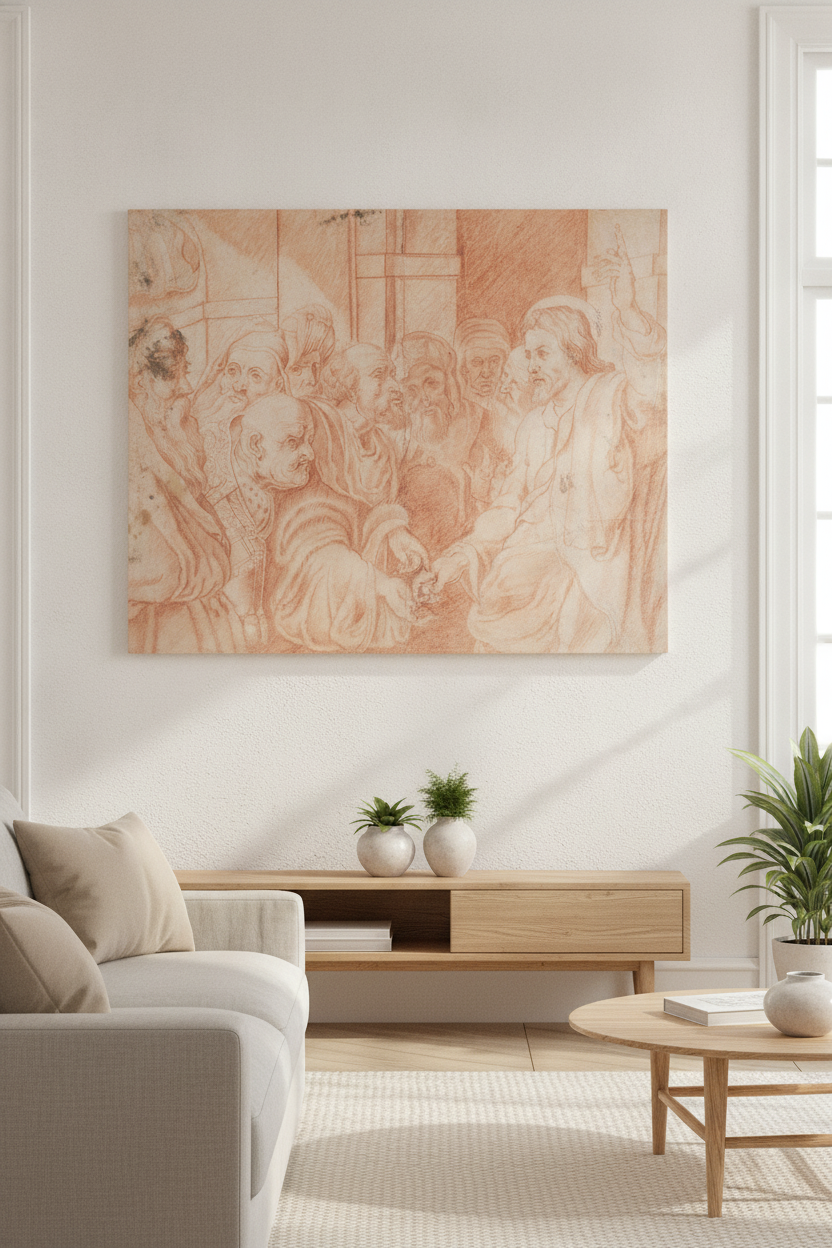
A stunning example of this is the reproduction of Tribute Money. This piece captures the intense psychological drama and rich tonal depth of the biblical narrative, showcasing how later artists successfully bottled the Flemish master's expressive power.
Bringing Baroque Energy Home
You might wonder how such grand, theatrical art fits into a contemporary home. The answer lies in contrast. The bold lines, warm tones, and deep shadows of Baroque art provide a stunning anchor for modern, minimalist spaces. A large-scale Rubens-inspired print adds instant character, warmth, and intellectual depth to a room.
Whether printed on textured archival paper or stretched canvas, these works bring a sense of history and human touch. They remind us of an era when art was grand, unapologetic, and deeply felt—making them perfect conversation starters for any modern living space.
Frequently asked questions
What does "after Sir Peter Paul Rubens" mean?
"After" is a traditional art-historical term meaning the work was created by another artist as a close study, translation, or interpretation of an original composition by Rubens. These were often made by highly skilled printmakers and academic painters to learn his techniques and distribute his imagery.
Why was Rubens so influential to later artists?
Rubens pioneered a dynamic, highly emotional style that defined the Baroque era. His mastery of human anatomy, fluid movement, and dramatic lighting became the gold standard for academic art training across Europe for centuries.
How do these Baroque prints fit into modern interior design?
Their rich, warm color palettes and dramatic compositions create a beautiful contrast in modern homes. They add a layer of historic soul and texture, pairing exceptionally well with neutral walls, clean-lined furniture, and natural wood tones.