The Luminous Blue and White of the Della Robbia Studio
In short: The Studio of Andrea della Robbia revolutionized Renaissance relief sculpture with a signature cobalt blue and milky white glaze, creating timeless, serene art.
The Alchemy of Renaissance Light
In fifteenth-century Florence, while painters chased perspective on flat wood, one family workshop found a way to make sculpture glow from within. The Studio of Andrea della Robbia, building upon the pioneering work of Andrea's uncle Luca, perfected the art of glazed terracotta. By applying a secret recipe of tin-glaze to clay, they created durable, luminous reliefs that could withstand the elements and brighten dark chapel walls. It was a revolutionary marriage of sculpture and painting.
Exploring the Full Studio of Andrea della Robbia collection reveals how this technique transformed public and private spaces across Renaissance Italy. The workshop elevated relief sculpture into a luminous, durable medium that seamlessly integrated with classical architecture, offering a brilliant alternative to traditional marble or bronze.
Blue, White, and the Bounty of Nature
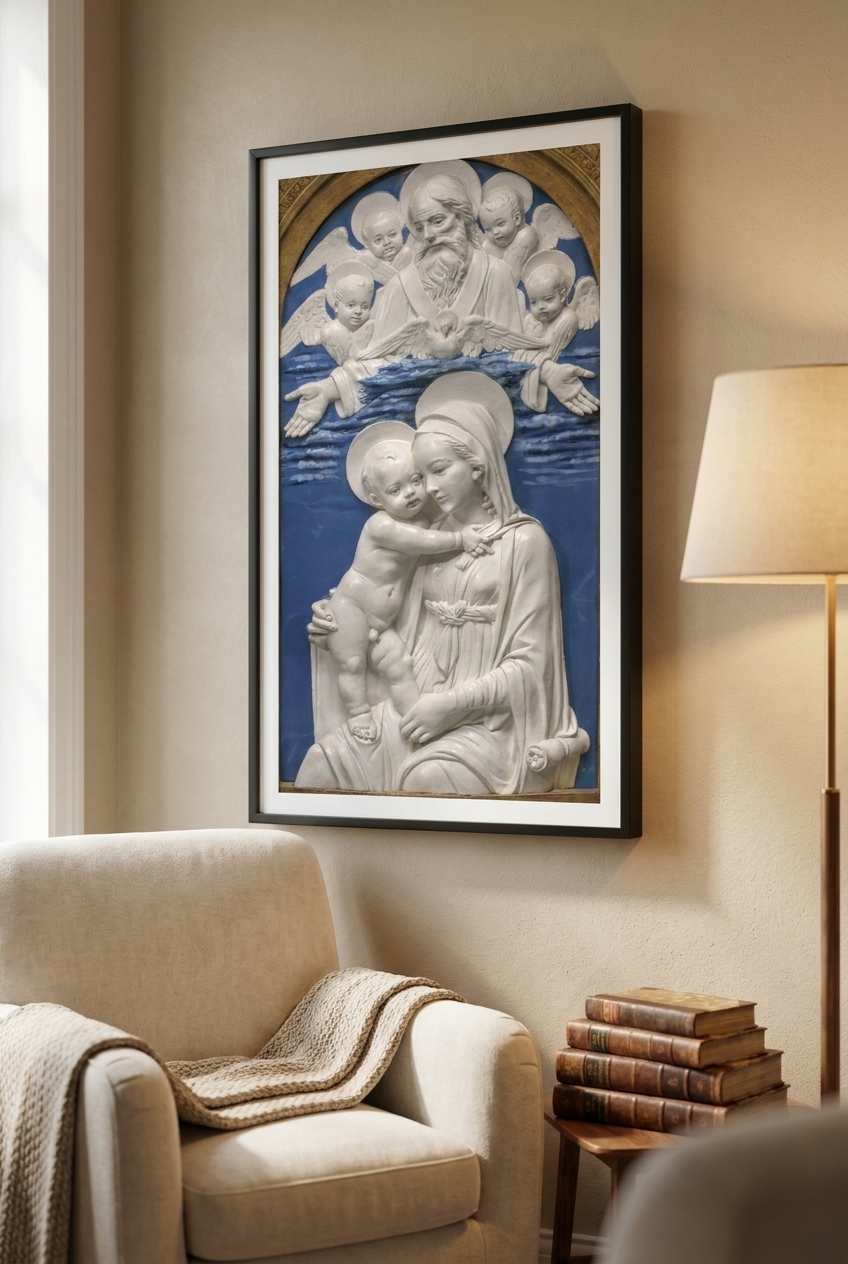
The studio’s signature aesthetic is instantly recognizable. It relies on a restrained, high-contrast palette of brilliant cobalt blues and milky, opaque whites. This stark, serene contrast gives the figures an otherworldly, peaceful quality. To frame these divine scenes, the workshop sculpted incredibly detailed, naturalistic garlands of pinecones, lemons, grapes, and lush foliage. This captured the Renaissance fascination with the natural world and classical symmetry.
In masterpieces like the Madonna and Child with God the Father and Cherubim, you can see this perfect balance: idealized, expressive countenances surrounded by vibrant, tactile nature. The quiet, balanced compositions represent a harmonious marriage of earthly beauty and heavenly calm.
Translating Terracotta to the Modern Wall
Why does a five-hundred-year-old glazed sculpture look so striking on a modern wall? The secret lies in the incredible sense of depth and clean, graphic contrast. The brilliant blues and clean whites feel remarkably contemporary, fitting effortlessly into minimalist, coastal, or traditional interiors.
When captured as a high-quality fine-art print, the subtle cracks in the glaze, the soft shadows of the relief, and the rich texture of the clay come alive. It brings a piece of Florentine architectural history, along with its calm, meditative energy, directly into your living space.
Frequently asked questions
What is tin-glazed earthenware?
It is a technique where clay pottery is covered with a lead glaze containing tin oxide. The tin makes the glaze white, opaque, and glossy, providing a perfect canvas for painted pigments like cobalt blue.
Who was Andrea della Robbia?
Andrea della Robbia (1435–1525) was an Italian Renaissance sculptor who inherited the famous Florentine terracotta workshop from his uncle, Luca della Robbia. He expanded the studio's production and popularized the medium across Europe.
How do three-dimensional relief sculptures translate into flat art prints?
High-resolution photography captures the precise play of light and shadow on the original glazed terracotta. This creates a striking three-dimensional illusion on paper or canvas, preserving the depth of the original sculpture.