
The Master of Regency Glamour: Sir Thomas Lawrence
In short: Sir Thomas Lawrence defined the Regency era with portraits that merged classical structure with Romantic emotion, famed for their luminous skin and lively eyes.
The Painter of Regency Glamour
If you want to understand the glittering, high-stakes world of Regency England, you do not look to history books; you look to the portraits of Sir Thomas Lawrence. As the preeminent portraitist of his age and the President of the Royal Academy, Lawrence did not merely paint the aristocracy—he defined how they wanted to be remembered. His work bridged the structured, intellectual world of Neoclassicism with the emotional, stormy heights of the emerging Romantic movement.
Born in 1769, Lawrence was a child prodigy who quickly rose to become the favorite painter of the Prince Regent (later King George IV). While his predecessors favored a more academic, historical approach, Lawrence brought something entirely new to the easel: a sense of theatricality, immediate life, and breathtaking glamour. To explore his full range, you can browse our Full Sir Thomas Lawrence collection.
Luminous Skin and Liquid Eyes
What makes a Lawrence portrait instantly recognizable is its sheer, breathing vitality. He had an unparalleled mastery of light, particularly when rendering the human face. His subjects do not look like static statues; they look as if they have just turned their heads to speak to you. Their eyes sparkle with a liquid, lifelike brilliance, and their skin tones seem to radiate a warm, inner luminosity.
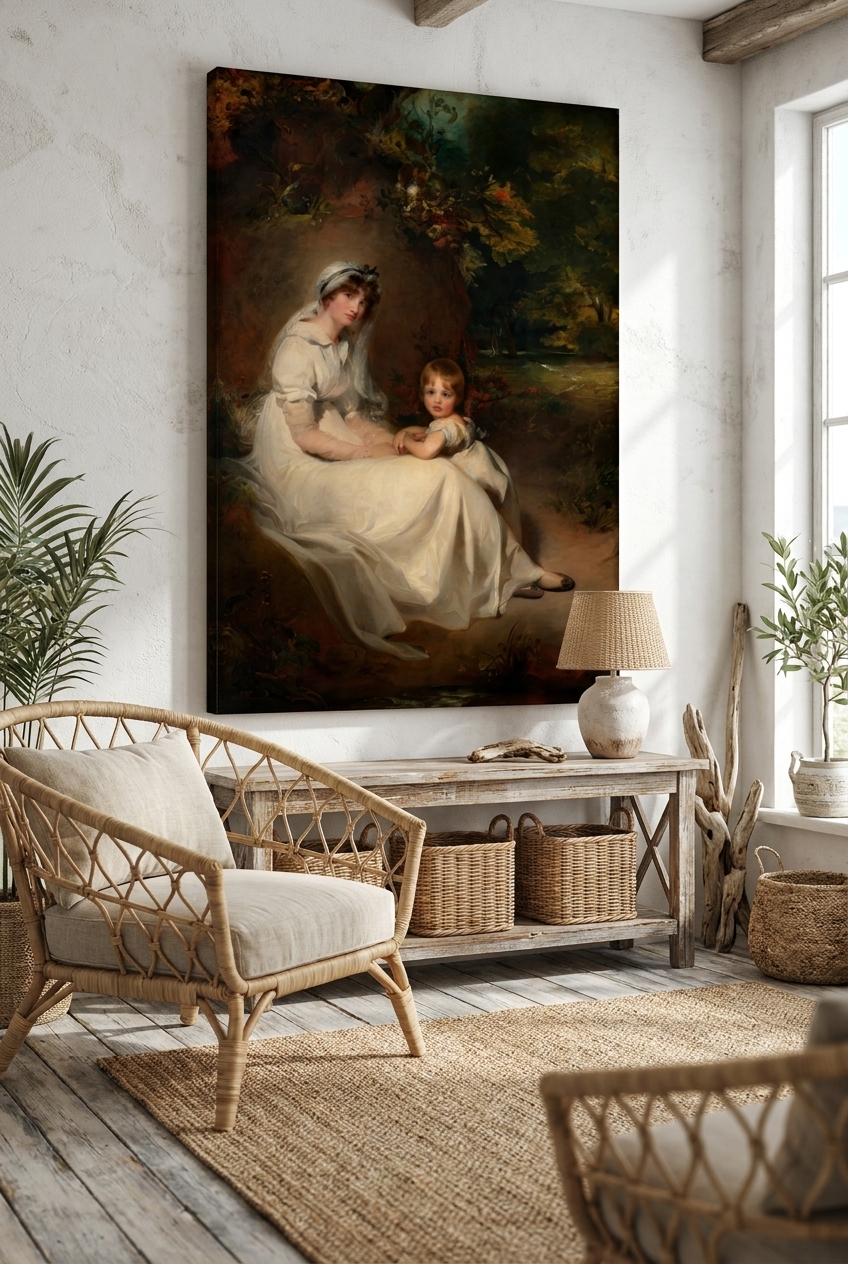
But Lawrence was also a master of texture. He painted fabrics—heavy velvets, shimmering silks, and delicate gossamer veils—with fluid, energetic brushstrokes that convey both luxury and movement. A prime example of this is his masterpiece, Lady Mary Templetown and Her Eldest Son. In this stunning work, the tender connection between mother and child is framed by dramatic, sweeping drapery and a soft, atmospheric landscape, perfectly showcasing his ability to blend classical poise with deep human emotion.
Why Lawrence Belongs in the Modern Home
It is easy to think of Regency portraits as relics of the past, but Lawrence’s work has a surprising modern appeal. Because his style relies so heavily on dramatic contrast and vibrant, fluid brushwork, his paintings do not feel dusty or dated. Instead, they bring a sense of grand scale, theatrical warmth, and sophisticated history to contemporary spaces.
When reproduced as a high-quality giclée print or canvas, a Lawrence portrait becomes an instant focal point. The rich, deep tones of his backgrounds—often filled with stormy skies or dark, classical columns—make the luminous figures in the foreground pop. Whether hung in a minimalist dining room to add a touch of classical drama, or placed in a cozy, book-filled study, his work introduces an air of effortless elegance and psychological depth that modern photography simply cannot replicate.
Frequently asked questions
What is the difference between Lawrence's style and earlier Georgian portraiture?
While earlier Georgian artists like Thomas Gainsborough and Joshua Reynolds focused on structured, formal compositions and academic ideals, Lawrence introduced a pre-Romantic sensibility. His brushwork was looser and more fluid, his lighting was more dramatic, and he emphasized a lively, psychological immediacy that made his subjects feel vibrantly alive.
How did Lawrence achieve the "sparkle" in his subjects' eyes?
Lawrence was famous for his tiny, precise highlights. By applying a minute dot of pure white paint to the iris and pupil, he captured the way moisture reflects light, giving his sitters an alert, intelligent, and deeply human expression.
What framing style works best for a Sir Thomas Lawrence print?
Because his paintings are grand and dramatic, they pair beautifully with classic, ornate gold frames that mirror the Regency aesthetic. However, for a more modern interior, a simple, deep-set dark wood or black frame can beautifully frame the rich, moody tones of his backdrops.