The Quiet Grace of Giuliano Bugiardini: High Renaissance Harmony
In short: A peer of Michelangelo, Giuliano Bugiardini painted with a serene, sculptural clarity that brings the quiet harmony of High Renaissance Florence into focus.
A Voice of Calm in a Golden Age
In the bustling workshops of sixteenth-century Florence, art was undergoing a revolution. While figures like Michelangelo pushed the boundaries of human anatomy and emotion, Giuliano Bugiardini championed a different kind of beauty: a quiet, monumental calm. Born in 1475, Bugiardini was a lifelong friend of Michelangelo, even helping him in the early stages of the Sistine Chapel. Yet, where his peers chased dramatic tension, Bugiardini sought balance, order, and a serene, classical grace.
The Bugiardini Style: Sculptural and Serene
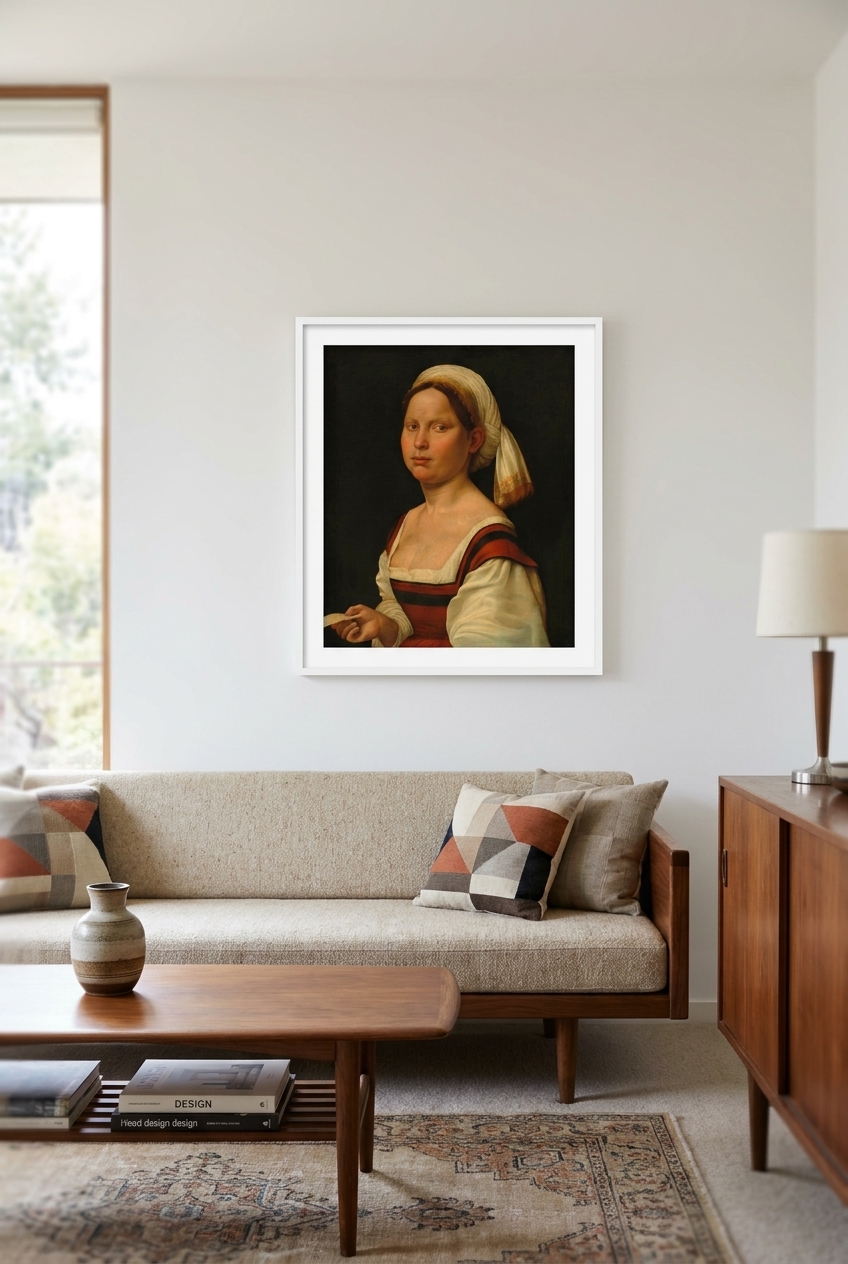
To look at a Bugiardini painting is to experience a sense of stillness. His style is defined by simplified, clean geometries and a sculptural approach to the human form. He rejected the frantic energy of the rising Mannerist movement, choosing instead to focus on luminous clarity and soft, atmospheric modeling. A perfect example of this approach is his Portrait of a Young Woman, where the subject’s steady gaze and the harmonious, rounded forms of her dress create an atmosphere of quiet dignity and idealized beauty.
Bringing Renaissance Harmony Home
There is a timeless quality to Bugiardini's work that makes it feel surprisingly modern. Because he focused on bold, simplified shapes and balanced compositions rather than cluttered details, his paintings have a powerful visual presence on a wall. Whether displayed as a textured canvas or a framed fine-art print, a piece from the full Giuliano Bugiardini collection brings a sense of architectural structure and peaceful contemplation to contemporary interiors, anchoring a room with the enduring spirit of the Tuscan golden age.
Frequently asked questions
What was Giuliano Bugiardini’s relationship with Michelangelo?
Bugiardini and Michelangelo were lifelong friends, having trained together in the workshop of Domenico Ghirlandaio. Bugiardini even assisted Michelangelo briefly on the Sistine Chapel ceiling, though his own style remained much more classical and serene than Michelangelo's dramatic, muscular forms.
What are the key characteristics of Bugiardini's paintings?
Bugiardini’s work is known for its quiet monumentality, simplified geometric shapes, and a sculptural feel. He used a vibrant but carefully controlled color palette and soft, atmospheric lighting to create a sense of calm, spiritual order.
How does his art fit into a modern home?
Because Bugiardini avoided the cluttered details and chaotic movement of later Renaissance styles, his clean lines and balanced compositions act as beautiful visual anchors. His works bring a soothing, classical presence that complements both minimalist modern spaces and traditional interiors.