
The Quiet Grandeur of Charles Moss: Classical Harmony for the Modern Home
In short: Charles Moss captured the quiet dignity of the natural world through a classical lens. His meticulous draftsmanship, warm ochres, and luminous skies make his work perfect for creating a peaceful, elegant atmosphere in any contemporary space.
The Pursuit of Classical Serenity
Charles Moss stands as a master of quiet restraint. Rooted deeply in the enduring traditions of classical landscape painting, his work emerged from an era that yearned for balance, harmony, and idealized natural beauty. While the modern art world was beginning to fracture into abstraction, Moss remained dedicated to academic principles. He did not merely paint what he saw; he ordered the natural world, elevating ordinary scenes into realms of poetic serenity and structured elegance.
Unlike the chaotic, wild landscapes of the Romantics, the classical tradition sought to find—or rather, impose—a beautiful order upon nature. Moss was a master of this approach. His compositions are carefully structured, guiding the viewer's eye along gentle pathways, quiet rivers, and balanced groupings of trees. This deliberate arrangement creates a sense of safety and eternal peace. To look at a work by Moss is to step into a space where the chaos of daily life is gently hushed, replaced by a profound sense of calm.
Light, Shadow, and the Earthy Palette
The magic of Moss's style lies in his meticulous draftsmanship and incredibly sensitive rendering of atmospheric light. His paintings are built on a refined palette of earthy ochres, deep forest greens, and soft, luminous skies. Rather than using harsh contrasts, Moss employed a delicate play of shadow and illumination. This technique creates an extraordinary sense of depth and stillness, transforming a simple canvas into a timeless window.
The light in a Moss painting is rarely the harsh glare of midday. Instead, he favored the soft, golden light of late afternoon or the cool, quiet glow of early morning. This atmospheric quality is achieved through incredibly subtle gradations of color. By layering his tones, he allowed the undercolors to breathe through, giving his skies a luminous, breathing quality that seems to radiate from within the canvas itself. Whether depicting a rolling pastoral valley or a quiet corner of a garden, his brushwork captures a quiet grandeur that feels both intimate and vast.
From Pastoral Vistas to Quiet Still Lifes
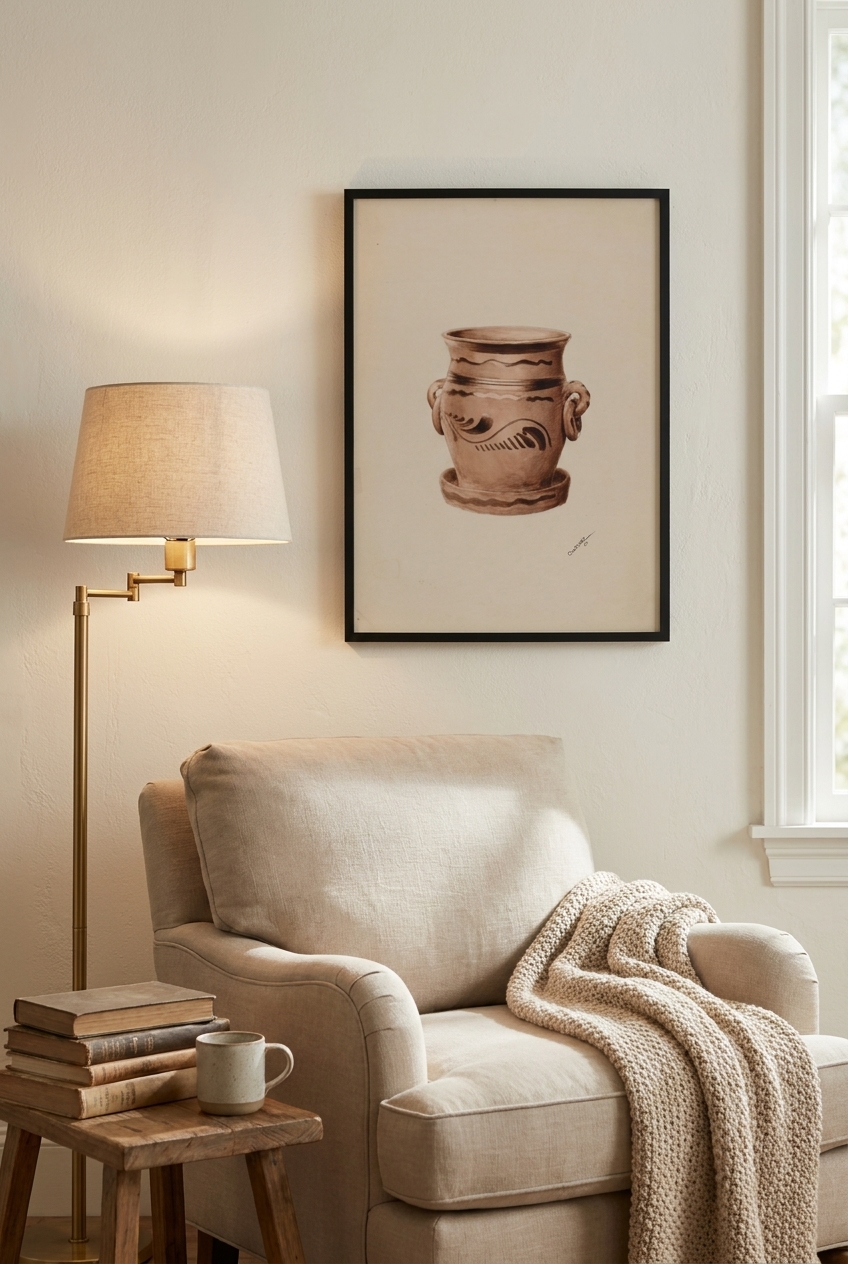
While Moss is celebrated for his sweeping pastoral landscapes, his classical sensibilities translated beautifully to smaller, more intimate subjects. A perfect example of this is his "Flower Pot" (1937), where the same principles of balance, light, and earthy color find expression in a humble domestic scene. In this work, the simple form of a potted plant is elevated by the same soft, atmospheric illumination that defines his grandest outdoor vistas.
Exploring the full Charles Moss collection reveals an artist who could find the same quiet dignity in a single flower pot as he did in a sun-drenched valley. It shows a remarkable consistency of vision, proving that classical harmony is not a matter of scale, but of perspective and care.
Why Charles Moss Belongs in the Modern Home
In our fast-paced, screen-dominated world, our homes have become crucial sanctuaries. This is why the classical art of Charles Moss feels so incredibly relevant today. His compositions do not shout for attention; instead, they anchor a room with their structured elegance and soothing color palettes. A high-quality archival print or canvas of his work acts as a visual deep breath.
The deep forest greens and warm ochres pair beautifully with natural wood, clean modern lines, and minimalist decor, bringing a sense of history, depth, and organic warmth to contemporary living spaces. Furthermore, the texture of a high-quality canvas reproduction brings out the subtle nuances of his brushwork and draftsmanship. When printed on archival paper or stretched canvas, the delicate plays of shadow and the rich, earthy tones of his palette are preserved with museum-quality accuracy. It is an effortless way to introduce a touch of historic sophistication and natural serenity into an entryway, study, or living room.
Frequently asked questions
What art movement is Charles Moss associated with?
Charles Moss is closely aligned with the Classical tradition, specifically academic landscape painting. His work emphasizes balance, harmony, structured compositions, and idealized natural beauty rather than the fragmented styles of modernism.
What are the defining characteristics of his color palette?
Moss relied on a refined, earthy palette dominated by deep forest greens, warm ochres, and soft, luminous tones for his skies. This subtle color scheme helps create his signature sense of quiet grandeur and atmospheric depth.
How do his still lifes, like "Flower Pot" (1937), compare to his landscapes?
While his landscapes capture sweeping pastoral vistas, his still lifes apply the exact same classical principles—such as balance, meticulous draftsmanship, and sensitive lighting—to intimate, everyday subjects, giving them a quiet, poetic dignity.