The Quiet Grandeur of Martin Partyka: Classical Order in American Design
In short: Martin Partyka’s masterful renderings of historical objects transcend mere documentation. By applying the rigorous rules of classical symmetry, light, and shadow, he turned everyday antiques into monumental studies of form and quiet stillness.
The Art of Restraint
At first glance, an antique wooden chest is simply a piece of history. But under the gaze of Martin Partyka, it becomes something monumental. Active during the mid-20th century, Partyka approached his subjects not merely as an illustrator, but as a classicist. His work, preserved beautifully in the Full Martin Partyka collection, is defined by a profound sense of order, symmetry, and quiet grandeur. He understood that the objects we build tell a story of human aspiration, and he sought to capture that spirit in its purest form.
Partyka was part of a generation of artists who looked at the material culture of early America and saw something sacred in its craftsmanship. Rather than chasing the fleeting, chaotic trends of modernism, he anchored his practice in the rigorous traditions of the classical canon. The result is a body of work that feels incredibly grounded, offering a contemplative stillness that is rare in today’s fast-paced world. By focusing on the structural essence of his subjects, he created art that feels both ancient and remarkably fresh.
Sculptural Clarity and the Classical Eye
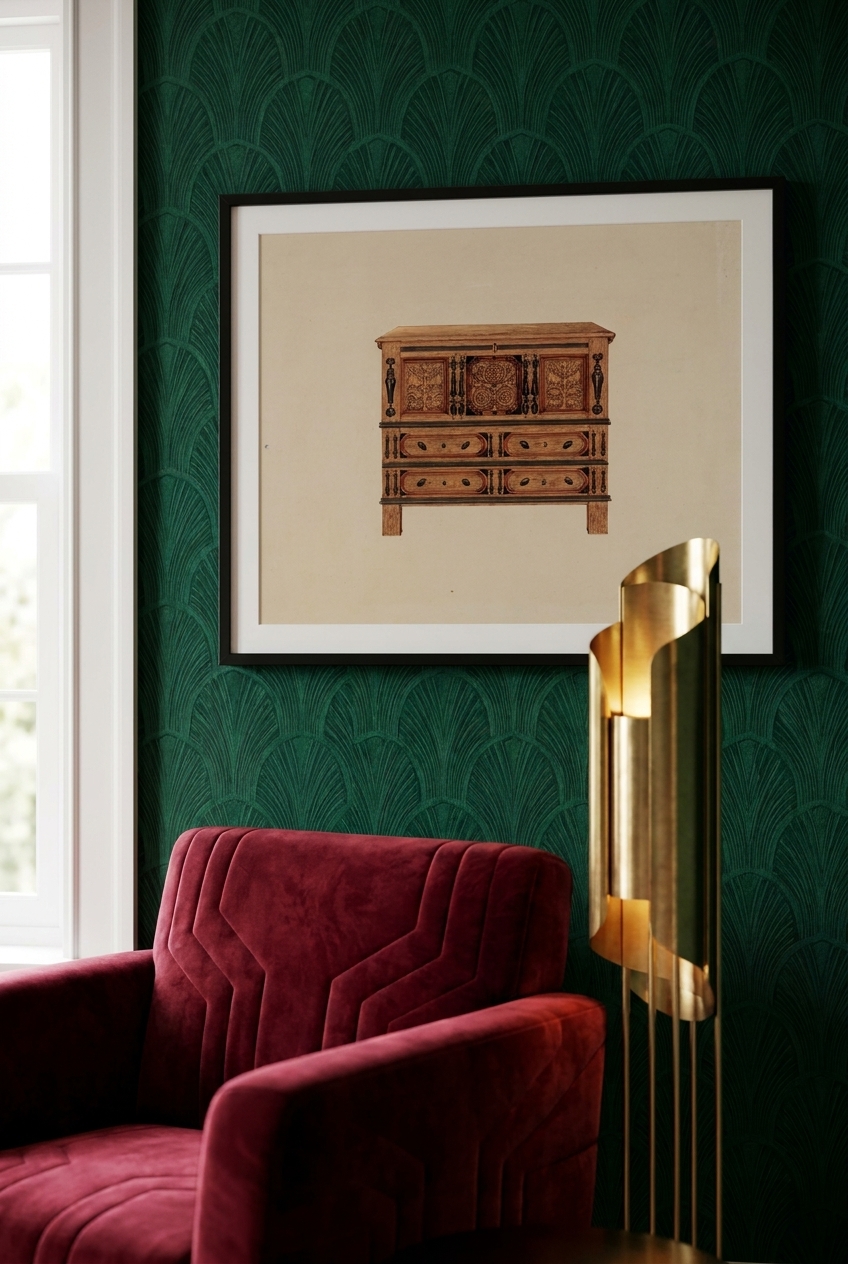
What makes Partyka's style so compelling is his meticulous command of light and shadow. He treated wooden surfaces, carved panels, and metal hardware with the same reverence that Renaissance masters reserved for marble sculptures. By stripping away transient ornamentation and focusing on the core structure, he achieved a rare sculptural clarity that elevates the ordinary into the extraordinary.
Consider his rendering of the Two Drawer Sunflower Chest - front view from 1936. Here, the chest is not just furniture; it is an architectural marvel. The symmetry of the carved sunflower panels and the deep, rich tones of the wood are rendered with such precision that you can almost feel the texture of the oak. Partyka uses a refined, earthy palette to emphasize the enduring beauty of form and proportion, turning a historical record into a timeless masterpiece of visual balance.
The Geometry of the Everyday
Classical art is, at its heart, an exploration of poise and balance. Partyka understood that this balance is not just found in grand mythological paintings, but in the everyday objects created by human hands. His deliberate draftsmanship allowed him to capture the quiet majesty of these objects from every angle, revealing the geometry that underlies all good design.
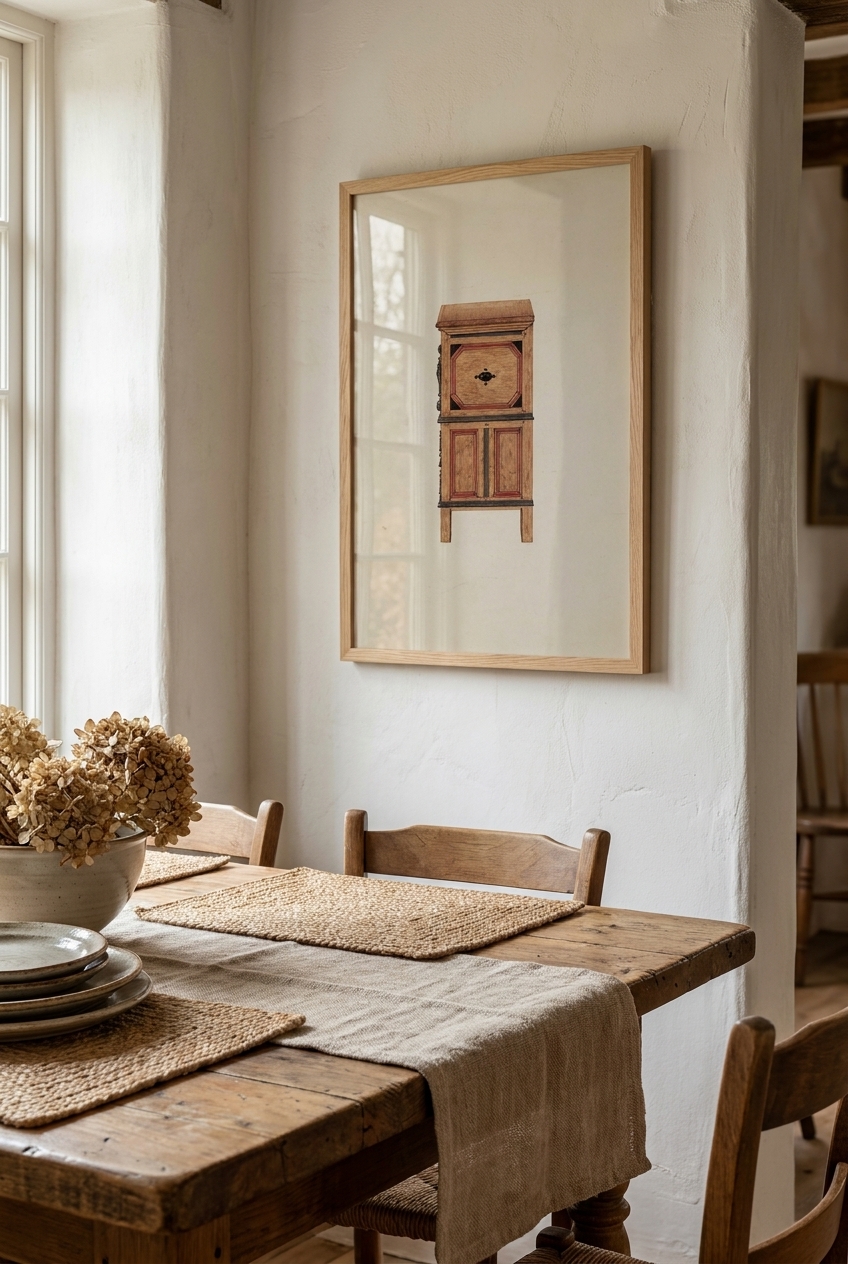
In the companion piece, the Two Drawer Sunflower Chest - side view, we see this structural harmony from a different perspective. The play of light across the side panel reveals the subtle variations in the wood grain and the sturdy, unpretentious joinery. It is a masterclass in tonal balance, showing how a simple profile can carry immense intellectual depth and artistic weight when observed with patience and respect.
Bringing Classical Stillness Home
In a modern home, where clean lines and minimalist aesthetics often dominate, Partyka’s work serves as a perfect bridge between the old and the new. His prints are not loud or demanding; instead, they invite quiet contemplation. They bring a sense of warmth, history, and architectural grounding to any room, serving as anchors of calm in a busy household.
Because his color palette is rooted in natural, earthy tones—warm ambers, deep charcoals, and soft ochres—these pieces harmonize beautifully with contemporary interiors. Whether framed as a commanding focal point in a study or hung as a pair in a quiet hallway, Partyka’s classical vision offers a timeless sophistication that transcends temporary decor trends, proving that true beauty lies in proportion and restraint.
Frequently asked questions
Who was Martin Partyka?
Martin Partyka was an American artist active in the mid-20th century. He is best known for his incredibly detailed, classical renderings of historical American decorative arts and furniture, created as part of the Federal Art Project's Index of American Design.
What defines the classical style in Partyka's work?
Partyka's work is characterized by a strict adherence to symmetry, structural harmony, and a masterful use of light and shadow (chiaroscuro). He stripped away unnecessary distractions to focus entirely on the pure form, proportion, and sculptural quality of his subjects.
How do these prints fit into modern interior design?
With their neutral, earthy color palettes and structured compositions, Partyka’s works act as grounding elements in modern spaces. They offer a sophisticated, architectural feel that complements both minimalist and traditional decor, bringing a sense of history and calm to a room.