The Quiet Gravity of J. Howard Iams: Classical Realism and American Heritage
In short: J. Howard Iams combined classical realism with a deep reverence for early American history, capturing historic stone taverns, rural landscapes, and still lifes with disciplined restraint and light.
The Painter of Quiet History
There is a rare, settling quietness in the work of J. Howard Iams. At a time when the art world was hurtling toward abstraction and loud experimentation, Iams looked backward and inward. He dedicated his brush to documenting the quiet dignity of early American architecture and the rural landscapes of the American East. Working with a distinct classical sensibility, his compositions possess a structured, archival reverence that elevates historic homesteads, stone taverns, and pastoral vistas into timeless monuments of regional heritage.
Rather than treating history as a dusty relic, Iams painted it with a vital, breathing presence. His work stands as both an invaluable historical record and a masterclass in classical realism, offering viewers a contemplative window into the foundational landscapes of a bygone era.
The Geometry of Stone and Light
To understand Iams’s appeal is to appreciate his disciplined restraint. He did not paint with flashy, dramatic strokes or rely on sentimental embellishments. Instead, he utilized a muted, organic palette and a precise command of light and shadow. By eschewing unnecessary ornamentation, Iams focused on the raw geometry of stone, wood, and earth, capturing the enduring spirit of his subjects with quiet gravity and painterly precision.
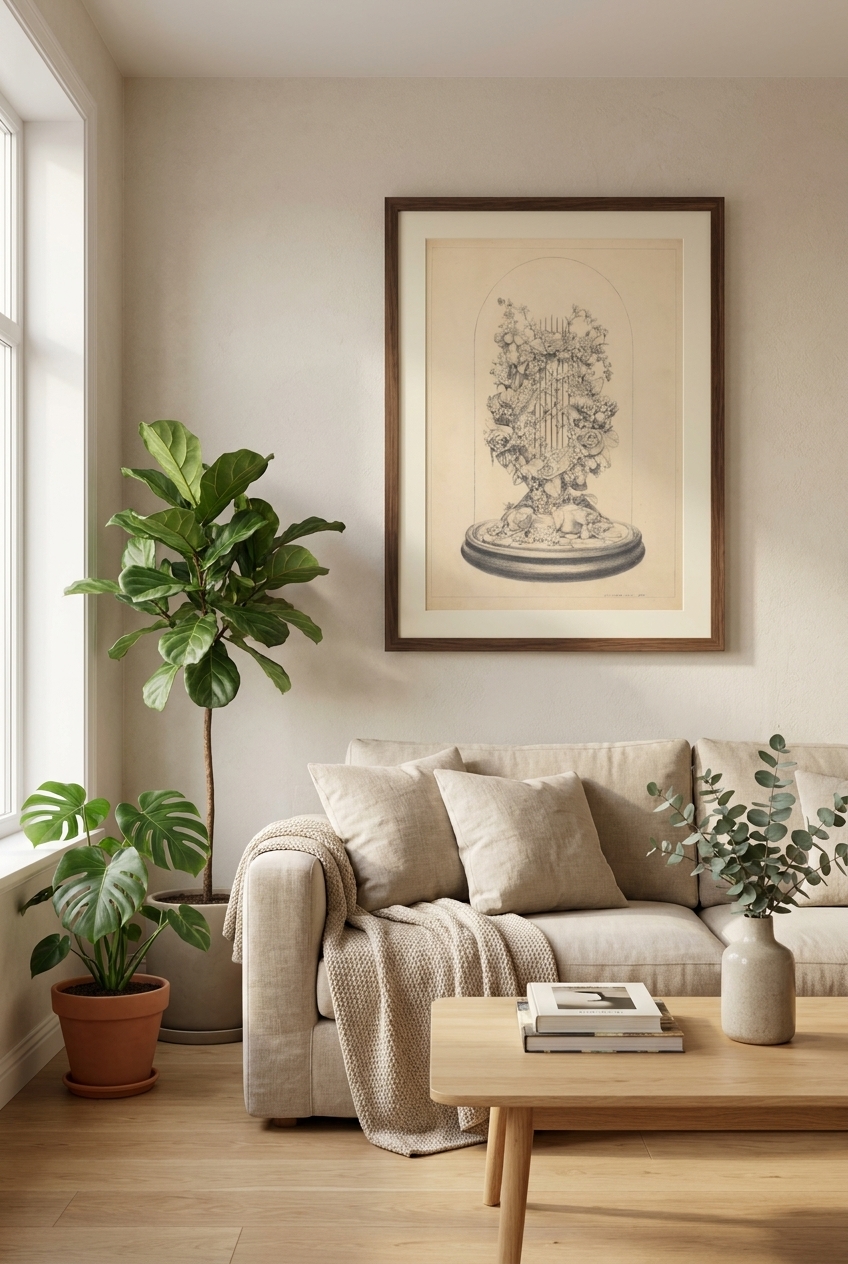
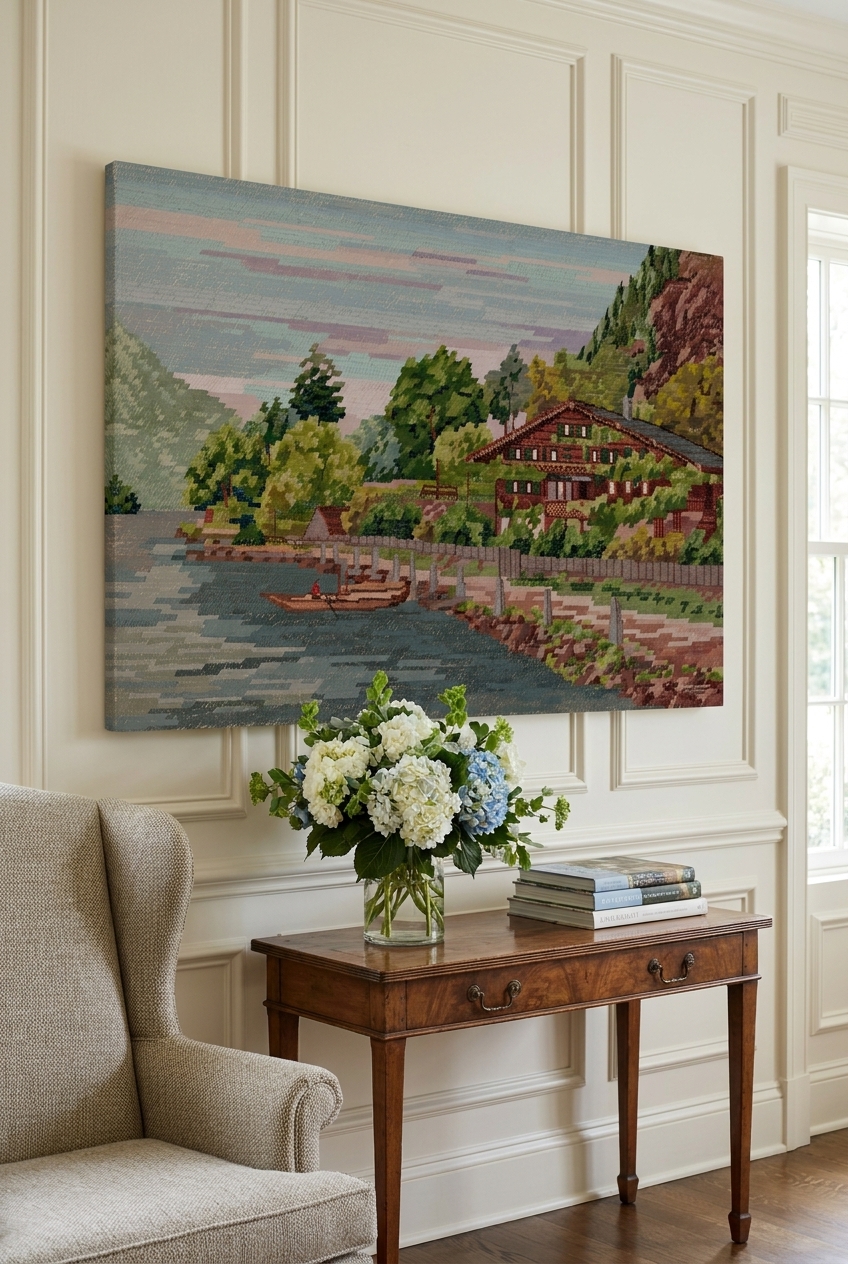
His mastery of texture and form is beautifully evident in works like Landscape in Petit Point (1937), which showcases his ability to translate intricate pattern and natural structure into a cohesive, tranquil scene. Similarly, in Glass Globe - Wax Flowers (1937), Iams demonstrates his classical realism through a delicate still life, capturing the play of light on glass and the soft textures of preserved flowers with breathtaking accuracy.
Why Iams Belongs in the Modern Home
In modern interior design, where spaces can sometimes feel overly sleek or sterile, the grounded, tactile quality of Iams’s work offers a perfect counterpoint. His paintings bring an immediate sense of history, warmth, and architectural structure to a room. Whether displayed as a textured canvas or a framed fine-art print, his scenes of stone houses and quiet valleys act as visual anchors, grounding a room in a sense of place and permanence.
Because his color palette relies on earthy ochres, deep forest greens, slate grays, and warm creams, his pieces harmonize effortlessly with natural wood, leather, and modern minimalist decor. Exploring the Full J. Howard Iams collection reveals a curated selection of works that do not shout for attention, but rather invite the eye to linger, offering a daily moment of calm reflection.
Frequently asked questions
What is Classical Realism, and how does J. Howard Iams fit into it?
Classical Realism is an artistic style that values traditional techniques of Western art, focusing on strong draftsmanship, realistic representation, and a disciplined control of light and form. J. Howard Iams fits into this tradition by applying these rigorous classical standards to early American subjects, capturing rural architecture and landscapes with geometric precision and quiet dignity.
What are the common themes in J. Howard Iams's paintings?
Iams focused heavily on regional heritage, particularly the early homesteads, stone taverns, rural landscapes, and historic structures of the American East. He also created delicate, precise still lifes that showcase his mastery over light, shadow, and texture.
How do J. Howard Iams prints complement modern interior design?
With their muted, organic color palettes and structured compositions, Iams's works bring a sense of history and architectural grounding to modern spaces. They pair exceptionally well with natural materials like wood, stone, and leather, providing a calming, sophisticated focal point.