
The Quiet Harmony of Anna Aloisi
In short: Anna Aloisi's work revives the classical pursuit of symmetry, balance, and idealized form. Her minimalist, tonally rich drawings and studies offer a serene, statuesque beauty perfect for contemporary interiors.
The Pursuit of Serene Order
In a world that often feels loud and chaotic, the art of Anna Aloisi offers a quiet sanctuary. Rooted in the enduring traditions of the Classical era, Aloisi’s work is a masterclass in balance, symmetry, and idealized form. Rather than chasing fleeting trends, she drew deep inspiration from antique masters, committing herself to an academic devotion to draftsmanship. Every line in her compositions serves a singular purpose: to reveal the underlying harmony of the natural world.
When you explore the complete Anna Aloisi collection, you immediately feel a sense of calm. Her art does not demand your attention with garish colors or frantic brushwork. Instead, it invites you to slow down and appreciate the quiet contemplation of beauty and proportion. It is an art of whispers rather than shouts, making it a timeless addition to any space that values serenity.
The Art of Restraint
What makes Aloisi's style so distinctive is her delicate economy of line and masterful command of tone. She understood that sometimes, what you leave out is just as important as what you put in. Through soft gradations and precise contours, her subjects achieve a statuesque permanence. Whether she is capturing a quiet figural pose or a simple botanical subject, the work transcends the ephemeral.
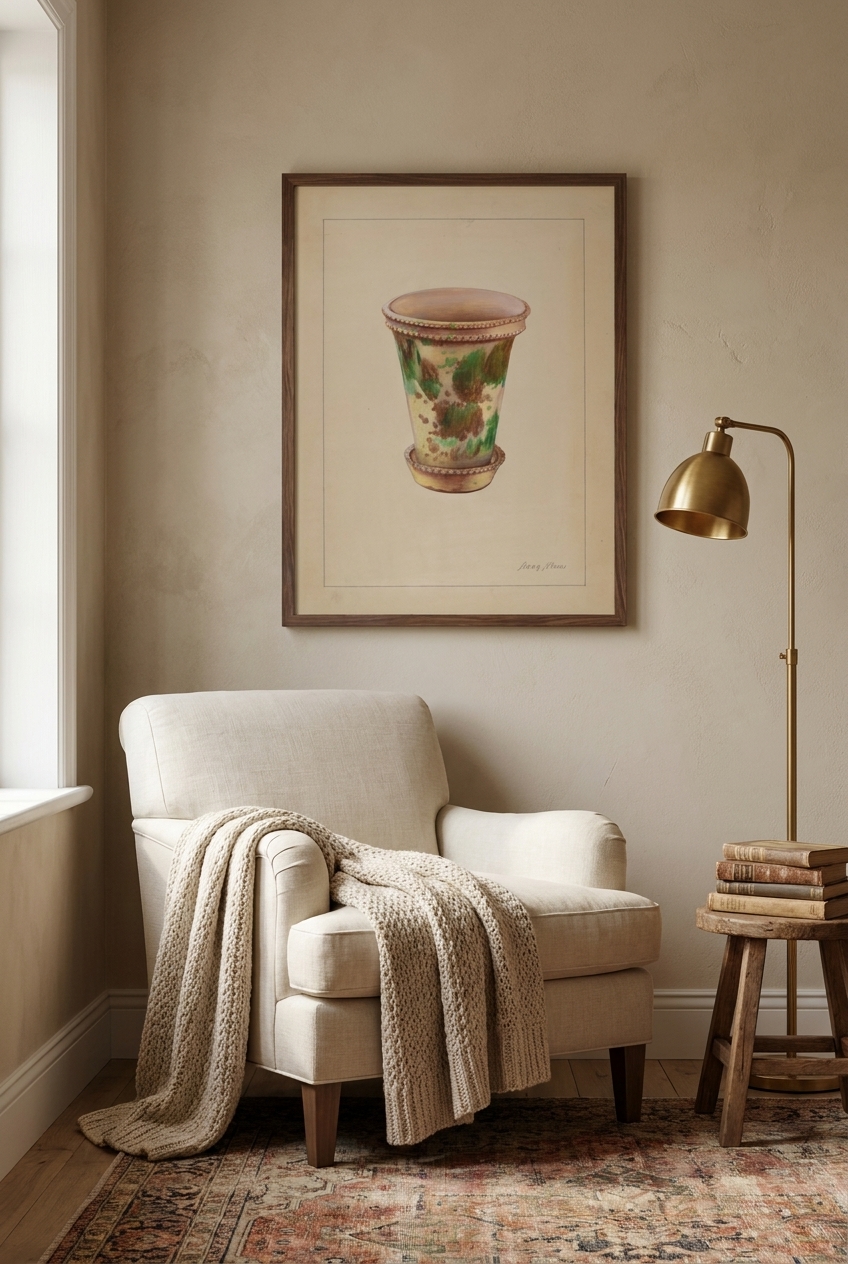
A perfect example of this restrained beauty is her work Flower Pot, created between 1935 and 1942. Here, a simple everyday object is elevated through careful study and classical execution. By stripping away unnecessary ornamentation, Aloisi coaxes out the inherent dignity of her subject, transforming a humble pot into a monument of quiet grace.
A Timeless Fit for Modern Spaces
There is a unique joy in bringing classical art into a contemporary home. Aloisi’s pieces work beautifully as fine-art prints or canvases because their clean lines and balanced compositions mirror the principles of modern interior design. In a minimalist room, a framed print of her anatomical or botanical studies acts as a grounding element, offering visual interest without cluttering the eye.
Because her palette relies on subtle tonal shifts rather than aggressive color, these works harmonize effortlessly with various decor styles, from warm mid-century modern to cool, industrial spaces. They invite a dialogue between the ancient and the modern, proving that true beauty never goes out of style.
Frequently asked questions
What defines Anna Aloisi's artistic style?
Anna Aloisi's style is defined by a classical devotion to draftsmanship, balance, and symmetry. She uses a delicate economy of line and soft tonal gradations to create serene, statuesque compositions that emphasize idealized form over temporary trends.
How does "Flower Pot" fit into her broader body of work?
Flower Pot (1935/1942) exemplifies Aloisi's ability to apply classical principles to simple, everyday subjects. By focusing on precise contours and subtle shading, she elevates a humble object into a study of timeless harmony and form.
Why are her prints well-suited for modern homes?
Because her work is free from unnecessary ornamentation and features a restrained, neutral color palette, it brings a sense of calm and order to modern spaces. The clean lines and balanced proportions complement contemporary minimalist and transitional interior designs beautifully.