
The Quiet Harmony of Ethelbert Brown: Classical Landscapes for the Modern Home
In short: Ethelbert Brown's art blends classical restraint with a deep reverence for nature, creating quiet, atmospheric scenes that bring a sense of order and peace to any room.
The Art of Quiet Order
In a world that often feels loud and chaotic, the paintings of Ethelbert Brown offer a welcome sanctuary of stillness. Rooted in the classical tradition, Brown's work is defined by a profound reverence for order, balance, and the idealized beauty of the natural world. Instead of chasing fleeting trends, he embraced academic principles that prioritize structured compositions and harmonious palettes. When you look at his landscapes, you do not just see a physical place; you feel a deep, restorative sense of calm. He invites us to slow down and appreciate the quiet majesty of simple things.
Light, Shadow, and the Quiet Landscape
At the heart of Brown's appeal is his mastery of atmospheric depth. His signature lies in the delicate interplay of light and shadow, rendered with meticulous brushwork that makes every leaf and rolling hill feel deliberate. By balancing classical restraint with a sensitive, patient observation of nature, he transformed simple pastoral views into enduring poetic statements. Exploring the complete Ethelbert Brown collection reveals an artist who understood how to capture the quiet, golden hours of the day. His work reminds us that landscape painting is not merely about documentation, but about capturing the emotional resonance of a quiet afternoon.
Honoring Craft and Everyday Beauty
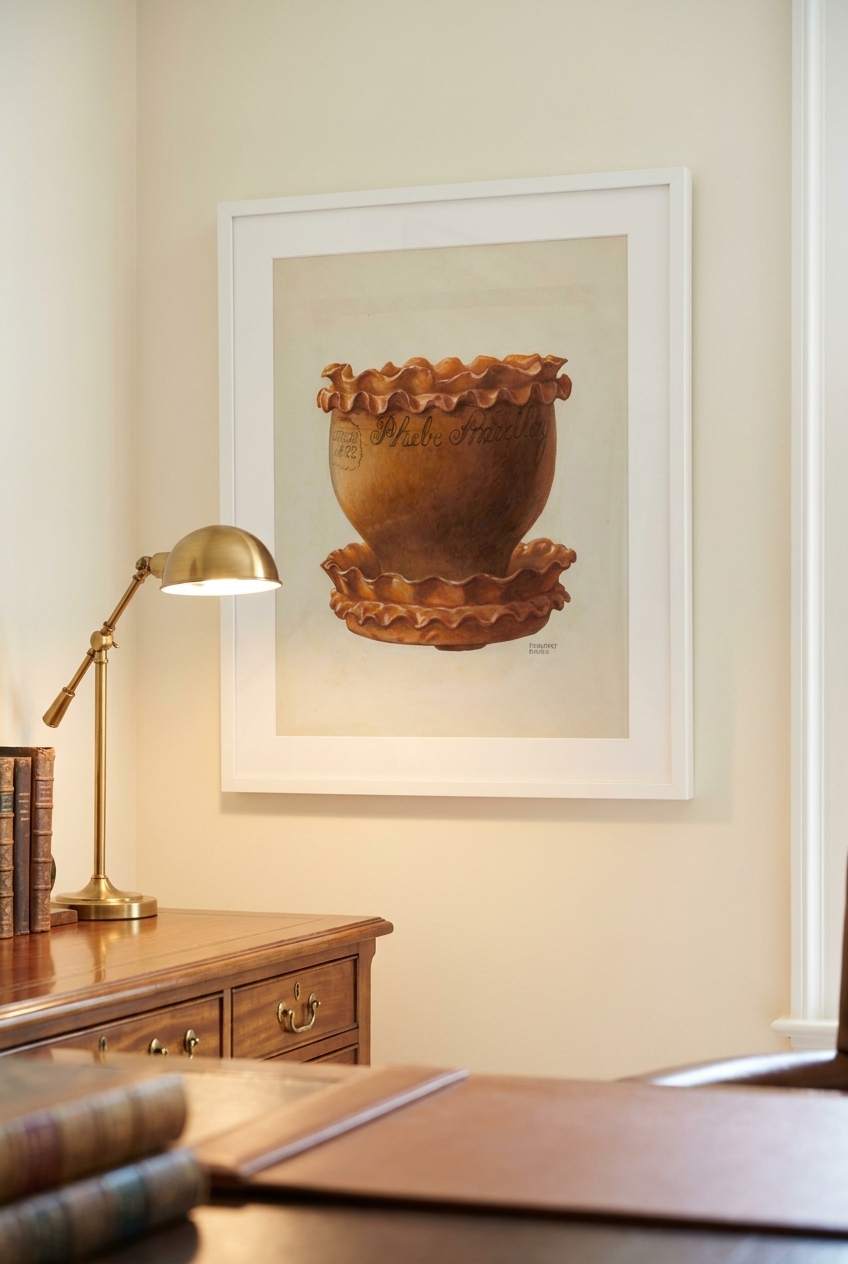
Brown's classical eye was not limited to grand vistas. He applied the same devotion to structure and light to simpler, everyday subjects, finding dignity in regional crafts and domestic objects. A perfect example of this is his rendering of the Pa. German Flower Pot and Saucer from around 1941. In this work, the humble earthenware is elevated through precise composition and a warm, earthy palette. It demonstrates that classical beauty is not reserved solely for grand historical scenes, but can be found in the most modest corners of human heritage and daily life.
Bringing Classical Harmony Home
Why do these classical works translate so beautifully into modern living spaces? A fine-art print or canvas of Brown's work acts as a visual anchor. Modern interiors, with their clean lines and minimalist aesthetics, pair wonderfully with the structured compositions and gentle, natural tones of his paintings. Whether framed over a mantelpiece or hung in a quiet study, his art brings a sense of timelessness and poise. These reproductions capture the rich textures and subtle tonal shifts of the originals, offering an easy way to bring museum-quality serenity into your home.
Frequently asked questions
What defines Ethelbert Brown's artistic style?
Ethelbert Brown's style is rooted in the classical academic tradition. It is characterized by structured compositions, a harmonious color palette, and a delicate interplay of light and shadow that creates atmospheric depth.
How does his work fit into modern interior design?
Because of their balanced compositions and serene, natural palettes, Brown's paintings act as soothing visual anchors. They complement both minimalist modern spaces and traditional decors by adding warmth and a sense of timeless order.
What subjects did Ethelbert Brown typically paint?
He is best known for his quiet, pastoral landscapes and rural vistas, as well as meticulous studies of traditional crafts and everyday objects, all rendered with classical restraint.