The Quiet Harmony of Frank J. Mace: Classical Art for the Modern Soul
In short: Frank J. Mace's art channels nineteenth-century classical traditions, offering balanced compositions, soft light, and a meditative escape from our busy modern world.
The Appeal of Classical Order
In a world that often feels fast-paced and fragmented, the art of Frank J. Mace offers a welcome sanctuary. Working within the enduring traditions of classical painting, Mace’s work evokes a timeless, pastoral tranquility. This style, deeply rooted in the academic principles of the nineteenth century, prioritizes harmony, balanced composition, and a poetic observation of the natural world.
Rather than chasing fleeting modern trends, Mace focused on the quiet, enduring beauty of his subjects. Whether depicting sweeping, idealized landscapes or intimate, crafted still lifes, his work acts as a visual deep breath. For those looking to bring this sense of order and peace into their living spaces, exploring the Full Frank J. Mace collection reveals an artist dedicated to the pursuit of classical balance.
Light, Atmosphere, and the Poetic Eye
The true signature of Mace’s style lies in his delicate rendering of atmosphere and light. Through soft, blended brushwork and a restrained, earthy palette, his paintings capture the fleeting transitions of the day. You can almost feel the cool dampness of a morning mist or the gentle warmth of afternoon sunlight filtering through dense foliage to cast quiet reflections upon still waters.
These compositions transcend mere documentation. They are meditative studies in stillness. By avoiding harsh lines and jarring contrasts, Mace invites the viewer into a romanticized vision of the countryside—one where nature is not wild and chaotic, but harmonious, inviting, and deeply restorative.
Preserving Beauty in Still Life
While Mace is celebrated for his pastoral landscapes, his classical sensibility also shines through in his unique still-life compositions from the mid-twentieth century. In these works, the focus shifts from the open countryside to the quiet, preserved beauty of handmade objects, treated with the same academic reverence and eye for balance.
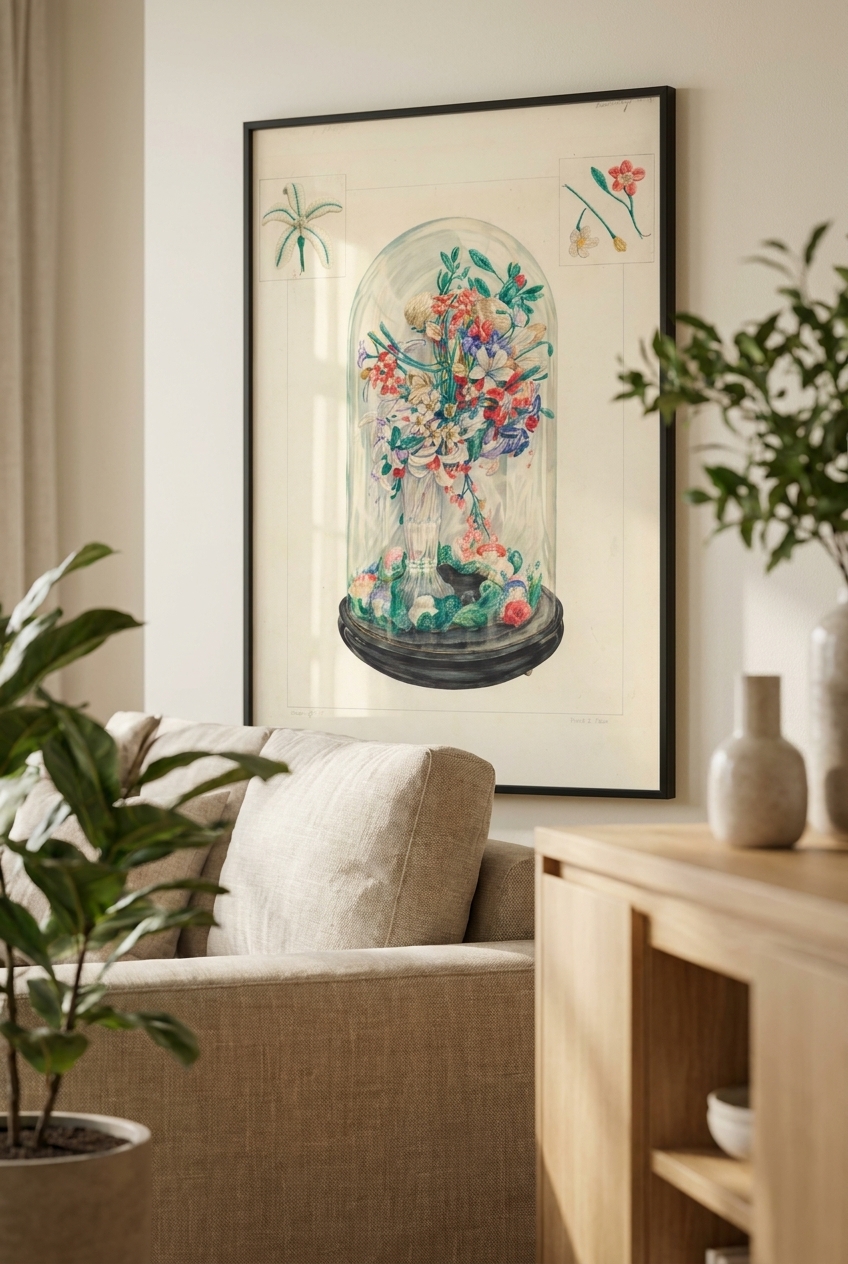
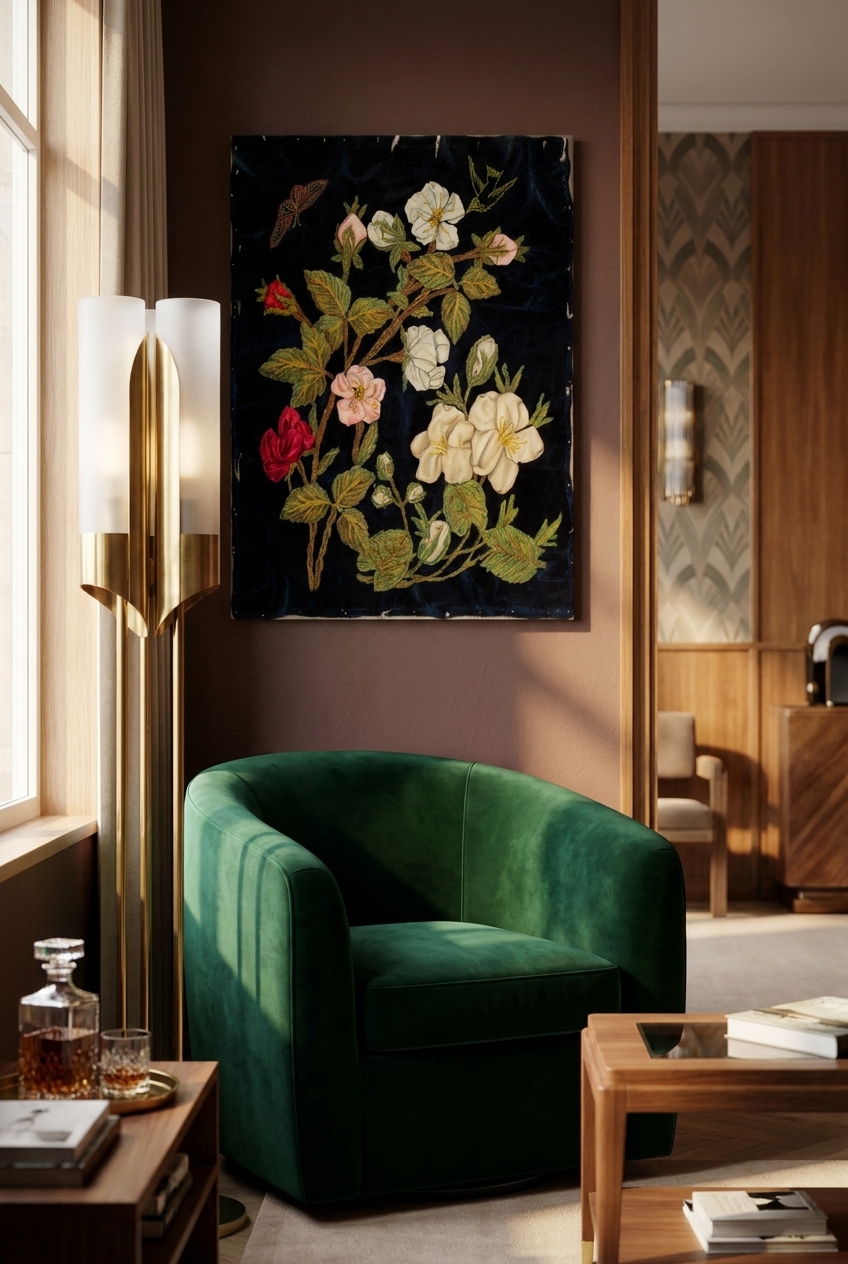
Consider, for instance, the striking contrast and quiet dignity of Handmade Flowers on Black. Here, the delicate textures of the blossoms are set against a dark, dramatic void, making the colors softly glow. Similarly, Wool Flowers Under Glass captures a sense of preserved memory, encasing tactile, crafted beauty within a protective dome. Both pieces showcase Mace’s ability to find majesty in the small, quiet corners of human creativity, translating three-dimensional crafts into balanced, two-dimensional masterpieces.
Bringing Timeless Stillness Home
Why does classical art feel so at home in modern interiors? The answer lies in the concept of visual grounding. Modern design often favors clean lines, neutral colors, and open spaces. A piece by Frank J. Mace acts as the perfect organic counterpoint to this minimalist aesthetic.
A high-quality canvas or framed print of Mace’s work introduces texture, depth, and history without overwhelming a room. His earthy color palettes—composed of soft greens, warm ochres, and deep, velvety blacks—complement contemporary furniture and natural wood tones beautifully. Hanging one of these pieces in a study, bedroom, or living room creates an instant focal point of calm, inviting anyone who enters to pause, reflect, and appreciate the quiet majesty of classical art.
Frequently asked questions
What art movement is Frank J. Mace associated with?
Frank J. Mace worked within the traditions of Classical and academic art, heavily inspired by nineteenth-century principles of landscape painting and balanced, harmonious compositions.
What characterizes the color palette in Mace's paintings?
Mace utilized a restrained, earthy palette dominated by soft greens, warm ochres, muted browns, and deep, rich blacks. This choice of color enhances the quiet, atmospheric quality of his work.
How do his still-life works compare to his landscapes?
While his landscapes focus on pastoral tranquility and natural light, his still-life works, such as his depictions of handmade flowers, apply the same classical principles of balance, soft lighting, and meticulous composition to intimate, preserved objects.