The Quiet Harmony of Gertrude Lemberg
In short: Gertrude Lemberg’s work captures the balanced, restrained beauty of classical design. With a muted palette and exquisite draftsmanship, her art brings a sense of calm, structured elegance to modern spaces.
The Art of Restraint
In a world that often feels loud and chaotic, there is a profound comfort in turning to art that understands the power of quiet. The works of Gertrude Lemberg offer exactly this kind of sanctuary. Deeply rooted in the disciplined traditions of European classicism, Lemberg’s creations are a masterclass in balance, harmony, and formal restraint.
Rather than chasing the fleeting trends of her era, Lemberg drew inspiration from the academic lineages of the late eighteenth and nineteenth centuries. Her art does not shout for attention; instead, it whispers, inviting the viewer to slow down and appreciate the clean lines, thoughtful proportions, and timeless principles of classical composition.
A Style Sculpted by Light
What makes Lemberg’s style so distinctive is her incredible dedication to draftsmanship. Every line is deliberate, and every curve is rendered with mathematical precision yet feels entirely organic. Her stylistic signature is characterized by a muted, highly sophisticated palette that relies on earthy tones, soft greys, and gentle pastels.
In her work, light is never dramatic or theatrical. You won't find harsh spotlights or deep, moody shadows. Instead, Lemberg uses a soft, diffused light to gently sculpt her subjects. This subtle interplay of light and shadow reveals a deep appreciation for physical structure, making even the simplest objects feel three-dimensional, weighty, and permanent.
The Beauty of the Everyday Classical
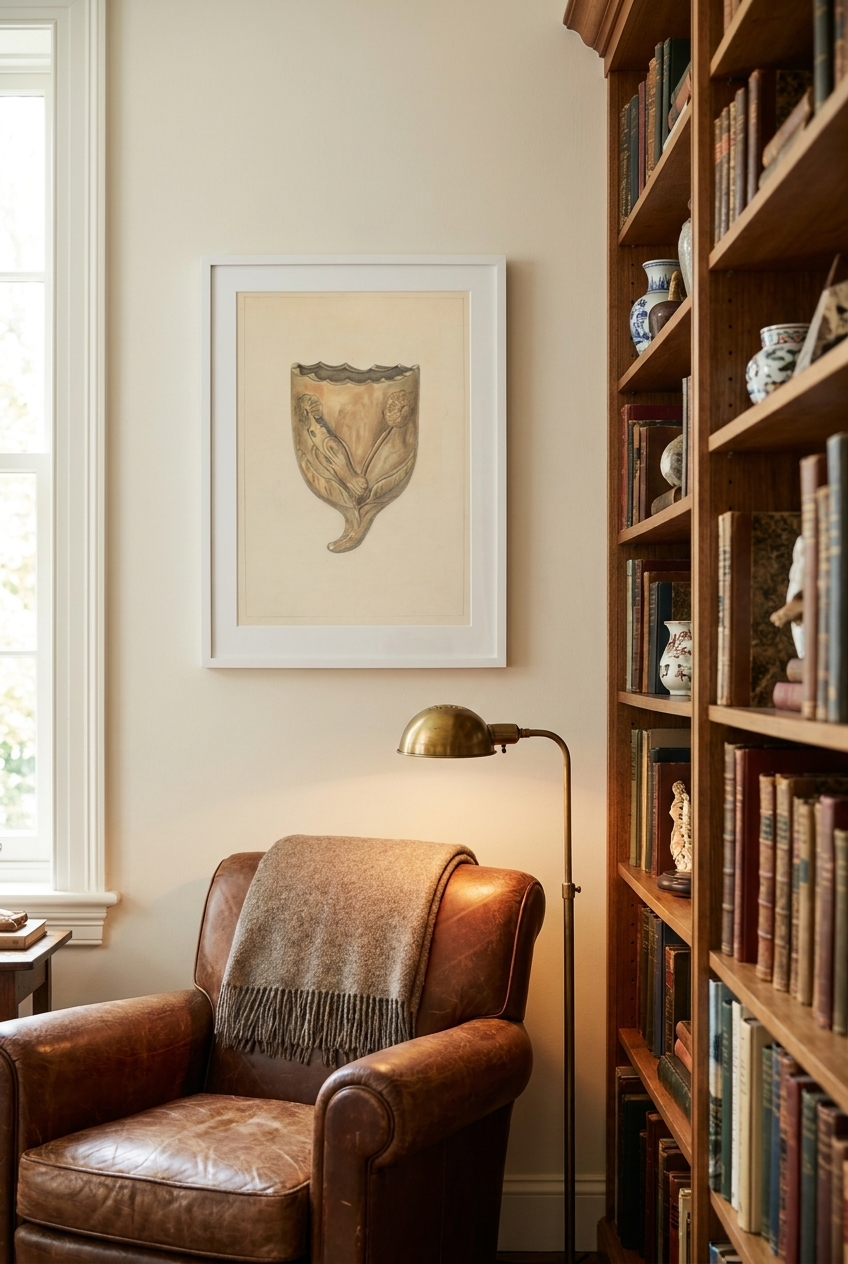
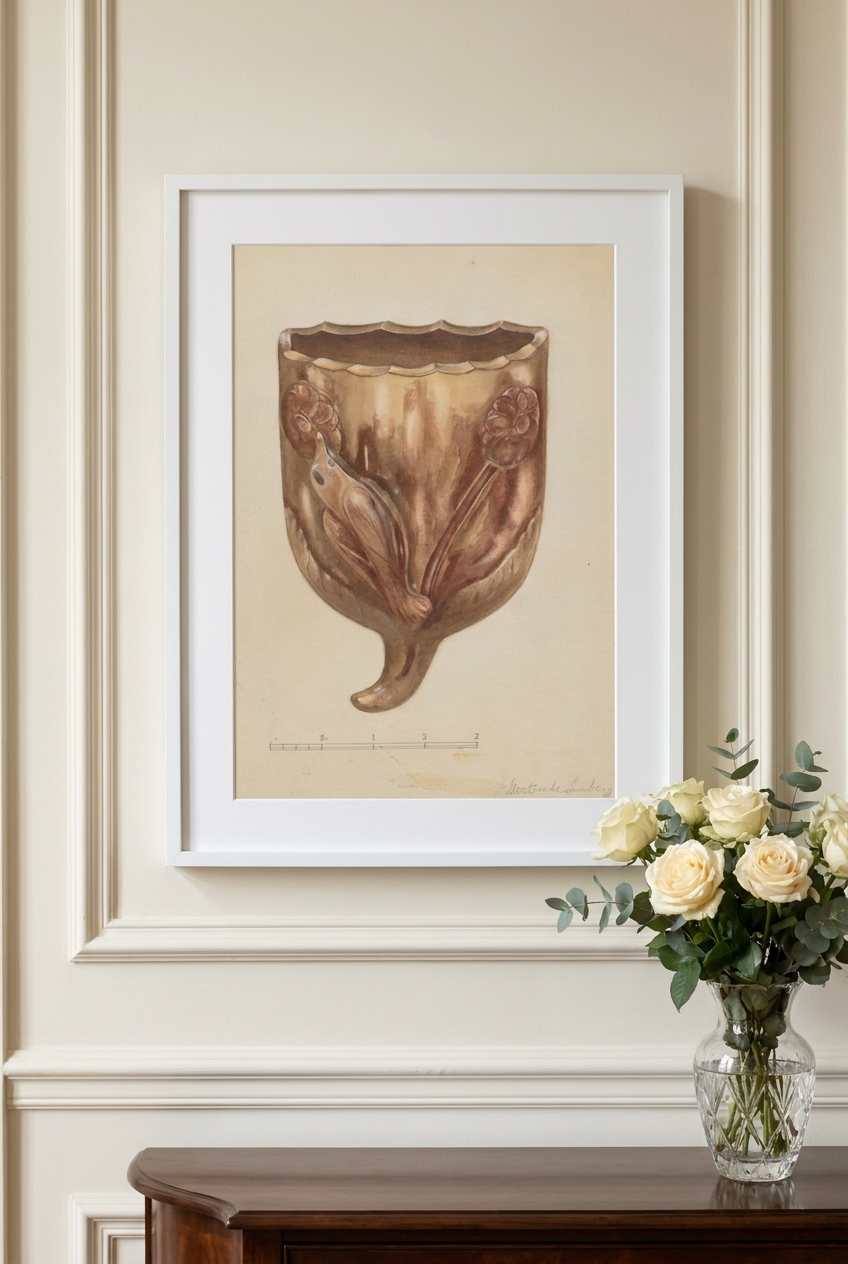
Lemberg had a unique gift for finding classical elegance in functional, everyday objects. This is beautifully demonstrated in her rendering of a Wall Pocket for Flowers (c. 1936), which captures a delicate balance between structured design and natural grace. The precision of the vessel's form contrasts wonderfully with the soft, organic potential of the flowers it was meant to hold.
Another variation, the Wall Pocket for Flowers (1935/1942), showcases her consistency in capturing the quiet dignity of classical decorative arts. Through these works, Lemberg reminds us that classical beauty isn't reserved solely for grand monuments or epic history paintings—it can reside quietly on a simple household wall.
Bringing Classical Calm to Modern Spaces
Because Lemberg’s work is so grounded in structure and neutral, sophisticated tones, her pieces adapt beautifully to modern interiors. Whether your home leans toward minimalist modernism, rustic warmth, or traditional elegance, her art acts as a grounding element. A high-quality print or canvas from the Full Gertrude Lemberg collection brings an instant sense of architectural stability and calm to a living room, study, or hallway.
By choosing a fine-art reproduction of Lemberg's work, you are not just hanging a picture; you are bringing a centuries-old tradition of harmony, balance, and meticulous craftsmanship into your daily life.
Frequently asked questions
What artistic movement does Gertrude Lemberg’s work belong to?
Gertrude Lemberg’s style is deeply rooted in European classicism and the academic traditions of the late 18th and 19th centuries, focusing on balance, proportion, and precise draftsmanship.
What are the defining visual characteristics of her prints?
Her work features a muted, sophisticated color palette, meticulous rendering of forms, and a soft, gentle use of light that sculpts objects without dramatic contrast.
How do her classical subjects fit into a modern home decor style?
Because of their neutral tones, clean lines, and balanced compositions, Lemberg's prints act as calming, grounding accents that complement minimalist, transitional, and traditional spaces alike.