
The Quiet Light of Carl Buergerniss: Classical Realism for the Modern Home
In short: Carl Buergerniss captured the natural world with academic precision, soft light, and a restrained palette. His timeless, contemplative landscapes and delicate studies offer a peaceful, sophisticated retreat for modern interiors.
The Art of Stillness
In a world that often feels loud and hurried, the paintings of Carl Buergerniss offer a rare gift: absolute, unhurried quiet. Rooted deeply in the traditions of classical realism, Buergerniss approached the canvas not to shock or disrupt, but to observe. His work reflects a profound, almost spiritual reverence for the natural world. Instead of grand, dramatic gestures, he captured the quiet, untouched beauty of pastoral vistas, treating the earth and sky with a disciplined, gentle respect.
Classical realism is not merely about copying what the eye sees; it is about finding the ideal harmony within nature. Buergerniss understood this deeply. Each of his scenes is constructed with a quiet discipline, inviting the viewer to step away from the chaos of modern life and into a space of pure, undisturbed contemplation.
The Anatomy of His Style: Light, Balance, and Tone
To understand Buergerniss is to look closely at how he handled light. Drawing inspiration from academic landscape conventions, his compositions favor a perfect, restful balance. There are no jarring angles or chaotic colors here. Instead, you will find a harmonious distribution of light and shadow, built with a delicate mastery of tonal transitions.
His brushwork is deliberate but soft, creating an atmospheric quality that makes the air in his paintings feel tangible. By employing a restrained, naturalistic palette—earthy greens, soft ochres, muted blues, and gentle greys—he evokes a sense of timeless stillness. When you look at his landscapes, notice how your eye travels. There is always a gentle path—a winding stream, a soft slope, or a break in the trees—that coaxes you into the depth of the painting. Whether you are exploring the Full Carl Buergerniss collection or studying a single horizon line, his scenes feel less like captured moments and more like eternal truths.
Beyond the Horizon: Versatility in Subject
While Buergerniss is celebrated for his contemplative studies of land and sky, his classical discipline extended to closer, more intimate subjects. He brought the same quiet observation and technical precision to still lifes and decorative studies, proving that the principles of classical realism could elevate even the simplest forms.
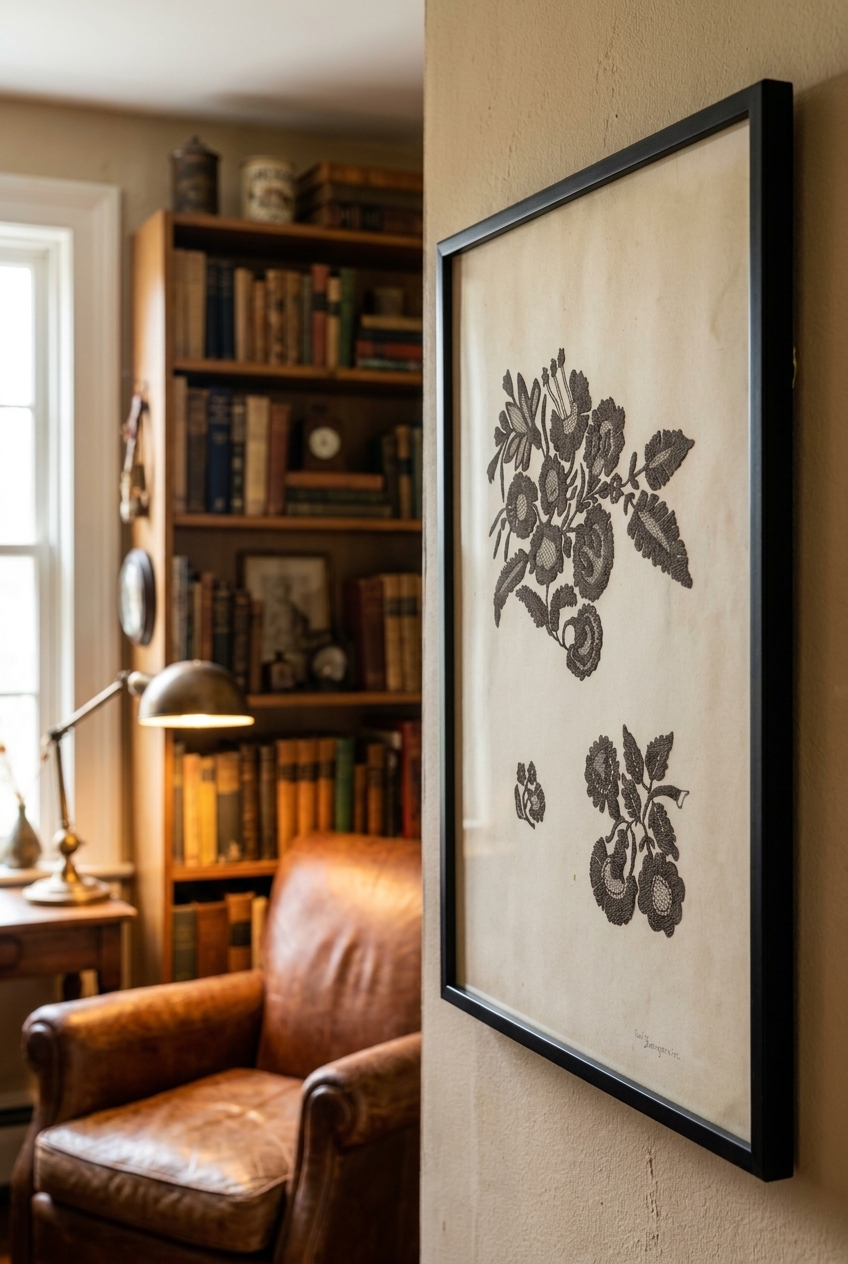
A beautiful example of this is his Embroidered Flower Motif (1941). In this piece, the artist translates the tactile, delicate textures of needlework into paint. It demonstrates his extraordinary ability to find beauty in the quiet corners of human craft, applying the same soft light and balanced composition to a domestic subject as he did to the great outdoors.
Why His Work Belongs in the Modern Home
Modern interior design often thrives on clean lines, open spaces, and minimalist aesthetics. However, these spaces can sometimes feel clinical without the warming touch of history and texture. This is where the classical realism of Buergerniss shines.
A high-quality print or canvas of his work acts as a visual anchor. Because his palette is naturalistic and restrained, his pieces harmonize beautifully with contemporary color schemes, from warm neutrals to cool greys. A large-scale landscape print framed over a mantel or a smaller, detailed canvas in a quiet reading nook offers a sophisticated retreat—a window into a world of quietude and classical elegance that never goes out of style.
Frequently asked questions
What is Classical Realism?
Classical Realism is an artistic movement that combines the aesthetic principles of classical Greek and Roman art—such as balance, harmony, and proportion—with the precise, observational techniques of 19th-century academic realism. It emphasizes beauty, discipline, and a truthful representation of the natural world.
How does Carl Buergerniss use light in his paintings?
Buergerniss uses soft, atmospheric light and delicate tonal transitions rather than harsh contrasts. This creates a gentle, glowing effect that makes his landscapes feel peaceful, spacious, and deeply contemplative.
What framing style works best for a Buergerniss print?
Because of his classical style and natural palette, Buergerniss prints look exceptional in traditional wood frames, particularly in dark walnut, oak, or antique gold. For a more modern look, a simple, deep-profile black or warm metallic frame can beautifully bridge the gap between classical art and contemporary decor.