The Quiet Magic of Jean Siméon Chardin
In short: While his contemporaries painted lavish royal fantasies, Chardin found poetry in a copper pot, a peach, and a glass of water, inventing a modern way of seeing.
The Rebel of the Kitchen Table
In eighteenth-century Paris, art was loud, theatrical, and unashamedly aristocratic. The dominant Rococo style was all about blushing cupids, swirling pastel silks, and noblemen playing games in glowing, impossible gardens. Then came Jean Siméon Chardin. Instead of grand mythological goddesses, he painted kitchen maids peeling turnips. Instead of epic historical battles, he painted a couple of plums, a copper pot, and a glass of water. Chardin was a quiet revolutionary who looked at the ordinary domestic world around him and decided it was worthy of the grandest art.
By rejecting the dramatic narratives of his peers, Chardin turned his gaze toward the quietude of the everyday. He proved that you do not need grand subjects to create profound art. His paintings of children playing, mothers serving meals, and simple kitchen tables offered a radical, comforting alternative to the frantic energy of the era.
How to See a Chardin: Light, Texture, and Time
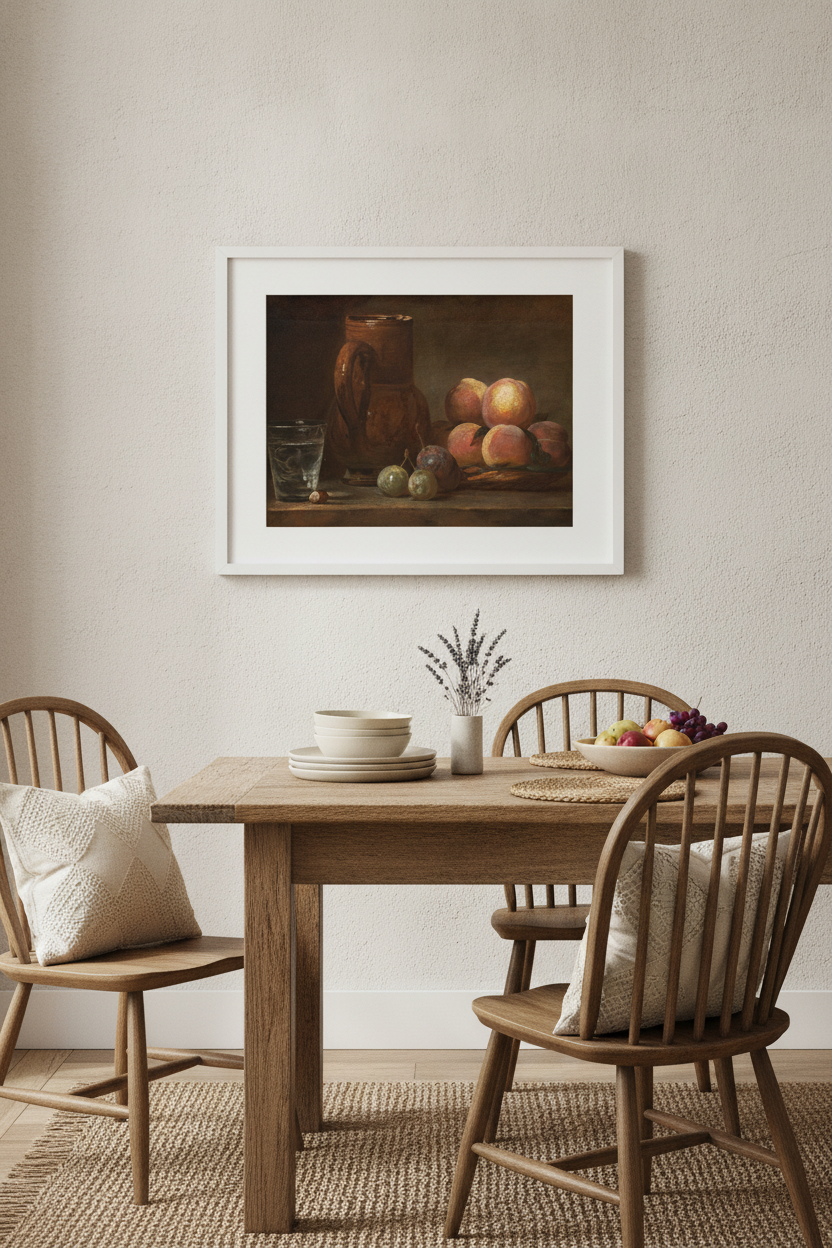
To stand in front of a Chardin painting is to experience a slow, meditative beauty. He did not paint with the slick, invisible brushstrokes favored by the French Academy. Instead, Chardin used thick, deliberate layers of paint, building up rich surfaces that feel incredibly tactile. When you look at his work, you can almost feel the cool roughness of earthenware, the dusty bloom on a fresh peach, and the cold, solid weight of a copper jug.
His extraordinary handling of light is what truly elevates these humble scenes. It does not flash dramatically like a spotlight; rather, it bathes his subjects in a soft, solemn glow that feels entirely natural. In masterpieces like Fruit, Jug, and a Glass, he coaxes a monumental presence out of the simplest arrangements. This focus on form, weight, and light over narrative is precisely why modern art historians view him as a vital ancestor of modern abstraction.
The Dignity of the Everyday
Chardin’s genius was not limited to still lifes. He brought the exact same deep respect and quiet observation to his genre scenes of domestic life. He captured children building delicate houses of cards, young boys spinning tops, and mothers gently correcting their children's manners. There is no forced melodrama or cheap sentimentality in these scenes. Instead, Chardin captures the quiet dignity of ordinary life.
These paintings remind us that the moments we so often overlook—the quiet pauses in a busy day, the simple chores, the shared meals—are actually the ones that anchor us. By treating these subjects with the same reverence usually reserved for kings and saints, Chardin elevated the domestic sphere into something sacred.
Bringing Chardin’s Quiet Elegance into the Modern Home
Why does an artist who painted eighteenth-century kitchen utensils feel so incredibly relevant today? The answer lies in his simplicity and his earthy, grounded palette. In our fast-paced, highly digital world, Chardin’s work acts as a visual deep breath. His paintings do not demand your attention with loud colors or shocking subjects; instead, they invite you to slow down and appreciate the beauty in front of you.
A high-quality canvas or framed print of his work brings a sense of calm and grounding to contemporary spaces. Whether hung in a minimalist kitchen, a quiet study, or a cozy living room, his rich textures and subtle tones of ochre, cream, and deep slate blue harmonize beautifully with modern interiors. Exploring the full Jean Siméon Chardin collection reveals how effortlessly these historic works bridge the gap between classical elegance and modern simplicity.
Frequently asked questions
Why is Chardin considered a precursor to modern art?
Chardin focused deeply on the abstract qualities of paint, form, and light rather than just the narrative of the subject. Later modern masters, like Paul Cézanne and Henri Matisse, deeply admired how Chardin could make a simple arrangement of fruit feel monumental, structural, and timeless.
How does Chardin's style differ from Dutch still life painting?
While seventeenth-century Dutch still lifes often carried moral warnings about the fleeting nature of life (vanitas) or flaunted luxury goods, Chardin's French Realism focused on the simple, humble utility of everyday French household items, celebrating their quiet, poetic presence without heavy moralizing.
What makes Chardin's paintings work so well as modern home decor?
Chardin's earthy color palette—filled with warm ochres, soft creams, and deep, muted blues—complements modern interior design beautifully. His focus on simple, clean compositions and rich, tactile textures brings a sense of calm, warmth, and organic elegance to contemporary spaces.