The Quiet Majesty of Classical Revival: A Guide to Art That Endures
In short: Classical Revival art brings the poise, balance, and monumental beauty of ancient architecture into the modern home. Through masters of etching like F.L. Griggs and Louis Conrad Rosenberg, this movement captures a sense of quiet permanence and poetic nostalgia.
The Lure of the Ancient Stone
In the turbulent decades of the early twentieth century, as the world sped up with industrial noise, roaring engines, and modern anxieties, a group of artists quietly looked backward to find their footing. This period marked a widespread cultural movement often called the "return to order." After the trauma of the First World War, artists across Europe and America sought solace in the stable, the permanent, and the harmonious. This is where the Classical Revival in printmaking and drawing found its beating heart.
This movement was not a dry, academic copying of ancient ruins. Instead, it was a deeply poetic reimagining of the past. Artists were captivated by the monumental beauty of classical and medieval architecture. They turned their attention to soaring stone arches, sun-drenched European plazas, and quiet country churches. It is an art of stone, shadow, and silence. By focusing on the enduring structures built by human hands over centuries, these artists offered a visual anchor in a rapidly changing world.
Masters of the Copper Plate: Griggs and Rosenberg
To truly appreciate this era, one must look at the printmakers who elevated the medium of etching to an extraordinary level of detail and atmosphere. These artists spent hundreds of hours meticulously scratching lines into copper plates, using acid baths to bite the metal and create rich, velvety textures that cannot be replicated by any other medium.
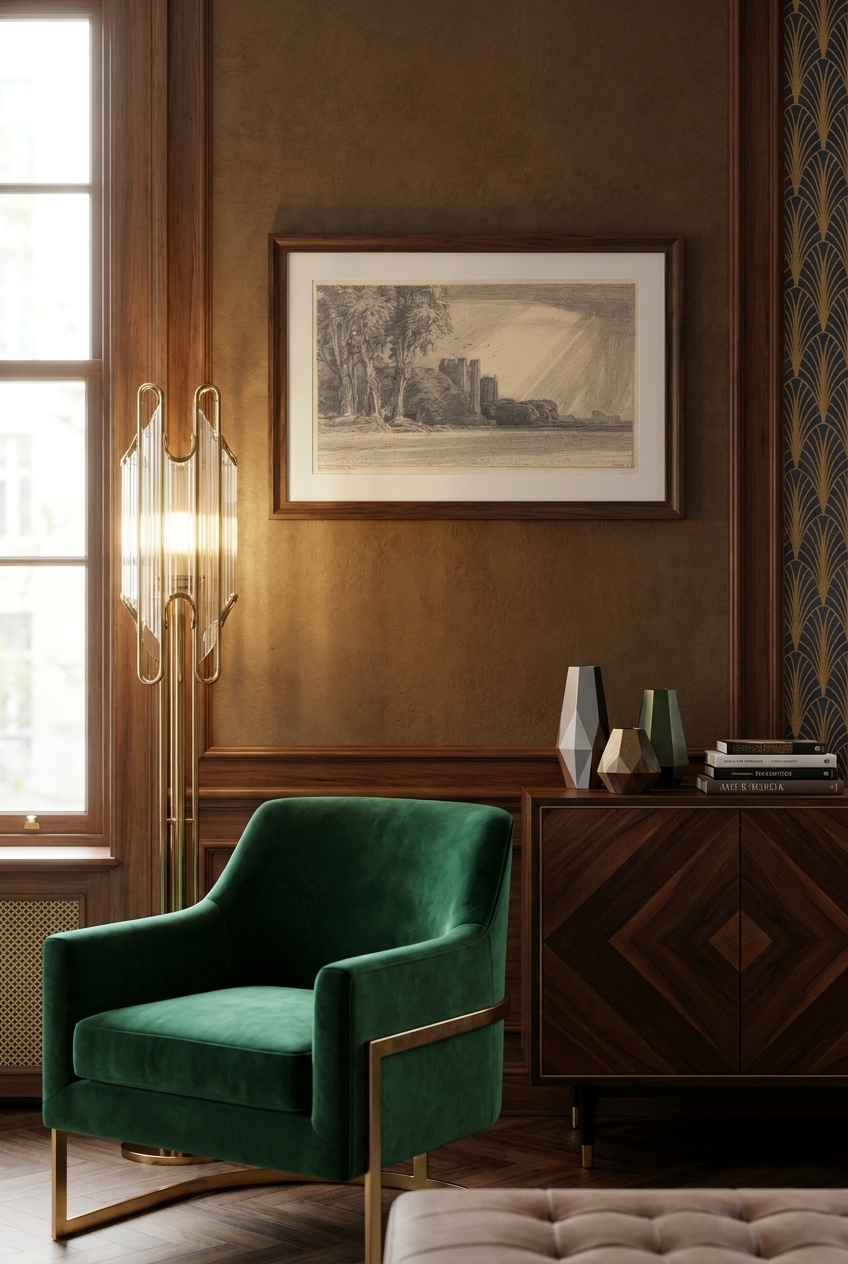
Frederick Landseer Griggs, known professionally as F.L. Griggs, was one of the undisputed giants of this tradition. Working in the English countryside, Griggs created idealized, deeply romantic visions of an older, pre-industrial England. His work is thick with atmosphere, depicting gothic churches, ancient stone bridges, and mysterious fortresses that feel as though they have stood since the dawn of time. A beautiful example of his nostalgic, romantic vision is his Landscape with Castle (1921), where the rugged stone structures seem to grow naturally out of the earth itself, bathed in a soft, melancholic light.
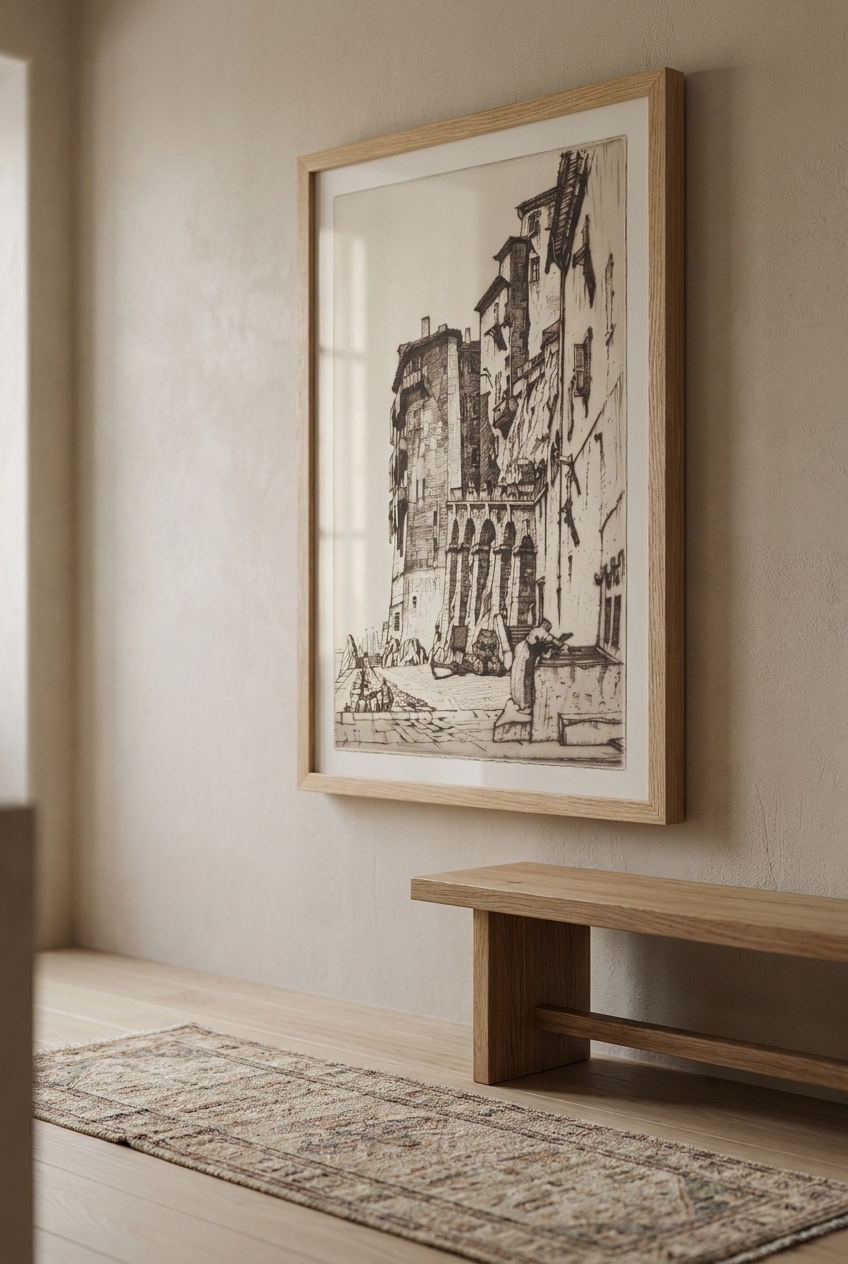
Across the Atlantic, American artist and architect Louis Conrad Rosenberg brought a builder's precise eye to the movement. Rosenberg trained as an architect, and that structural understanding shines through every line of his prints. He traveled extensively through Europe and North Africa, capturing the vibrant life of old ports and narrow, winding streets with incredible geometric clarity. His print Quai de la Marine, Villefranche (1928) showcases his mastery of light and shadow, rendering the coastal architecture of southern France with both structural rigor and a breezy, Mediterranean warmth.
The Visual Hallmarks of Classical Revival
How do you spot a Classical Revival print? While the subjects vary from Roman ruins to English villages, several defining characteristics tie them together:
- Architectural Focus: Buildings are rarely just backgrounds; they are the main characters. Columns, arches, buttresses, and weathered stone masonry are rendered with loving, precise detail.
- Chiaroscuro: The dramatic play of light and shadow is central. Deeply bitten etched lines create rich, velvety blacks, while the untouched paper glows like warm sunlight hitting ancient stone.
- A Sense of Timelessness: Human figures, if they appear at all, are small and incidental. They serve to show the grand scale of the architecture and to emphasize the quiet, enduring nature of the spaces.
- Nostalgia and Poetic Mood: There is a distinct lack of modern technology, telephone wires, or industrial clutter. These scenes exist in a timeless, idealized past.
Living with Classical Revival Art
Why does Classical Revival art feel so at home in modern spaces? The answer lies in its inherent balance. In a world full of bright screens and fleeting trends, these monochrome and sepia-toned prints offer a visual anchor. They bring a sense of history, intellect, and calm to any room.
Because of their neutral palettes and strong linear structures, these prints are incredibly versatile. They pair beautifully with dark wood antiques and traditional libraries, but they look equally striking in a minimalist modern room, where their intricate details provide a warm, organic contrast to clean lines and flat surfaces.
When styling these pieces, consider hanging them in groups. A gallery wall of three or four architectural etchings creates a sophisticated, collector-like feel. Because these works are highly detailed, they invite close inspection, making them perfect for entryways, hallways, or hung low over a desk or reading chair where you can appreciate every delicate line.
Frequently asked questions
What is the difference between Neoclassicism and this Classical Revival?
While Neoclassicism (popular in the late 18th and early 19th centuries) was highly formal, heroic, and often depicted mythological scenes, the early 20th-century Classical Revival is more intimate and atmospheric. It focuses on the poetic, weathered beauty of actual historic architecture and landscapes, emphasizing mood and craftsmanship over rigid academic rules.
Why are so many Classical Revival works prints and etchings rather than oil paintings?
The etching revival of the late 19th and early 20th centuries coincided with this movement. Artists found that the fine, precise lines of etching were perfectly suited to capturing the intricate details of stone masonry and classical architecture. Additionally, the rich, velvety blacks and bright highlights of printmaking allowed for dramatic lighting effects.
How should I frame a Classical Revival print?
Because these prints rely on delicate lines and subtle tones, they look best with a generous mat board (in a warm white or cream) and a simple, classic frame. A thin black wood frame, a dark walnut frame, or a frame with a touch of antique gold finish will complement the historic feel of the artwork without overpowering it.
Will these monochrome prints make my room look too dark?
Not at all. While these prints feature deep, rich shadows, they also contain a great deal of light. The contrast actually helps to brighten a space, acting like a window into a sunlit European plaza or a misty English countryside. They bring depth and character to a room rather than darkness.