The Quiet Majesty of Sir Muirhead Bone: Master of Line and Light
In short: Sir Muirhead Bone combined the precision of an architect with the soul of a classicist, creating masterly drypoint prints of cathedrals, scaffolding, and landscapes that bring a timeless, dramatic elegance to modern walls.
The Architect of the Etching Needle
Sir Muirhead Bone was not just an artist; he was a builder of images. Born in Scotland, he trained initially in architecture, a discipline that would forever shape his artistic vision. Instead of brick and mortar, Bone chose copper and steel, becoming one of the most celebrated printmakers of the early twentieth century. His mastery lay in drypoint and etching—demanding techniques that require an incredibly steady hand and an absolute certainty of line.
Through his work, Bone aligned himself with a classical devotion to rigorous draftsmanship. He did not just sketch a scene; he dissected its structural soul. Whether capturing the monumental shifts of a rapidly industrializing landscape or the ancient, weathered stones of European cities, his work carries the weight and permanence of classical art.
The Magic of Drypoint and Velvety Shadows
To truly appreciate Bone's work, one must look closely at his lines. Unlike traditional etching, where acid bites into a metal plate, drypoint involves scratching directly into the copper with a sharp needle. This process throws up a rough ridge of metal, called a burr. When inked, this burr holds a rich, soft reservoir of ink, producing the deep, velvety blacks that are the hallmark of the Sir Muirhead Bone collection.
Bone was a master of this technique, using it to create dramatic, sculptural contrasts of light and shadow. His compositions often feature grand cathedrals wrapped in complex scaffolding, or busy urban spaces undergoing dramatic transformations. The scaffolding is not just a detail; it is a delicate web of lines that frames the massive, solid forms of the buildings beneath, representing a beautiful tension between the temporary and the eternal.
Capturing the Changing World
While Bone is famous for his architectural marvels, his eye for landscape was equally profound. He had a rare ability to find quiet majesty in the natural world, applying the same structural rigor to rolling hills and coastlines as he did to gothic cathedrals.
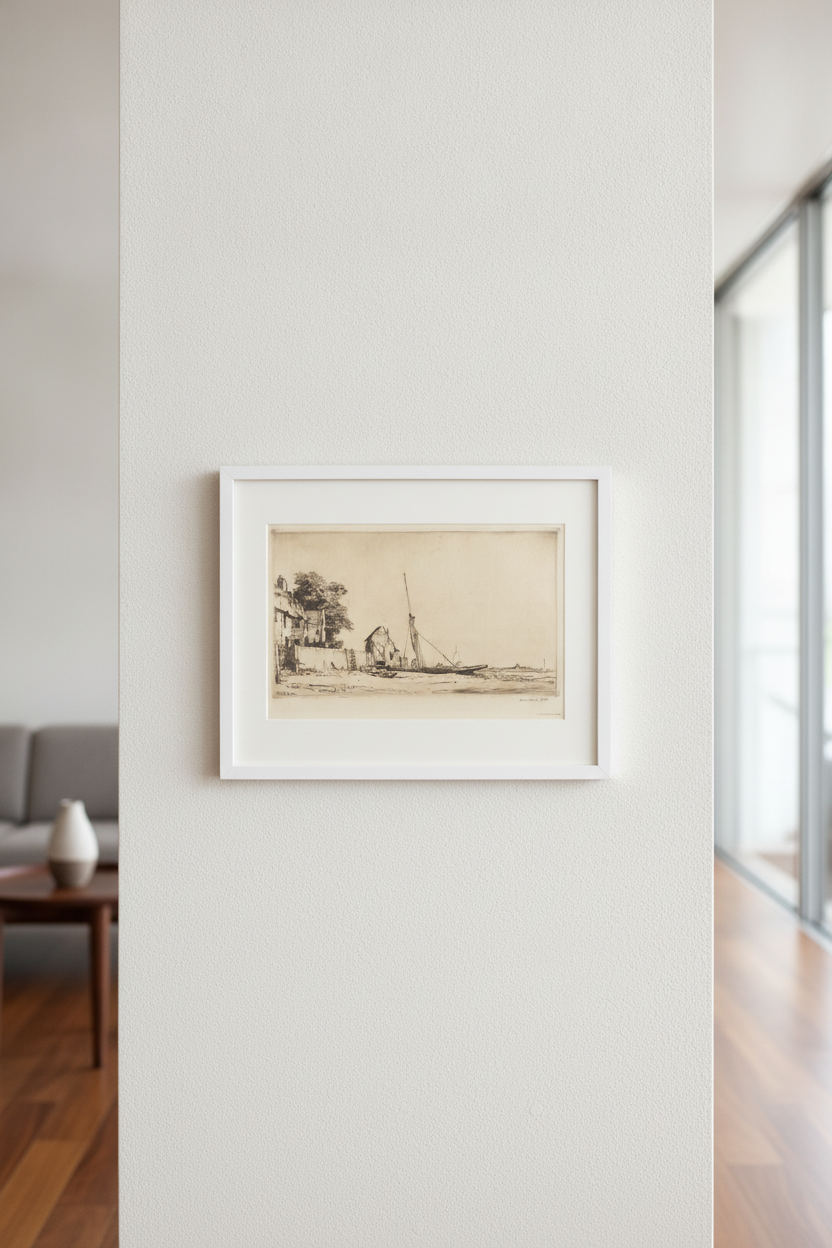
A perfect example of this is his evocative work, South Coast - No. 2, created in 1908. In this piece, Bone captures the sweeping expanse of the shoreline with a delicate, atmospheric touch. The composition is grounded in classical balance, yet it feels incredibly fresh and alive. The play of light across the water and the subtle textures of the land show an artist who was deeply sensitive to the fleeting moods of nature.
Why Sir Muirhead Bone Belongs in the Modern Home
There is a timeless quality to black-and-white graphic art that makes it exceptionally suited for modern interiors. Bone's prints offer a sophisticated focal point, balancing the clean lines of contemporary furniture with their rich, hand-crafted textures.
Whether displayed as a large, striking framed print or a series of smaller, detailed works, his art invites close inspection. The deep blacks and luminous highlights create a sense of depth that draws the eye in, making a room feel both grander and more intimate. For anyone who appreciates the marriage of technical perfection and poetic atmosphere, Bone's work is an enduring testament to the beauty of the human touch.
Frequently asked questions
What is drypoint, and how does it differ from standard etching?
Drypoint is a printmaking technique where the artist scratches an image directly onto a copper plate using a sharp needle. Unlike etching, which uses acid to carve lines, drypoint leaves a raised metal ridge (called a burr) next to the furrow. This burr holds extra ink, resulting in the rich, velvety, and slightly soft lines that characterize Muirhead Bone's work.
Why did Muirhead Bone focus so much on scaffolding and construction?
Bone was deeply fascinated by the transition and growth of the modern world. Having trained in architecture, he saw scaffolding not as an eyesore, but as a beautiful, intricate geometric web. It allowed him to contrast the delicate, temporary structures built by human hands with the timeless, solid weight of stone cathedrals and monuments.
How do these black-and-white prints fit into modern home decor?
Because of their strong graphic quality, architectural precision, and deep tonal contrasts, Bone's prints fit beautifully into modern, minimalist, or industrial spaces. They provide a sophisticated, classic touch without clashing with contemporary color schemes, offering a window of intricate detail and quiet contemplation on your walls.