
The Quiet Monumentality of Nicholas Zupa
In short: Nicholas Zupa combined Renaissance-level draftsmanship with Neoclassical restraint, using light and shadow to transform simple subjects into monumental works of art.
The Quiet Power of the Line
What makes an image endure? In a world filled with fleeting visual noise, the work of Nicholas Zupa offers a grounding breath of air. Rooted in the rigorous traditions of classical draftsmanship, Zupa’s art honors the timeless principles of balance, symmetry, and anatomical precision. Rather than chasing temporary trends, his work looks back to the grand masters of the Renaissance and the Neoclassical revival, celebrating the permanent truths of form and structure.
To look at a Zupa piece is to witness a deep devotion to the purity of line. Whether depicting the human figure or capturing the quiet dignity of the natural world, his compositions feel deliberate, balanced, and remarkably calm. There is no frantic energy here—only a steady, academic discipline that elevates the everyday into something monumental.
Sculpting with Light and Shadow
One of the most striking elements of Zupa’s style is his masterful application of chiaroscuro—the dramatic contrast between light and dark. In his hands, light is not merely used to illuminate a scene; it is used to sculpt form and define space. This creates a profound dialogue between shadow and substance, giving his subjects a three-dimensional weight that seems to lift off the page.
This sculptural quality is enhanced by a restrained, earth-toned palette. By limiting his colors to warm ochres, deep umbers, and soft charcoal tones, Zupa keeps our focus entirely on the interplay of light and structure. The result is a collection of works that feel quiet yet incredibly powerful, possessing a quiet monumentality that commands attention without ever shouting. You can explore this striking balance of light and form in the full Nicholas Zupa collection.
Elevating the Everyday
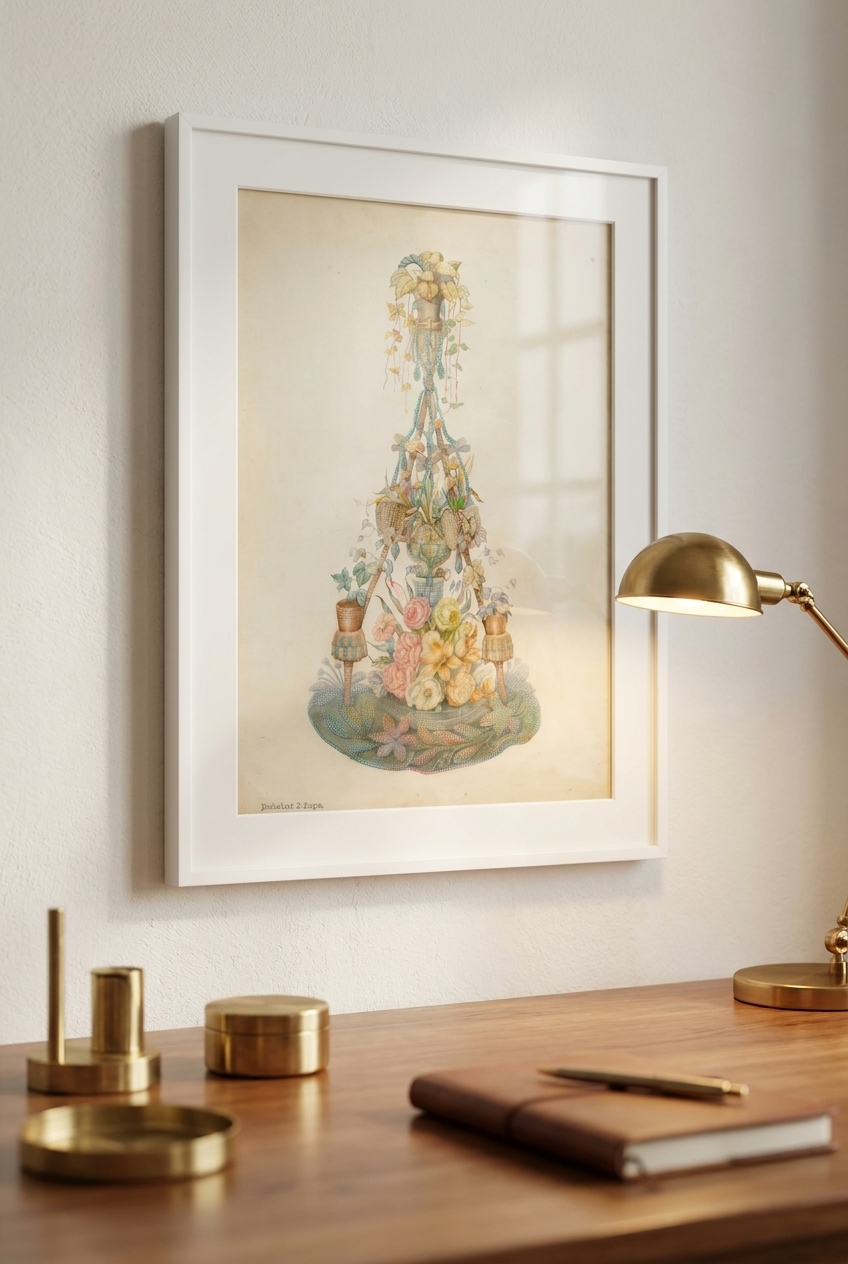
Zupa’s classical training allowed him to find extraordinary beauty in ordinary objects. A perfect example of this is his rendering of the Parlor Flower Stand (c. 1939). In this work, a piece of decorative furniture is treated with the same reverence and anatomical precision one might expect in a study of a Renaissance marble sculpture.
By applying classical principles to material culture, Zupa bridges the gap between high academic art and the objects that shape our daily lives. The clean lines, symmetrical balance, and rich textures of his work make these pieces incredibly versatile. They do not just decorate a room; they anchor it, offering a sense of history and quiet sophistication.
Why Zupa Belongs in the Modern Home
Modern interiors often crave texture, warmth, and a sense of grounding. Because Zupa’s work relies on a neutral, earth-toned palette and clean classical lines, it fits seamlessly into a variety of decor styles. In a minimalist contemporary space, a Zupa print adds much-needed depth and organic warmth. In a more traditional or eclectic home, it acts as a timeless bridge between different eras.
Choosing a fine-art reproduction of Zupa's work is an invitation to live with the enduring language of classicism. These are pieces designed to be lived with, studied, and appreciated over a lifetime—a quiet testament to the beauty of discipline, balance, and light.
Frequently asked questions
What defines Nicholas Zupa's artistic style?
Zupa's style is defined by rigorous classical draftsmanship, anatomical precision, and a masterful use of chiaroscuro (the contrast of light and shadow). He relied on a restrained, earth-toned palette to create works with a sense of quiet monumentality.
How does Zupa's work fit into a modern interior?
Because of his neutral color palette and clean, symmetrical compositions, Zupa's prints bring a grounding, sophisticated presence to modern homes. They add warmth to minimalist spaces and complement traditional decor beautifully.
What is the significance of the Parlor Flower Stand print?
Created around 1939, this piece demonstrates Zupa's ability to apply rigorous classical drawing techniques to everyday decorative objects, elevating a simple household item into a monumental study of form, symmetry, and shadow.