
The Quiet Order of Fritz Boehmer
In short: Fritz Boehmer’s nineteenth-century classical style brings balanced compositions, soft light, and a sense of peaceful restraint into the modern home.
The Appeal of Serene Order
In a world that often feels loud and hurried, the paintings of Fritz Boehmer offer a welcome pause. Rooted in the rigorous academic traditions of nineteenth-century European classicism, Boehmer’s work is a masterclass in balance. Rather than chasing fleeting trends or dramatic, chaotic emotions, he dedicated his brush to capturing a timeless, serene order. His pieces harmonized the idealized beauty of classical antiquity with a deeply felt observation of the natural world.
At the heart of Boehmer’s appeal is his incredible draftsmanship. Every line and form in his compositions feels deliberate, weighted with purpose, and perfectly placed. By looking back to classical principles, he created art that does not demand your attention with loud colors or shocking subjects, but instead coaxes you into a state of quiet appreciation.
Light, Shadow, and Restraint
What truly sets Boehmer apart is his mastery of atmospheric perspective and tonal harmony. He did not paint with harsh, jarring contrasts. Instead, he favored a muted, earthy palette where soft light gently coaxes shapes out of the shadows. This subtle interplay of light and dark creates a profound sense of depth, making his quiet vistas feel as though they stretch on for miles.
This classical restraint is his stylistic signature. When you look at his landscapes, you are not overwhelmed by storm clouds or theatrical lighting. Instead, you are invited to sit with a gentle afternoon sun filtering through trees or illuminating a quiet valley. It is an art of whisper rather than shout, designed for quiet contemplation.
From Grand Vistas to Intimate Corners
While Boehmer is celebrated for capturing the quiet grandeur of the European countryside, his classical eye was equally skilled at finding beauty in smaller, everyday subjects. He applied the same rigorous standards of balance and light to intimate still lifes as he did to sweeping horizons.
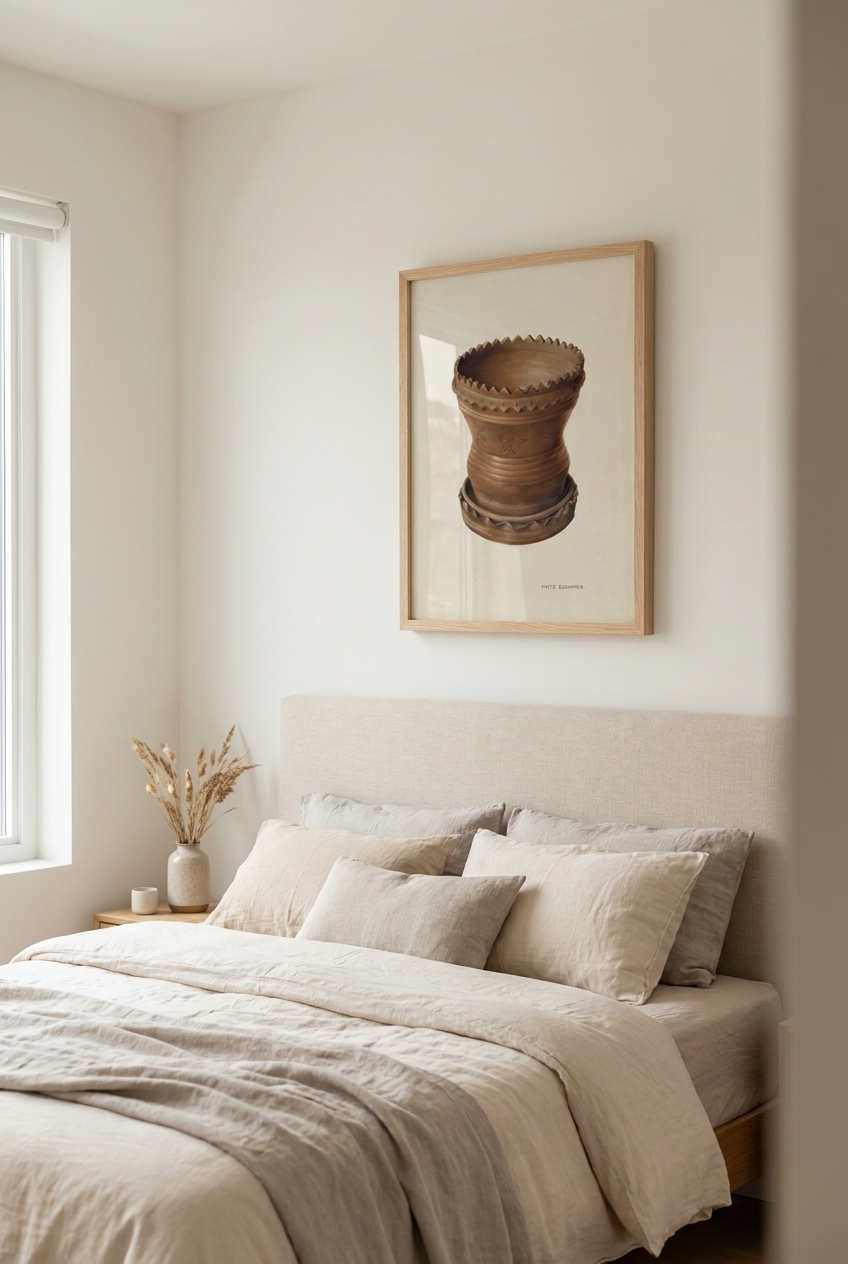
A perfect example of this is his work Flower Pot (c. 1939). In this piece, a simple household object is elevated through careful composition and soft, directional light. The texture of the clay, the delicate leaves, and the gentle shadows cast on the surface showcase his ability to find the extraordinary in the ordinary, proving that classical principles apply to all corners of life.
Bringing Classical Balance Home
There is a unique joy in living with classical art. Because Boehmer’s work is built on a foundation of structural balance and harmonious, earthy colors, his pieces fit naturally into contemporary interiors. Whether your home features minimalist modern lines or warm, traditional textures, a Boehmer print acts as a visual anchor.
In busy living rooms or quiet bedrooms, these works introduce a sense of stability and calm. Exploring the full Fritz Boehmer collection reveals a range of quiet scenes that do not compete with your decor, but rather elevate the entire room. They are pieces that grow handsomer the longer you live with them, offering new details in their soft shadows every time the room’s light changes.
Frequently asked questions
What artistic movement is Fritz Boehmer associated with?
Fritz Boehmer is closely associated with nineteenth-century European classicism, an academic tradition that emphasized rigorous draftsmanship, balanced compositions, and a harmonious blend of natural observation and idealized beauty.
What characterizes Boehmer's color palette?
Boehmer primarily used a muted, earthy palette. He relied on subtle tonal harmonies and soft, natural light to define forms and create atmospheric depth, avoiding harsh or highly saturated colors.
Why do Fritz Boehmer's prints work well in modern interiors?
His compositions are grounded in classical balance and restraint, meaning they bring a sense of order and calm to a space. The neutral, earthy tones blend seamlessly with both minimalist modern decor and classic interior styles.