The Quiet Order of William Spiecker: Classical Beauty for the Modern Home
In short: William Spiecker's works capture the harmony and disciplined beauty of the Classical tradition. With earthy tones, soft light, and meticulous structure, his art offers a peaceful, grounding presence perfect for contemporary interiors.
The Pursuit of Idealized Balance
In a world that often feels fast-paced and fragmented, there is a profound comfort in returning to the principles of classical art. The works associated with William Spiecker offer exactly this kind of refuge. Grounded in the disciplined framework of the Classical tradition, these compositions reflect an era defined by order, symmetry, and a relentless pursuit of idealized beauty. Rather than capturing fleeting moments or raw, transient emotions, these pieces prioritize structural harmony and timelessness. By exploring the William Spiecker collection, we find ourselves stepping into a space where nature is not wild and untamed, but beautifully orchestrated and serene.
This dedication to order draws inspiration from the pastoral landscapes of antiquity and the academic rigor of the late eighteenth and early nineteenth centuries. It is art that seeks to elevate the spirit by presenting a perfected version of the world, offering a visual sanctuary of balance and poise.
Light, Ruins, and Meticulous Draftsmanship
The stylistic signature of this body of work lies in its meticulous draftsmanship and carefully controlled palette. Spiecker’s landscapes and subjects are built on a foundation of earthy undertones, which are gently illuminated by a soft, diffused light. This light does not cast harsh, dramatic shadows; instead, it bathes each scene in a quiet, golden glow that evokes a sense of deep, timeless tranquility.
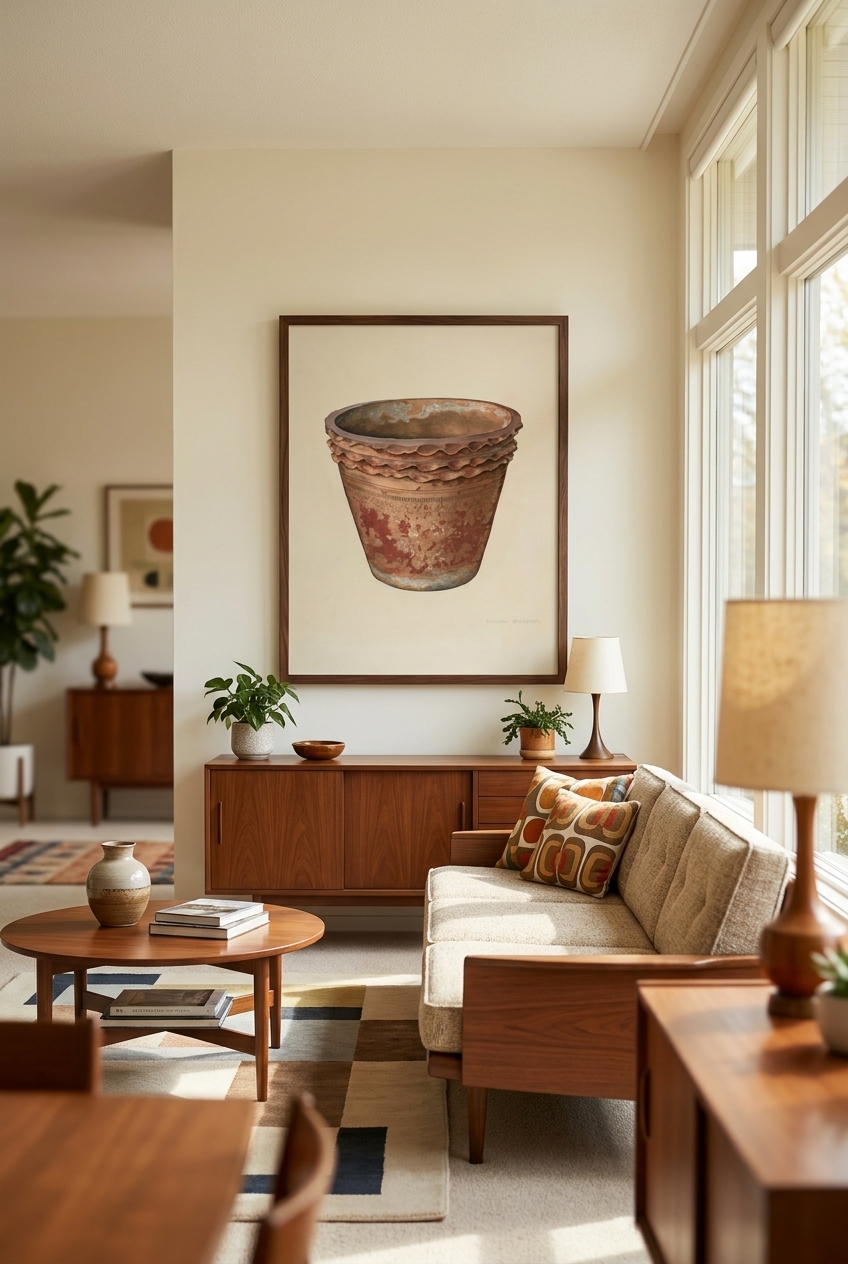
Every element in these compositions is deliberate. From the architectural precision of distant classical ruins to the careful placement of foliage, nothing is left to chance. Even in a focused study like "Flower Pot" (c. 1938), we see this same dedication to form, balance, and quiet dignity. The artist guides the viewer's eye through a balanced, heroic landscape where every leaf, stone, and vessel has its rightful, harmonious place.
Why Classical Art Grounds a Modern Room
Why does this classical approach translate so beautifully into the modern home? Contemporary interior design often relies on clean lines, open spaces, and minimalist aesthetics. Classical art, with its emphasis on symmetry and proportion, acts as the perfect companion to these spaces. It provides a sophisticated focal point without cluttering the visual field.
A high-quality archival print or canvas of Spiecker's work does not shout for attention; instead, it anchors a room, offering a window into a world of quiet contemplation. Whether framed over a mantelpiece or displayed as a large-scale canvas in a study, these pieces bring a grounding, meditative quality to our living spaces, reminding us of the enduring power of balance and harmony.
Frequently asked questions
What defines the classical style of William Spiecker's work?
His work is defined by order, symmetry, and a pursuit of idealized beauty, drawing inspiration from pastoral landscapes and the academic rigor of the classical tradition.
How does Spiecker use light and color in his compositions?
He employs a controlled palette of earthy undertones illuminated by soft, diffused light, which avoids harsh shadows and creates a sense of timeless tranquility.
Why do these prints suit modern home decor?
The structural harmony, balanced compositions, and calming color palettes provide a grounding, peaceful focal point that complements clean, modern interiors beautifully.