
The Quiet Power of Form: Discovering Clarence W. Dawson
In short: Clarence W. Dawson's work champions classical realism, utilizing a restrained palette and masterful tonal control to create still lifes and studies that bring a sense of serene permanence and structural clarity to any wall.
The Appeal of Serene Permanence
In a world of fast-moving trends and loud, abstract statements, there is a profound comfort in returning to the fundamentals. The works of Clarence W. Dawson offer exactly this sanctuary. Rooted deeply in the enduring traditions of Classical Realism, Dawson’s art represents a lifetime of academic rigor, structural clarity, and a quiet, unwavering dedication to the study of form.
Rather than chasing the fleeting avant-garde movements of his era, Dawson looked backward to look forward. He embraced the timeless techniques of the old masters, focusing on how light falls across a surface, how shadows define a shape, and how a limited color palette can evoke a deep, atmospheric mood. Today, exploring the Clarence W. Dawson collection reveals an artist who understood that true beauty does not need to shout to be heard.
Masterful Light and Restrained Palettes
At first glance, Dawson’s compositions might seem simple. But look closer, and you will see a masterclass in tonal control. Classical Realism relies on the delicate balance of light and shadow—a technique known as chiaroscuro—to give flat canvases a three-dimensional weight. Dawson used this to spectacular effect, choosing quiet, domestic subjects and elevating them to moments of high drama and quiet dignity.
His palette is deliberately restrained. Instead of relying on bright, saturated pigments, Dawson worked with earthy ochres, deep umbers, muted greens, and soft, pearlescent whites. This control of tonal values creates an atmospheric depth that draws the viewer in. A perfect example of this is his striking still life, Flower Urn, painted between 1935 and 1942. In this piece, the soft petals and the cold, solid weight of the urn are rendered with such tactile precision that you can almost feel the temperature of the room.
Why Classical Realism Belongs in the Modern Home
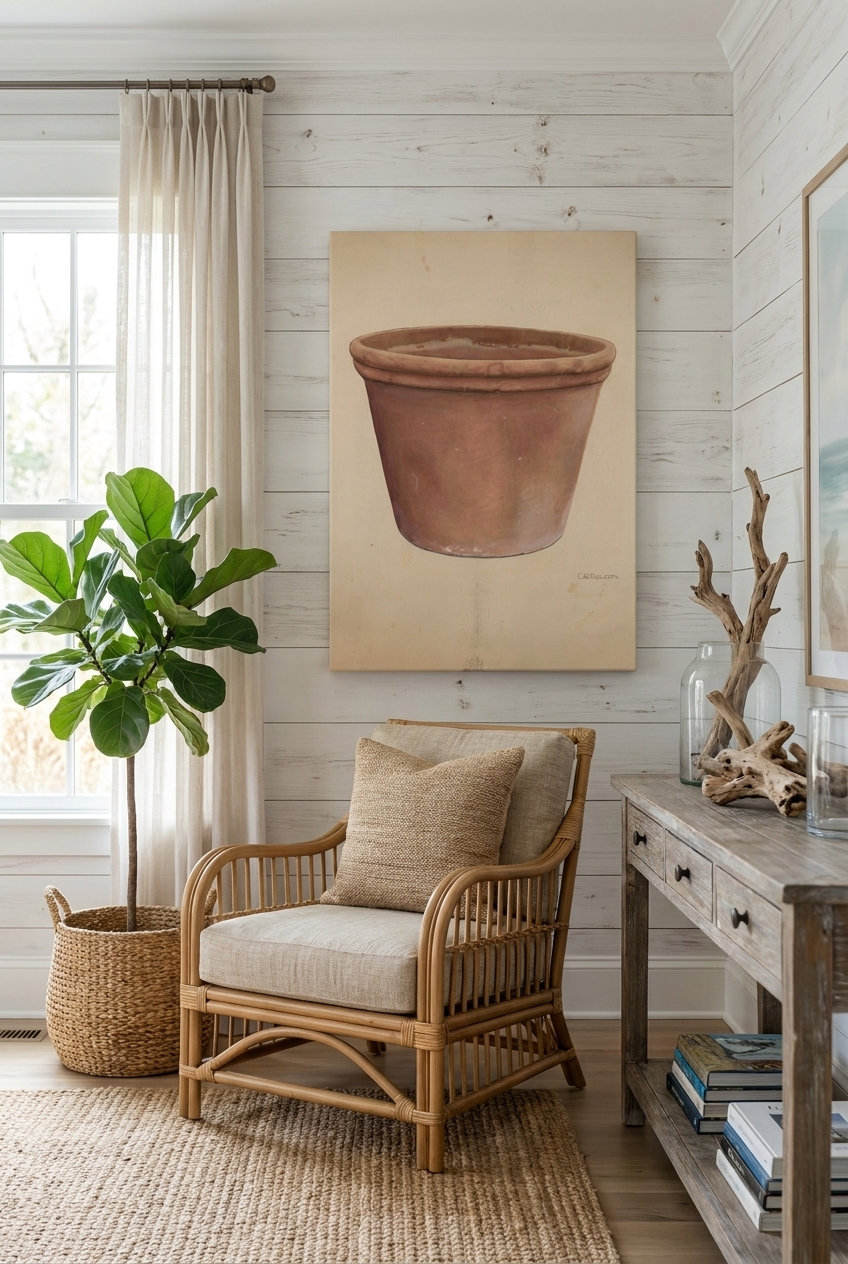
Why does an artist dedicated to classical academic traditions feel so incredibly relevant in a modern home? The answer lies in the concept of serene permanence. Modern interiors—often characterized by clean lines, neutral colors, and minimalist furniture—can sometimes feel a bit sterile. Hanging a reproduction of Dawson’s work introduces an instant sense of history, warmth, and intellectual depth without cluttering the space.
Because Dawson eschewed transient trends, his art does not date. A high-quality canvas print of his work acts as a visual anchor in a living room, study, or bedroom. The rich, dark backgrounds and subtle play of light complement contemporary design beautifully, bridging the gap between historical craftsmanship and modern simplicity. It is art that invites quiet contemplation at the end of a busy day.
Frequently asked questions
What is Classical Realism, and how does Clarence W. Dawson fit into it?
Classical Realism is an artistic movement that values the traditional techniques of the old masters, prioritizing academic drawing, realistic representation, and a deep study of light, shadow, and form. Clarence W. Dawson is a key practitioner of this style, known for his disciplined draftsmanship and atmospheric, quiet compositions.
What makes Dawson’s use of color unique?
Dawson favored a highly restrained, muted palette. Rather than using bright, distracting colors, he relied on subtle shifts in tonal values (lightness and darkness) to create depth, volume, and a serene, timeless mood.
How do Dawson’s paintings translate to fine-art prints and canvases?
Beautifully. Because his work relies heavily on delicate gradations of light and shadow, museum-quality archival printing is essential. High-quality prints capture the rich, velvety darks and the subtle, luminous highlights of his original oil paintings, making them stunning focal points for modern interiors.