The Quiet Precision of Max Soltmann: Classical Realism for the Modern Eye
In short: Rooted in the rigorous traditions of late nineteenth-century Germanic academic art, Max Soltmann’s work pairs masterful draftsmanship with a sober, sculptural handling of light. His quiet, earthy compositions bring a sense of balance and serene dignity to contemporary interiors.
The Legacy of Academic Discipline
In an era of rapid artistic experimentation, some creators found their voice not by breaking the rules of the past, but by mastering them. Max Soltmann stands as a brilliant exemplar of this dedication. Heavily associated with the disciplined traditions of late nineteenth-century Germanic academic art, Soltmann’s work embodies a rigorous pursuit of classical form and balanced composition. Rather than chasing fleeting trends, he looked backward to move forward, translating the timeless draftsmanship of the Old Masters through a highly refined, academic lens.
This commitment to technical mastery is what makes exploring the full Max Soltmann collection such a rewarding experience. Every line, curve, and shadow in his portfolio feels deliberate, born from a patient and profound observation of the natural world. It is art that does not demand your attention with loud gestures, but instead earns it through quiet, undeniable authority.
Sculptural Light and Restrained Color
When you look at a Soltmann piece, the first thing that strikes you is the light. His stylistic signature lies in a sober, deliberate handling of chiaroscuro—the dramatic play between light and shadow. Rather than using light to create theatrical drama, however, Soltmann uses it to carve out three-dimensional space. Forms are rendered with a sculptural clarity that makes objects feel tangible, heavy, and real.
To achieve this sense of quiet contemplation, Soltmann relied on a restrained and earthy color palette. Deep ochres, muted umbers, soft creams, and subtle grays dominate his work. By prioritizing structural harmony over bright, distracting pigments, he invites the viewer into a state of calm. It is a visual language that speaks of stability, patience, and understated dignity.
From Academic Rigor to Everyday Beauty
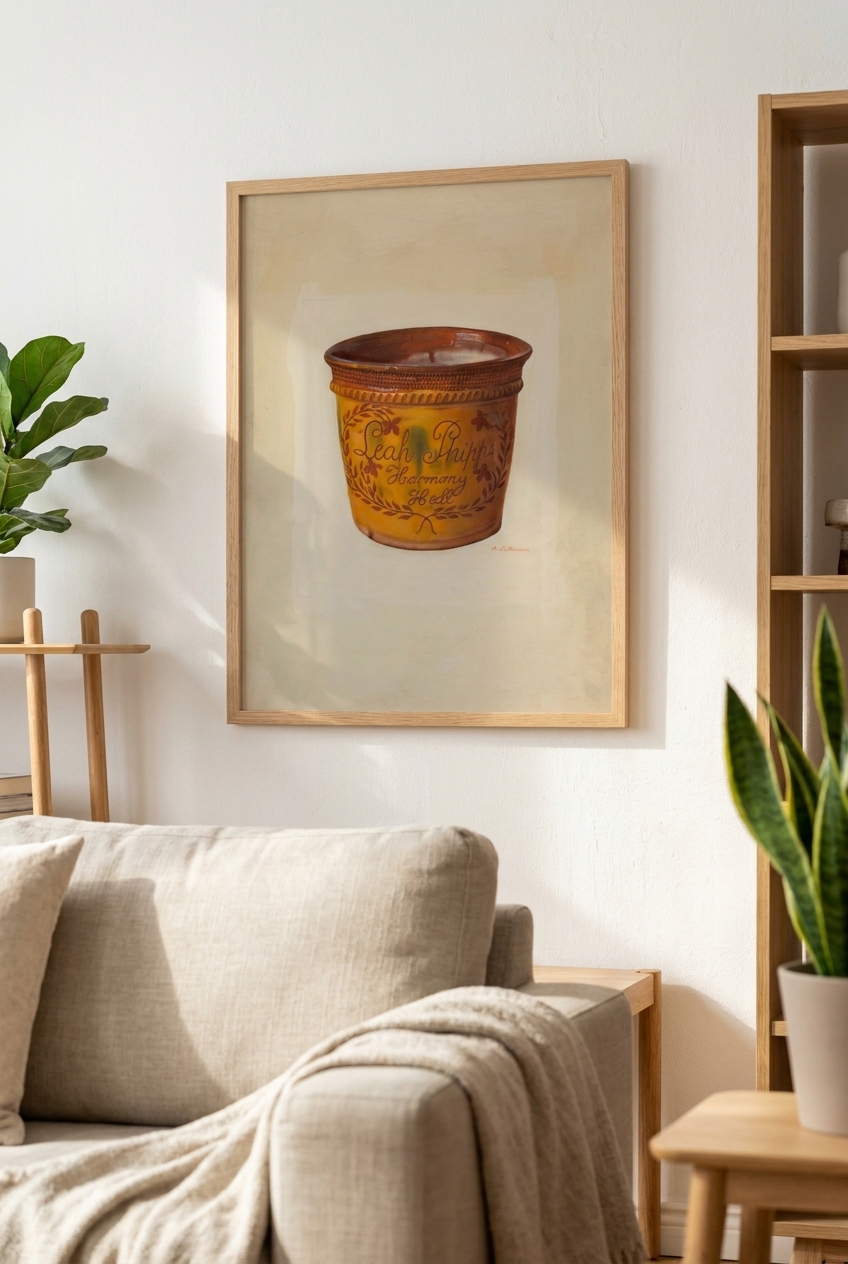
While Soltmann’s training was deeply academic, his skills found beautiful expression in documenting the simple, honest objects of everyday life and historical craft. A perfect example of this is his rendering of the "Pa. German Flower Vase" (c. 1937). In this work, the artist applies his formidable academic training to a piece of traditional American folk art.
The result is breathtaking. What could have been a simple, flat illustration becomes a masterclass in texture and form. The glazed slipware of the vase gleams under a soft light, its painted floral motifs rendered with absolute precision. By treating folk craft with the same reverence and technical seriousness usually reserved for classical portraiture, Soltmann elevates the everyday into the realm of high art.
Why Soltmann Works Beautifully in Modern Homes
Modern interior design often balances clean lines and minimalist spaces with textures that add warmth and character. This is precisely why Max Soltmann’s work translates so beautifully into contemporary homes. Whether framed on archival paper or stretched on a high-quality canvas, his pieces offer a grounding, centering presence in a room.
Because his color palette is naturally earthy and neutral, a Soltmann print complements a wide variety of decor styles, from rustic farmhouse to sleek mid-century modern. His work brings a sense of history, quiet intelligence, and tactile warmth to a space, reminding us of the beauty that emerges when an artist takes the time to truly look, see, and record.
Frequently asked questions
What is Classical Realism, and how does Max Soltmann fit into it?
Classical Realism is an artistic movement that values the traditional skills of draftsmanship, realistic representation, and composition popularized by the European academies. Max Soltmann fits into this tradition through his rigorous Germanic training, his focus on sculptural form, and his deep reverence for the techniques of the Old Masters.
What makes the "Pa. German Flower Vase" (c. 1937) print unique?
This piece is a wonderful intersection of academic realism and American folk history. Created as part of a mid-century effort to document historical American design, it showcases Soltmann's ability to apply highly disciplined, classical painting techniques to humble, traditional crafts, resulting in a stunningly detailed and textured still life.
How should I frame a Max Soltmann print for my home?
Because Soltmann’s work features earthy tones and classical compositions, it pairs exceptionally well with natural wood frames (such as oak or walnut) or simple, dark-toned frames that echo the deep shadows in his paintings. A mat board can also enhance the academic, gallery-like feel of the print.