
The Quiet Revolution of Aristide Maillol
In short: Aristide Maillol rejected the dramatic tension of his era to champion a calm, simplified classicism. Today, his balanced figures and elegant woodcuts bring a grounding, meditative presence to modern homes.
The Quiet Revolution of Aristide Maillol
At the turn of the twentieth century, the world of sculpture was dominated by raw emotion and restless movement. Auguste Rodin ruled the artistic landscape with figures that seemed to twist, sweat, and ache with psychological drama. It was powerful, but exhausting. Then came Aristide Maillol. Rather than competing with Rodin's theatrical tension, Maillol chose a completely different path—one of profound, unshakable silence and structural harmony.
Maillol ushered in a quiet revolution. He deliberately turned his back on the nervous energy of his contemporaries, looking instead to the stable, balanced ideals of ancient Greek art. By seeking to capture a sense of eternal calm rather than fleeting emotion, he established himself as a pioneer of Modern Classical art, offering a soothing, grounded alternative to the chaotic pace of early modernism.
The Geometry of Serenity
To stand before a Maillol piece is to experience an immediate feeling of gravity, weight, and perfect balance. He focused almost exclusively on the female nude, but his approach was entirely unique. He did not view the body as a vehicle for narrative or drama, but rather as a beautiful landscape of pure geometry. By stripping away superfluous details and surface textures, he revealed the essential curves and volumes of the human form.
His figures do not pose, strain, or call out to the viewer; they simply exist in a state of quiet grace. They possess a timeless, meditative quality, characterized by smooth, flowing contours and a deep sense of internal repose. Whether cast in bronze or drawn on paper, Maillol’s subjects carry a quiet dignity that feels both ancient and remarkably fresh. You can explore these harmonious shapes and bring this sense of calm into your own space with our curated full Aristide Maillol collection.
The Graphic Art of a Sculptor
While Maillol is celebrated worldwide for his monumental public sculptures, his graphic works deserve equal admiration. He was an incredibly skilled printmaker, translating his sculptural obsession with form into delicate woodcuts, lithographs, and etchings. On paper, his lines remain clean, heavy, and purposeful, capturing the exact same weight and grace as his three-dimensional masterpieces.
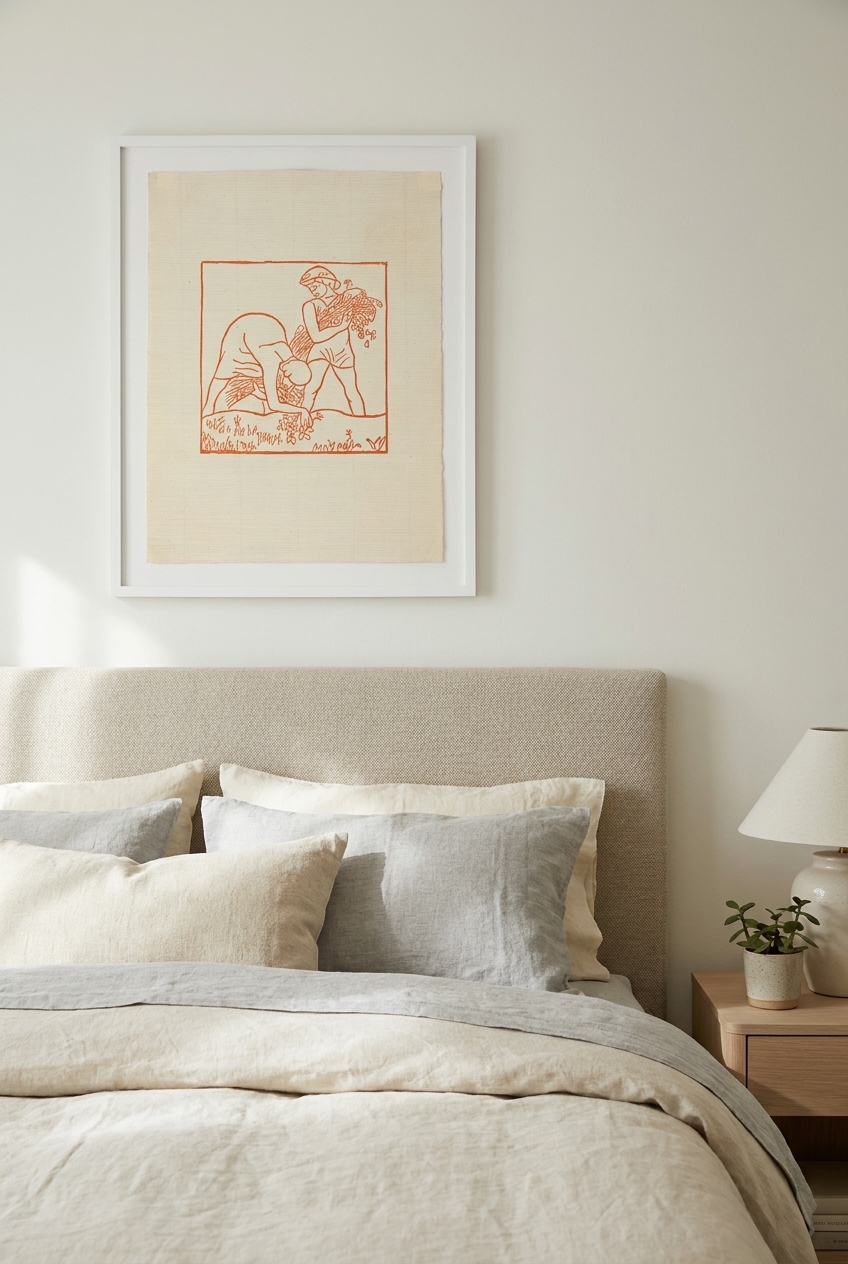
A beautiful example of this graphic mastery is his work for classic literature, such as the exquisite woodcut First Book: Daphnis and Chloe Picking Flowers(Daphnis et Chloe rammassant des fleurs), published in 1937. In this piece, Maillol uses simple, fluid lines to evoke a pastoral innocence that feels entirely timeless. The figures are integrated naturally into the landscape, embodying the perfect harmony between humanity and nature that defined his entire artistic career.
Bringing Classical Calm Home
Why does Maillol’s work translate so beautifully into modern homes? Our contemporary living spaces are often filled with visual noise, sharp technological angles, and constant distraction. Hanging a high-quality fine-art print or canvas of Maillol's work introduces an instant visual anchor to a room. His clean lines and balanced compositions offer a gentle resting place for the eye, bringing a sense of order and peace.
His minimalist approach to the human figure pairs effortlessly with a wide variety of interior styles, from warm mid-century modern rooms to cool, minimalist spaces. By choosing a reproduction of his work, you bring a piece of museum-grade tranquility into your daily life—a beautiful, daily reminder of the elegance found in simplicity and balance.
Frequently asked questions
Who was Aristide Maillol and why is he important?
Aristide Maillol (1861–1944) was a French sculptor and printmaker who led a return to classical harmony in the early 20th century. He is famous for moving away from the expressive, dramatic style of Auguste Rodin toward a simpler, calmer, and more balanced representation of the human form.
What are the main characteristics of Maillol's style?
Maillol's work is defined by simplified forms, smooth surfaces, and a sense of internal repose. He focused heavily on the female nude, stripping away unnecessary details to focus on weight, volume, and essential geometry.
How do his graphic works compare to his sculptures?
His graphic works, including woodcuts and lithographs, share the same artistic philosophy as his sculptures. They utilize clean, fluid lines to convey a sense of weight, balance, and classical simplicity, making them exceptionally elegant as framed prints.