The Radiant Rebirth: A Guide to Italian Renaissance Art
In short: The Italian Renaissance married classical harmony with a newfound love for the natural world. This guide explores its visual hallmarks, key artists, and how to bring its timeless elegance into your home.
The Dawn of a New Vision
To step into the world of the Italian Renaissance is to witness a profound awakening. Beginning in the fourteenth century and flourishing through the sixteenth, this era was defined by a simple yet revolutionary idea: that the wisdom of the ancient world could be revived to illuminate the present. In the bustling city-states of Florence, Venice, and Rome, artists, scholars, and patrons turned away from the flat, symbolic conventions of the Middle Ages. Instead, they looked to the natural world and the classical ruins around them, seeking to capture the truth of human experience.
What defines the visual language of the Renaissance is balance, harmony, and a deep respect for proportion. Artists mastered the laws of linear perspective, creating the illusion of three-dimensional depth on flat surfaces. They studied anatomy to depict the human form with startling realism, and they harnessed light and shadow to give their subjects weight and presence. Yet, this was not merely a technical revolution. It was an intellectual one, driven by humanism—a philosophy that celebrated human potential, curiosity, and the beauty of the earthly realm.
Masterpieces in Miniature: Engraving and Detail
While we often think of massive frescoes and towering marble statues when we picture the Renaissance, some of the era's most captivating innovations occurred on a much smaller scale. Printmaking and engraving allowed artists to experiment with complex compositions and distribute their designs to a wider audience than ever before. This democratization of art fostered a rapid exchange of ideas across Europe, blending classical mythology with contemporary observation.
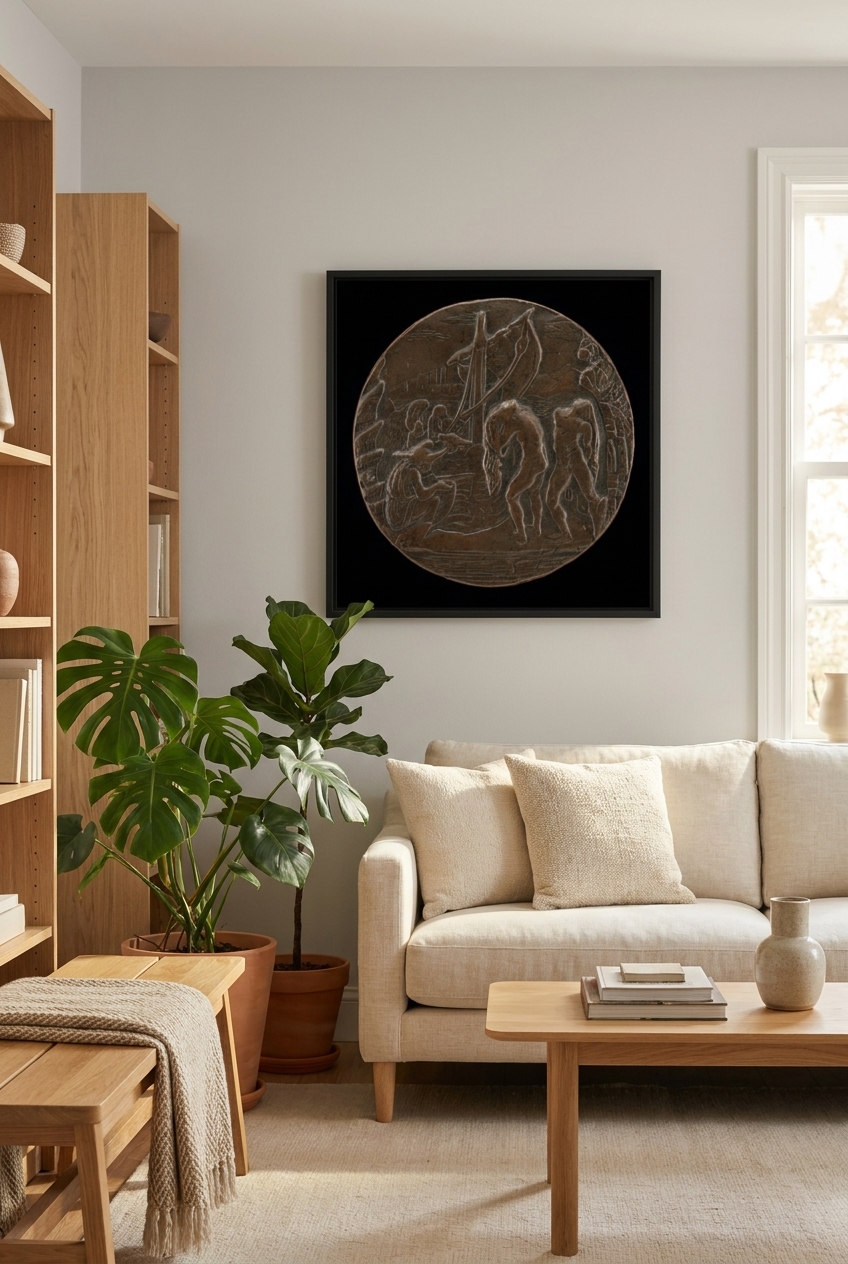
A stunning example of this mastery can be seen in the work of Caradosso Foppa, an influential goldsmith and medalist known for his exquisite attention to detail. His Marine Scene from 1452 captures the Renaissance fascination with classical antiquity and the natural world. In this piece, the sea is not just a backdrop but a dynamic, living force, populated by mythical creatures and rendered with a precision that reflects the era's scientific curiosity. The delicate lines and balanced composition draw the viewer into a narrative that feels both ancient and immediate, showcasing how Renaissance artists could pack immense depth into a compact space.
The Brilliant World of Maiolica
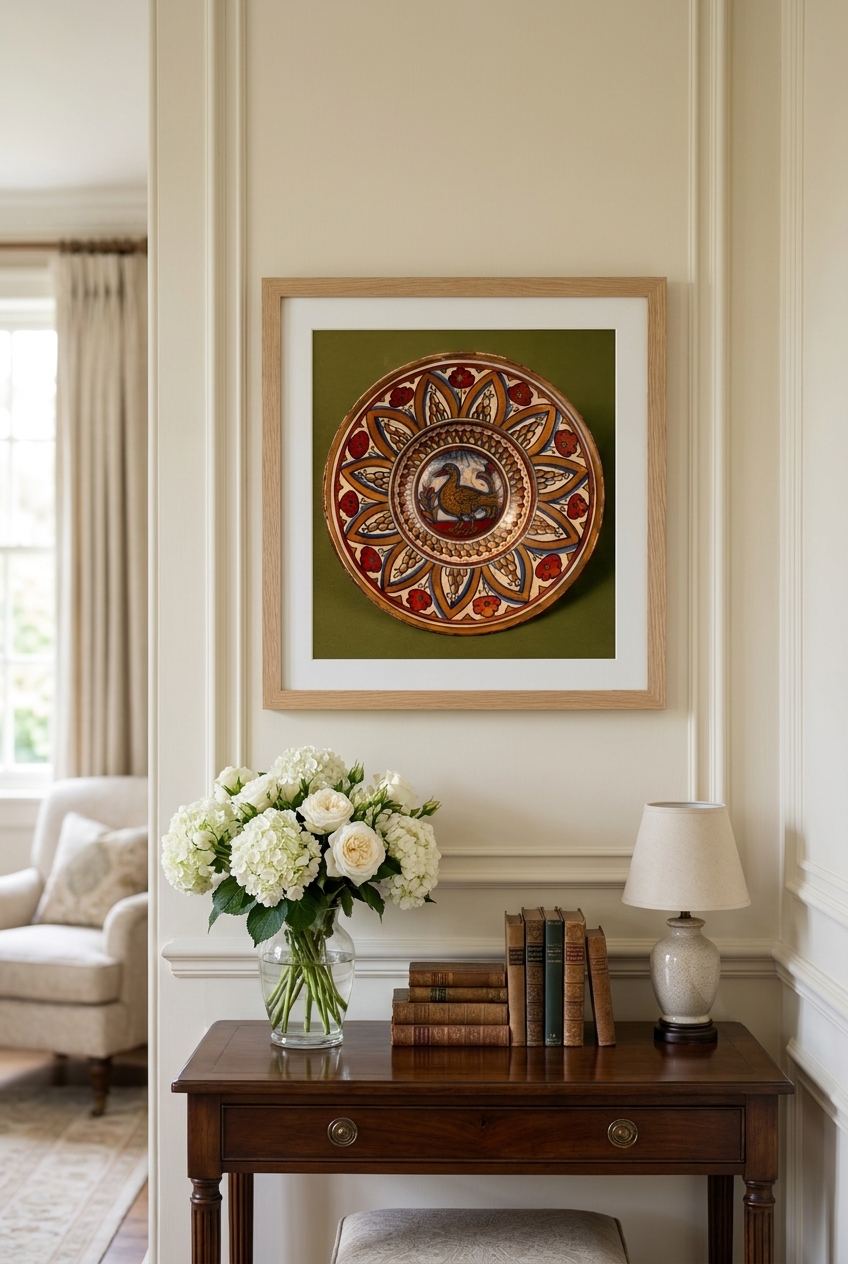
The Renaissance spirit was not confined to paper and canvas; it transformed everyday objects into extraordinary works of art. One of the most brilliant expressions of this was maiolica—tin-glazed earthenware that became highly fashionable among the wealthy elite. Towns like Deruta and Gubbio became famous for producing these vibrant ceramics, which featured rich pigments of cobalt blue, copper green, and antimony yellow, often finished with a shimmering metallic luster.
These pieces were prized not just for their utility, but as status symbols and conversation starters. A beautiful illustration of this craftsmanship is the Plate with border of rounded hills within pointed arches with flowers between them; in the center, a wading bird between stylized plants, dating from around the turn of the sixteenth century. The plate demonstrates the perfect marriage of geometric order and organic beauty, with its stylized borders framing a graceful, central wildlife scene. It reflects a culture that found joy in decorating the home with objects that mirrored the harmony of the cosmos.
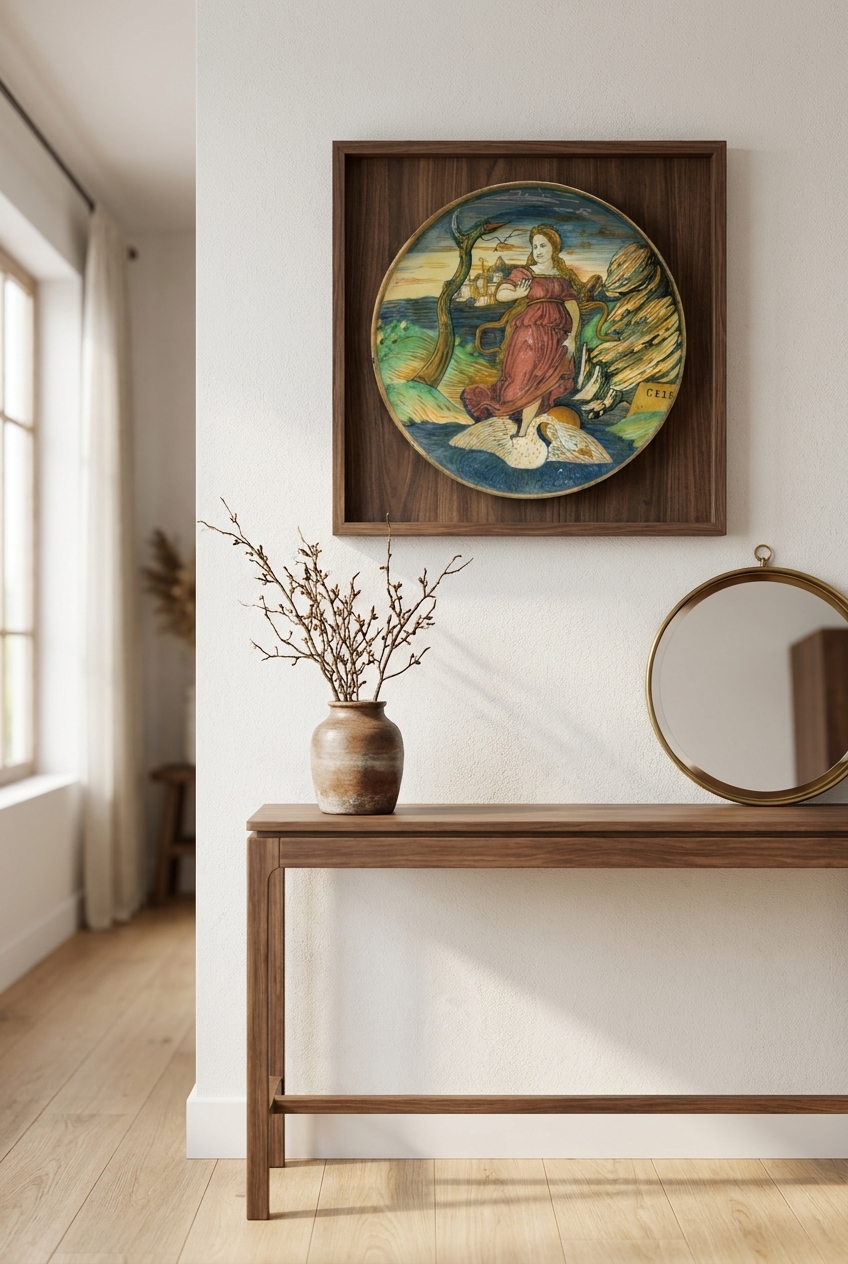
In Gubbio, the workshop of Maestro Giorgio Andreoli took this art form to even greater heights. Andreoli was celebrated for his secret recipe for a brilliant ruby-red luster glaze that caught the light like no other. We see this dazzling artistry in the Shallow bowl on low foot with the muse Clio riding on a swan through a watery landscape. Created in the 1530s, this piece depicts the muse of history gliding gracefully across the water. The narrative, known as istoriato painting, turns the ceramic surface into a canvas, inviting viewers to contemplate classical mythology over dinner or during a quiet moment in the study.
Bringing the Renaissance to Your Modern Walls
Bringing Italian Renaissance art into a contemporary home is a wonderful way to introduce warmth, history, and a sense of calm. Because Renaissance compositions are rooted in symmetry and balance, they have an inherently soothing quality that fits beautifully into modern living spaces. You do not need a grand palazzo to appreciate these works; indeed, their rich textures and deep colors can ground a minimalist room or add a layer of intellectual charm to an eclectic gallery wall.
When choosing a piece for your home, consider the mood you wish to create. The intricate, monochromatic lines of an engraving like Foppa's sea scene offer a quiet, contemplative elegance that pairs beautifully with dark woods and clean, modern lines. On the other hand, the brilliant blues, warm ochres, and rich history of a maiolica print can inject a splash of Mediterranean warmth into a kitchen, dining room, or sunlit hallway. By displaying these timeless designs, you connect your modern space to a centuries-old tradition of celebrating beauty, intellect, and the human spirit.
Frequently asked questions
What exactly does the term "Renaissance" mean in art history?
The word "Renaissance" means "rebirth" in French. In the context of Italian art, it refers to the period between the 14th and 16th centuries when artists revived the classical ideals of ancient Greece and Rome, emphasizing humanism, physical realism, linear perspective, and harmonious proportions.
What is maiolica, and why was it so popular during the Renaissance?
Maiolica is a style of Italian tin-glazed pottery painted with bright metal oxide colors. It became incredibly popular during the Renaissance because it allowed for highly detailed, colorful narrative paintings (called istoriato) on functional and decorative household objects, making art accessible in daily life.
How can I style Renaissance art prints in a contemporary home?
Renaissance prints style beautifully in modern homes due to their balanced, symmetrical compositions. Try framing black-and-white engravings in simple, dark wood frames for a minimalist look, or use vibrant maiolica prints to bring warmth and color to dining rooms, kitchens, or gallery walls.
Who was Maestro Giorgio Andreoli of Gubbio?
Maestro Giorgio Andreoli was one of the most famous ceramicists of the Italian Renaissance. Operating a workshop in Gubbio, he was internationally renowned for his mastery of lusterware, particularly a brilliant, iridescent ruby-red glaze that other workshops could not replicate.